Vajra Symbol Meaning: Spiritual Power, Wisdom, and Protection
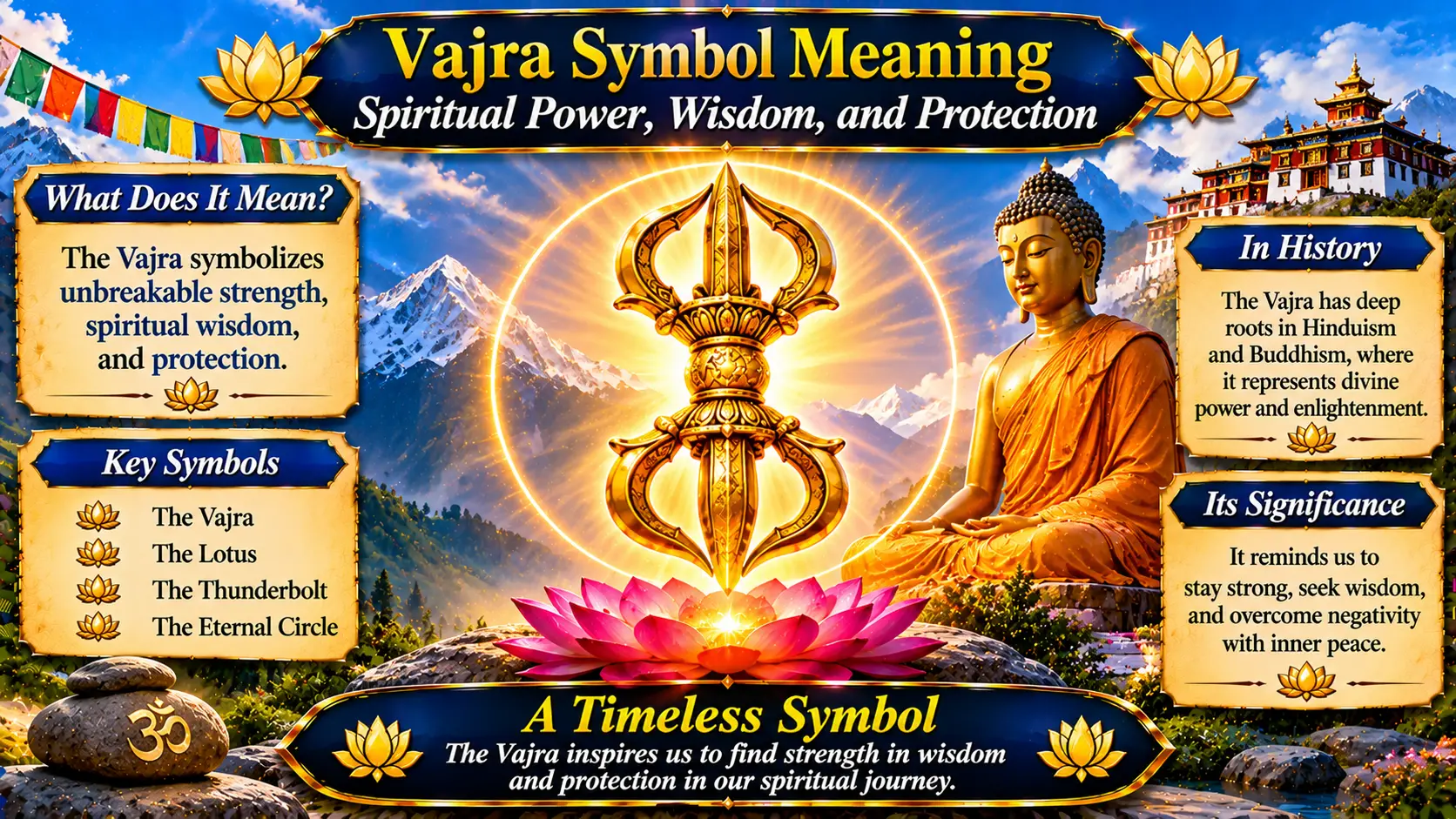
The Vajra symbol is an ancient spiritual symbol associated with strength, protection, wisdom, and spiritual enlightenment. It holds an important place in Tibetan Buddhism, Hindu traditions, and other Eastern spiritual practices. The word “Vajra” comes from Sanskrit and is commonly translated as “thunderbolt” or “diamond,” representing both powerful energy and unbreakable strength.
In Buddhist traditions, the Vajra represents the strength of truth and the clarity of wisdom. Its distinctive design often features a central handle with symmetrical prongs extending from both ends. This shape symbolizes the connection between different spiritual qualities, including wisdom and compassion.
The Vajra symbol also represents inner strength, protection, transformation, and spiritual awakening. Its historical and religious significance makes it an important symbol in meditation, traditional ceremonies, sacred art, and spiritual teachings.
What Is the Vajra Symbol?
The Vajra is a traditional spiritual object and symbol found in Tibetan Buddhism and Hindu traditions. It is often designed with a central handle and symmetrical prongs extending outward from both ends. Its Sanskrit name refers to a thunderbolt or diamond, reflecting its associations with strength, clarity, and permanence.
In Tibetan Buddhism, the Vajra is also known as Dorje. It is used in religious ceremonies and meditation practices to represent spiritual power, wisdom, and the unchanging nature of truth. Its design carries deep symbolic meaning within Buddhist teachings.
What Does the Vajra Symbol Represent?
The Vajra symbol represents strength, wisdom, protection, spiritual clarity, and enlightenment. Its diamond-like meaning reflects something pure and unbreakable, while its thunderbolt association represents powerful spiritual energy.
It also symbolizes the ability to overcome confusion and develop a deeper understanding of life. In Buddhist traditions, the Vajra is especially connected with the union of wisdom and compassion, two important qualities on the spiritual path.
Vajra Symbol Meaning in Buddhism
In Buddhism, particularly Vajrayana Buddhism, the Vajra is an important ritual object and spiritual symbol. It represents the indestructible nature of truth and the strength of enlightened wisdom. Its symbolism is closely connected with spiritual development and the removal of ignorance.
The Vajra is often used alongside a bell during Buddhist ceremonies. The Vajra traditionally represents compassion or method, while the bell represents wisdom. Together, they symbolize the importance of bringing wisdom and compassionate action together.
Vajra Symbol Meaning in Hinduism
In Hindu traditions, the Vajra is strongly associated with Indra, the king of the gods and deity connected with thunder and lightning. According to Hindu mythology, the Vajra is his powerful weapon, symbolizing divine authority, strength, and protection.
The symbol also represents the power to overcome negative forces and restore balance. Its association with thunder and lightning gives it additional meanings of energy, courage, and divine power in Hindu religious traditions.
Spiritual Meaning of the Vajra Symbol
Spiritually, the Vajra represents inner strength, clarity, transformation, and awakening. It can serve as a reminder to develop wisdom, remain focused, and approach life’s difficulties with patience and determination.
Some spiritual interpretations also connect the Vajra with protection and the ability to overcome negative influences. Its diamond-like symbolism represents a clear and steady mind that remains strong even during challenging circumstances.
Vajra Symbol Meaning in Tibetan Culture
In Tibetan culture, the Vajra is commonly known as Dorje and has an important role in Buddhist religious practices. It appears in sacred artwork, ceremonial objects, temple decorations, and traditional spiritual teachings.
The Dorje represents indestructible spiritual power, clarity, and enlightened wisdom. It is often paired with a ritual bell during ceremonies, expressing the relationship between wisdom and compassion in Tibetan Buddhist philosophy.
What Do the Different Parts of the Vajra Symbol Mean?
The traditional Vajra design contains several elements, and each part can carry symbolic meaning. Its central section represents unity, while the surrounding prongs are associated with different aspects of spiritual understanding and enlightened qualities.
The number and arrangement of prongs can vary depending on the design and tradition. However, the overall structure commonly represents balance, spiritual completeness, wisdom, and the unbreakable nature of truth.
Vajra Symbol Meaning in Protection
The Vajra is traditionally associated with spiritual protection and the strength to overcome obstacles. In Buddhist and Hindu contexts, it represents powerful divine or enlightened qualities that help practitioners develop courage, clarity, and confidence.
It also appears in religious ceremonies and sacred artwork as a reminder of spiritual strength. Its protective meaning is rooted in religious traditions and should be understood as symbolic rather than as a scientifically established effect.
Vajra Symbol Meaning in Meditation
In Buddhist meditation traditions, the Vajra is connected with concentration, wisdom, awareness, and spiritual development. Its symbolism reminds practitioners to develop a clear mind and maintain focus during their spiritual journey.
The Vajra may also be used as a ritual object during certain meditation practices. Its presence represents the importance of combining wisdom with compassion and developing a deeper understanding of reality.
Vajra Symbol vs. Dorje Symbol
Vajra and Dorje are two names for the same traditional Buddhist ritual symbol. Vajra is the Sanskrit term, while Dorje is its Tibetan equivalent. Both refer to a spiritual object associated with indestructible strength, wisdom, and enlightenment.
Although the names come from different languages, their symbolic meanings are closely connected. Both are especially important in Vajrayana Buddhist traditions and are commonly represented in religious ceremonies and sacred artwork.
Feature Vajra Dorje
Language Sanskrit Tibetan
Meaning Thunderbolt or diamond Thunderbolt or diamond
Tradition Hinduism and Buddhism Tibetan Buddhism
Symbolism Strength and wisdom Indestructible spiritual power
Common use Religious rituals Buddhist ceremonies
Interesting Facts About the Vajra Symbol
The Vajra has a long history and carries different meanings across Eastern religious traditions. Its distinctive design and spiritual importance make it one of the recognizable symbols in Buddhist and Hindu sacred art.
Here are some interesting facts:
- Vajra is a Sanskrit word.
- It is commonly translated as thunderbolt or diamond.
- In Tibetan, it is known as Dorje.
- It is associated with Indra in Hindu mythology.
- It represents indestructible spiritual strength.
- It is important in Vajrayana Buddhism.
- It is often paired with a ritual bell.
- It symbolizes wisdom and compassion.
- Its design commonly features symmetrical prongs.
- It appears in traditional Buddhist ceremonies and artwork.
Why Is the Vajra Symbol Still Important Today?
The Vajra symbol remains important because of its deep religious, historical, and philosophical significance. It continues to appear in Buddhist temples, spiritual artwork, traditional ceremonies, and educational discussions about Eastern religions.
Many people also appreciate its symbolic associations with strength, clarity, wisdom, and personal growth. Its message of developing inner strength and understanding continues to make it meaningful in contemporary spiritual discussions.
Frequently Asked Questions About Vajra Symbol Meaning
What does the Vajra symbol mean?
The Vajra symbolizes strength, wisdom, protection, and spiritual enlightenment. Its name is commonly translated as thunderbolt or diamond.
What does Vajra mean in Sanskrit?
Vajra is a Sanskrit word commonly translated as thunderbolt or diamond. Both meanings represent powerful strength and something indestructible.
What is the Vajra symbol in Buddhism?
In Buddhism, the Vajra represents the indestructible nature of truth, enlightened wisdom, and spiritual strength. It is especially important in Vajrayana Buddhism.
What is the Vajra symbol called in Tibetan culture?
In Tibetan culture, the Vajra is called Dorje. It is an important ritual object associated with wisdom, compassion, and spiritual power.
What does the Vajra symbolize spiritually?
Spiritually, the Vajra represents inner strength, clarity, transformation, protection, and enlightenment. It is also associated with developing wisdom and compassion.
What does the Vajra represent in Hinduism?
In Hindu mythology, the Vajra is associated with Indra, the king of the gods. It represents thunder, divine strength, authority, and protection.
Why is the Vajra paired with a bell?
In Tibetan Buddhist ceremonies, the Vajra traditionally represents method or compassion, while the bell represents wisdom. Together, they symbolize the union of these important spiritual qualities.
What do the prongs of the Vajra symbolize?
The prongs can represent different enlightened qualities and aspects of spiritual understanding. Their specific interpretations may vary across Buddhist traditions.
Is the Vajra a symbol of protection?
Yes, the Vajra is traditionally associated with spiritual protection and the strength to overcome obstacles. Its protective meaning comes from religious and spiritual traditions.
What is the difference between Vajra and Dorje?
Vajra is the Sanskrit name, while Dorje is the Tibetan name for the same traditional Buddhist ritual symbol. Both represent indestructible strength and spiritual wisdom.
Conclusion
The Vajra symbol carries deep spiritual and cultural significance in Buddhism and Hinduism. Commonly translated as thunderbolt or diamond, it represents strength, wisdom, protection, and enlightenment. Its connection with Indra in Hindu mythology and Vajrayana Buddhist practices gives it an important place in Eastern religious traditions. Whether seen in sacred artwork, meditation practices, or religious ceremonies, the Vajra remains a powerful symbol of indestructible truth, spiritual clarity, and the union of wisdom and compassion.