Orange Symbolism: Spiritual Meaning & Cultural Guide
Quick Answer
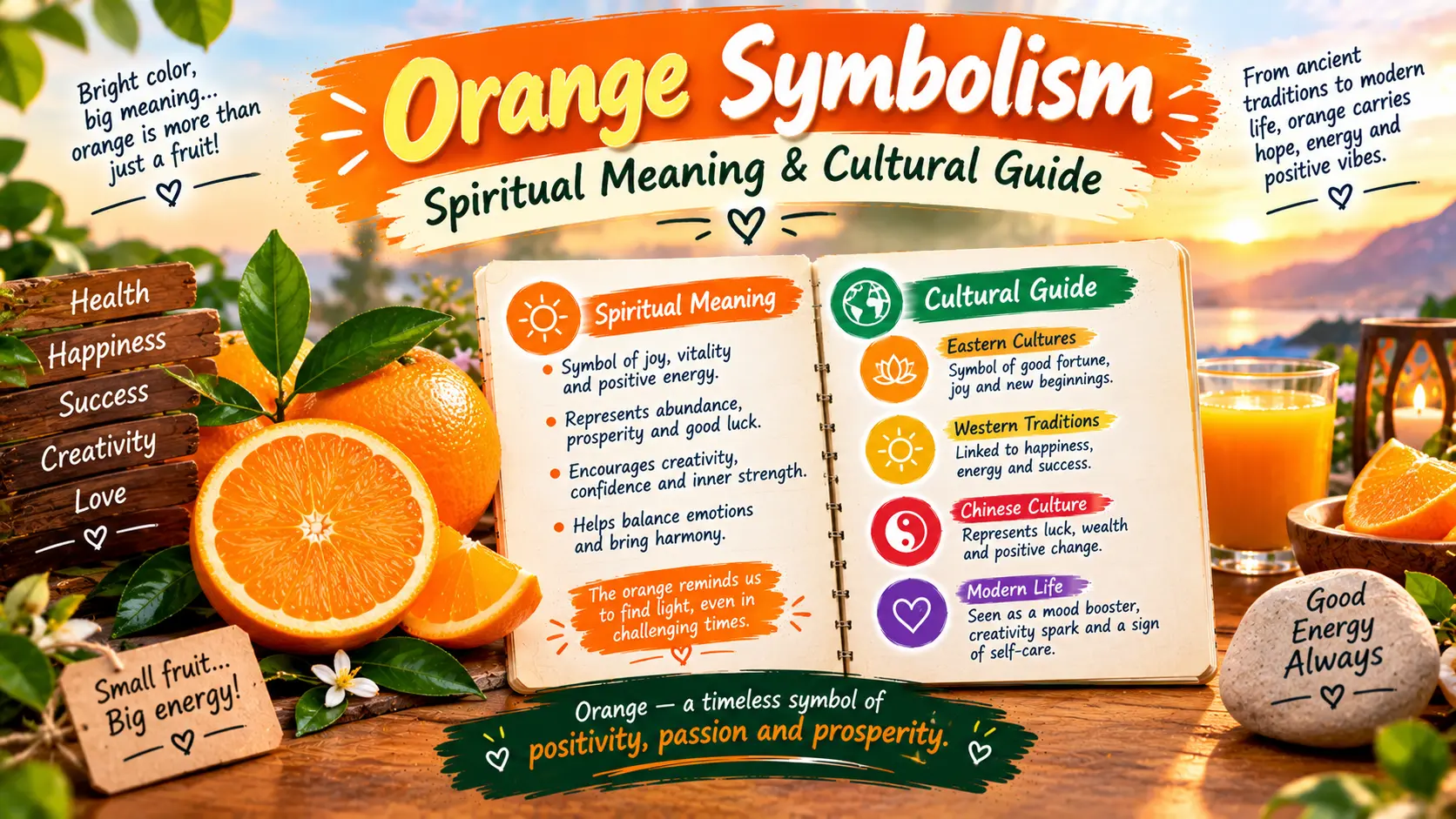
Orange symbolism is commonly associated with abundance, happiness, vitality, prosperity, creativity, renewal, and good fortune. As a fruit, the orange can represent nourishment, generosity, fertility, and the rewards of growth. In spiritual interpretations, seeing or receiving oranges may be viewed as a reminder to appreciate blessings, welcome positive change, and remain open to new opportunities.
The meaning of an orange can vary according to culture, personal experience, dreams, and circumstances. In Chinese traditions, oranges and other citrus fruits are strongly connected with luck, prosperity, and celebration, especially around the Lunar New Year. In modern symbolism, oranges often communicate warmth, energy, optimism, and abundance.
TL;DR
- Orange fruit: Abundance, nourishment, happiness, prosperity, and renewal.
- Orange color: Energy, creativity, confidence, warmth, and enthusiasm.
- Spiritual meaning: Growth, positive energy, manifestation, and emotional renewal.
- Chinese culture: Good fortune, prosperity, and festive blessings.
- Dreams: Often connected with opportunity, vitality, relationships, or personal growth.
- Modern meaning: Optimism, creativity, social connection, and fresh beginnings.
What Do Oranges Symbolize?
Oranges are naturally bright, fragrant, sweet, and full of juice, so it is easy to understand why many symbolic traditions associate them with life, vitality, pleasure, and abundance. Their round shape can also suggest wholeness, completeness, and continuity.
Symbolism is not a universal code with one fixed interpretation. An orange given as a gift can suggest generosity, while an orange appearing in a dream might reflect nourishment or an opportunity. The surrounding circumstances often determine which meaning feels most relevant.
Core Symbolic Meanings
The most common symbolic associations of oranges include abundance, prosperity, joy, vitality, fertility, creativity, generosity, renewal, and good fortune.
The fruit’s bright appearance can represent optimism and positive energy, while its seeds can suggest potential and future growth. Its protective peel may also be interpreted metaphorically as a boundary surrounding something valuable within.
Why Oranges Are Associated With Abundance and Joy
A healthy orange contains sweetness, water, nutrients, and vibrant color. Symbolically, these qualities can make it an image of having something valuable to share. A bowl of oranges may therefore evoke hospitality, generosity, and a household with enough to offer others.
The orange is also strongly connected with sensory pleasure. Its fragrance, taste, and color can create associations with happiness, celebration, warmth, and enjoyment of life.
General Symbolism of Oranges
Across different settings, oranges frequently carry positive meanings. They can represent the enjoyment of present blessings while also pointing toward future possibilities.
Because citrus trees can produce abundant fruit, oranges are sometimes used as symbols of productivity and reward. The image of a tree carrying fruit naturally suggests that patience and consistent growth can eventually produce visible results.
Prosperity, Success, and Good Fortune
Oranges can symbolize financial well-being, success, opportunity, and good fortune. This association is particularly strong in some East Asian cultural traditions.
Symbolically, receiving an orange may represent being offered a blessing or opportunity. A plentiful harvest of oranges can similarly suggest that effort is beginning to produce rewarding results.
Happiness, Vitality, and Positive Energy
The vivid appearance of an orange makes it a natural symbol of joy and vitality. Its bright color can suggest enthusiasm, movement, and emotional warmth.
Spiritually, an orange may be interpreted as an invitation to reconnect with activities that create energy and optimism. It can represent choosing growth rather than remaining emotionally stagnant.
Fertility, Growth, and Renewal
Seeds inside an orange provide a simple metaphor for potential. A seed may be small, but under the right conditions it can become part of a productive tree.
For this reason, oranges can symbolize fertility, creativity, new beginnings, and personal development. They may represent an idea or opportunity that needs time and care before its full potential becomes visible.
Historical Roots of Orange Symbolism
The orange has a long history of cultivation, trade, food use, and cultural exchange. Citrus fruits spread through different regions over centuries, and their meanings developed alongside their economic and social importance.
Because citrus could be valuable and desirable, oranges sometimes became associated with prosperity and hospitality. Their fragrance and bright appearance also contributed to their use in celebrations, gardens, decorative settings, and gift-giving.
Ancient and Pre-Christian Associations
It is important not to assume that every later orange symbol existed in the ancient world exactly as it is understood today. Citrus varieties and cultivation changed considerably over time, and different fruits were sometimes confused or grouped together in later interpretations.
Nevertheless, fruit symbolism more broadly has long been connected with fertility, nourishment, abundance, seasonal cycles, and life. These broader associations helped shape later interpretations of citrus fruits.
Early Trade, Agriculture, and Sacred Foods
The movement of citrus through trade routes contributed to its cultural importance. Fruits that were difficult to grow locally could become associated with luxury, hospitality, and prosperity.
As citrus became established in additional regions, oranges acquired practical and decorative roles. Their symbolic meanings consequently developed through agriculture, commerce, celebrations, art, and everyday life.
How Orange Symbolism Developed Across Cultures
Orange symbolism is best understood as a combination of natural characteristics and cultural traditions. Bright color, sweetness, fragrance, seeds, and abundant fruiting provide natural symbolic material, while individual cultures add their own beliefs and customs.
This explains why oranges can symbolize prosperity in one setting, romance or celebration in another, and simple nourishment in everyday life.
Oranges in Chinese Culture
Oranges have particularly strong associations with luck, prosperity, happiness, and celebration in Chinese culture. Citrus fruits are commonly connected with positive wishes, especially during important festivals.
The symbolism can also involve linguistic associations, traditional customs, color, shape, and the cultural value placed on giving auspicious gifts.
Good Fortune and Prosperity
Oranges and mandarins are widely associated with good fortune and prosperity in Chinese cultural traditions. Their golden-orange appearance can reinforce associations with wealth and positive outcomes.
Offering citrus during a celebration can therefore communicate a wish for success, abundance, happiness, and good luck.
Lunar New Year Traditions
Citrus fruits are especially visible during Lunar New Year celebrations. Families may display or exchange oranges and mandarins as part of festive customs.
Their presence can symbolize hopes for a prosperous year ahead. The fruit becomes more than food: it can serve as a physical expression of good wishes and positive beginnings.
Gifting Oranges and Citrus Fruits
Giving oranges can be interpreted as a gesture of goodwill and blessing. The meaning becomes especially powerful when the gift is connected to a holiday, family gathering, or important milestone.
As with many cultural symbols, exact customs can vary by region and family. It is therefore better to view orange symbolism as a broad cultural association rather than a single rule that applies everywhere.
Spiritual Symbolism of Oranges
In modern spiritual interpretation, oranges can represent positive energy, abundance, growth, creativity, emotional renewal, and manifestation. These interpretations are symbolic rather than scientifically established spiritual facts.
An orange may become meaningful when it repeatedly appears during a period of transition or reflection. The significance often comes from the personal meaning attached to the experience.
Abundance and Manifestation
An orange can represent the idea of turning potential into something tangible. The fruit develops from a flowering tree, making it a useful metaphor for intentions becoming visible results.
In manifestation-oriented practices, oranges may therefore symbolize receiving, abundance, gratitude, and confidence in growth.
Energy, Creativity, and Motivation
The bright orange color is often psychologically associated with stimulation, enthusiasm, and activity. For spiritual readers, this can translate into symbolism involving creativity and motivation.
Seeing an orange at an important moment might be interpreted as a reminder to take action, explore an idea, or bring greater enthusiasm into everyday life.
Emotional Renewal and Personal Growth
The act of peeling an orange can also work as a symbolic metaphor. The outer layer is removed to reveal something nourishing inside.
This can represent letting go of emotional defenses, discovering inner value, or moving beyond an old stage of life.
Spiritual Messages Associated With Oranges
If an orange feels spiritually meaningful to you, possible symbolic themes include:
- Appreciate what you already have.
- Make room for growth and opportunity.
- Protect what is valuable while allowing yourself to open up.
- Bring more joy into everyday life.
- Share your blessings generously.
- Begin something that has been waiting for attention.
These are reflective interpretations rather than predictions or guaranteed supernatural messages.
Oranges in Mythology and Folklore
Fruit has played an important role in mythology and folklore because it can represent life, fertility, temptation, nourishment, beauty, and transformation. Citrus fruits have sometimes been included in later artistic or legendary interpretations of these broader fruit themes.
It is important to distinguish documented traditions from modern symbolic interpretations. Not every story involving a golden or magical fruit specifically refers to the orange we know today.
Sacred Fruit and Divine Blessings
Golden or extraordinary fruits frequently appear as symbols of divine favor, beauty, rarity, or immortality in mythology. Because oranges have a naturally golden appearance, later art and folklore can sometimes connect them with these themes.
The broader symbolism is therefore often more reliable than claiming that a particular ancient story was specifically about an orange.
Fertility and Immortality Themes
Fruit that returns each season can symbolize the continuing cycle of life. Seeds also represent the possibility of regeneration.
Oranges can consequently participate in symbolic themes of fertility, renewal, continuity, and the hope for lasting prosperity.
European and Mediterranean Folklore
In European and Mediterranean settings, citrus fruits became increasingly significant as cultivation and trade expanded. Their fragrance, beauty, and relative rarity in some climates helped them acquire associations with gardens, wealth, hospitality, and celebration.
Over time, oranges also became prominent in decorative traditions, still-life art, seasonal customs, and wedding symbolism.
Oranges in Christianity and Biblical Symbolism
The Bible does not establish a specific universal spiritual meaning for the modern orange. In fact, oranges are not a central biblical symbol in the way that grapes, figs, olives, dates, and certain other plants are.
However, later Christian art and devotional symbolism sometimes use fruit generally to communicate abundance, blessing, generosity, nourishment, and the goodness of creation.
Fruit, Blessings, and Spiritual Nourishment
Fruit can naturally represent the results of growth and cultivation. In a Christian symbolic reading, this may evoke ideas of spiritual fruitfulness and living a productive, generous life.
An orange can therefore function as a modern symbolic illustration of blessing or nourishment without being presented as a direct biblical symbol.
Purity, Generosity, and Renewal
The freshness of citrus can be used metaphorically to express renewal and vitality. Sharing fruit can also represent generosity and hospitality.
These meanings are best understood as later symbolic applications, rather than direct biblical definitions of the orange.
Important Differences Between Biblical Text and Later Symbolism
A common mistake is to assign modern symbolic meanings directly to the Bible without textual evidence. The orange should not be described as having a fixed biblical meaning that Scripture itself establishes.
A more accurate approach is to distinguish biblical fruit symbolism from later Christian art, cultural traditions, and personal spiritual interpretations.
Oranges in Art and Literature
Oranges have been popular subjects in art because they combine vivid color, recognizable form, texture, fragrance, and associations with abundance.
In literature, the fruit can similarly become a sensory image. Writers may use its taste, scent, color, or peeling process to communicate memory, childhood, warmth, longing, or transformation.
Oranges as Symbols of Beauty and Abundance
A collection of oranges can visually suggest plenty. A single orange can instead draw attention to simplicity, natural beauty, or a moment of sensory enjoyment.
The fruit’s rounded shape can also contribute to themes of completeness and harmony.
Still-Life Art and Hidden Meanings
Still-life artists have historically used food and everyday objects to communicate ideas beyond their physical appearance. Fruit may suggest wealth, mortality, seasonal change, pleasure, or abundance, depending on the artwork.
An orange placed beside flowers, glassware, books, or other objects can therefore take on additional symbolic meaning through context.
Oranges in Poetry, Stories, and Visual Culture
In writing, an orange can represent warmth and memory because taste and smell are strongly connected to personal experiences. The act of peeling an orange can evoke childhood, family gatherings, winter holidays, or simple comfort.
Its meaning is often emotional rather than literal, allowing the fruit to become a small object carrying a much larger memory.
Oranges in Weddings and Gifting
Oranges can work beautifully in symbolic celebrations because their meanings often involve happiness, prosperity, fertility, abundance, and good fortune.
Their color also creates a warm visual effect, making them suitable for seasonal decorations, centerpieces, floral arrangements, and themed celebrations.
Love, Happiness, and Good Fortune
When oranges appear in wedding settings, they may symbolize hopes for a happy and prosperous marriage.
Their sweetness can metaphorically represent joyful experiences, while the fruit’s seeds and growth cycle can suggest a future filled with possibilities.
Wedding Decorations and Floral Arrangements
Oranges can be incorporated into centerpieces, wreaths, table arrangements, or displays alongside flowers and greenery.
Beyond aesthetics, their presence can communicate a theme of warmth, abundance, natural beauty, and celebration.
Cultural Meanings of Giving Oranges
In cultures where oranges are considered auspicious, gifting them can carry a stronger meaning than simply giving food.
The gesture may communicate wishes for prosperity, health, happiness, and success. The exact meaning depends on the cultural setting and occasion.
Symbolism of the Orange Color
The color orange has its own symbolic system and should not be confused completely with the symbolism of the fruit.
Orange combines the warmth associated with red and the brightness associated with yellow, which helps explain its frequent connections with energy, confidence, enthusiasm, creativity, and social warmth.
Energy, Confidence, and Creativity
Orange is often used to create a lively and energetic visual impression. It can suggest movement, experimentation, confidence, and creative expression.
Symbolically, it may represent a willingness to act rather than remain passive.
Warmth, Social Connection, and Enthusiasm
Orange can also communicate friendliness and warmth. It often appears in settings designed to feel energetic, approachable, or playful.
From a symbolic perspective, this makes orange a useful representation of connection, enthusiasm, communication, and emotional openness.
Orange as a Symbol of Transformation
Orange can symbolize a transition between stages. Its association with autumn, sunsets, firelight, and changing landscapes makes it especially suitable for themes of transformation.
In spiritual writing, this can represent moving from one chapter of life into another while carrying lessons from the past.
Orange Symbolism in the USA Today
In the United States, orange has many meanings depending on context. It can represent energy, autumn, creativity, visibility, sports identity, safety, and celebration.
The fruit itself is commonly associated with breakfast, juice, freshness, nutrition, and childhood memories, while the color has much broader cultural uses.
Common American Associations
Americans may associate oranges with sunshine, summer, citrus-growing regions, breakfast foods, holidays, and healthy eating.
The meaning can also become seasonal. Orange pumpkins, autumn leaves, and Halloween imagery create a particularly strong connection between orange and fall.
Orange in Fashion, Branding, and Design
Brands and designers often use orange when they want to communicate energy, friendliness, enthusiasm, or attention.
Because orange is visually noticeable, it can also function as a color of emphasis. Its symbolic effect depends heavily on the shade and surrounding colors.
Seasonal and Everyday Symbolism
Orange can evoke warm seasonal feelings through autumn leaves, sunsets, pumpkins, and fires. The fruit adds another layer involving freshness, sweetness, nourishment, and abundance.
Together, these associations make orange a versatile symbol in contemporary American culture.
Seeing Oranges in Dreams
Dream symbolism is highly personal. There is no scientifically established dictionary that gives every dream image one universal meaning.
Still, oranges can provide useful reflective themes because their qualities naturally connect with nourishment, sweetness, opportunity, vitality, and abundance.
Dreaming of Eating an Orange
Eating a fresh orange may symbolize enjoyment, nourishment, satisfaction, or accepting something positive.
If the dream feels peaceful, it may reflect contentment or a desire for emotional nourishment. If the experience is unpleasant, the interpretation may instead involve disappointment or something that appears attractive but does not satisfy you.
Seeing a Fresh or Ripe Orange
A ripe orange can represent readiness, opportunity, and the results of patient growth.
It may be especially meaningful when you are approaching an important decision or completing a long-term goal.
Peeling or Cutting an Orange
Peeling an orange can symbolize revealing something gradually. You may be learning more about yourself, another person, or an opportunity.
Cutting the fruit may suggest sharing, dividing resources, or examining something more closely.
Rotten or Unripe Oranges
A rotten orange may symbolize disappointment, neglected potential, or something that once seemed valuable but has lost its appeal.
An unripe orange can represent patience. It may suggest that an idea, relationship, or personal goal needs more time before it is ready.
Receiving or Giving Oranges in a Dream
Receiving an orange may represent support, generosity, opportunity, or a blessing from another person.
Giving an orange can symbolize sharing affection, knowledge, resources, encouragement, or positive energy.
Orange Symbolism in Modern Spirituality
Modern spiritual interpretations frequently use oranges as symbols of optimism and abundance. These meanings can become especially prominent in manifestation practices, personal-growth communities, and visual spiritual content.
However, these interpretations should be treated as reflective frameworks rather than universal spiritual laws.
Manifestation and Personal Transformation
An orange can symbolize an intention becoming something tangible. The fruit represents the visible outcome of a longer process involving roots, growth, flowering, and fruit production.
This makes it a useful metaphor for patience, manifestation, progress, and personal transformation.
Emotional Healing and Positive Mindset
Orange symbolism can encourage emotional warmth and a more optimistic outlook. Its bright appearance may serve as a visual reminder to reconnect with activities that bring energy and enjoyment.
This does not mean that simply seeing orange automatically produces emotional healing. Rather, the symbol can support personal reflection and intentional thinking.
Social Media and Contemporary Symbolism
On social media, orange imagery may communicate positivity, aesthetic warmth, summer energy, wellness, food, creativity, or seasonal moods.
Its meaning is flexible, allowing creators to use the fruit and color for both literal and symbolic purposes.
Psychological Meaning of Orange Symbolism
Color and object symbolism can influence emotional associations, but individual responses vary significantly. Someone who associates oranges with childhood may experience them differently from someone whose memories are connected with another food.
Psychological symbolism is therefore most useful when combined with personal context.
Emotional Associations With Orange
Orange is commonly associated with warmth, stimulation, enthusiasm, energy, and sociability. These associations help explain why it is often used in environments intended to feel active or welcoming.
The fruit itself can add associations of freshness, nourishment, sweetness, and comfort.
Creativity, Optimism, and Motivation
Orange can serve as a symbolic reminder to experiment, create, and take action. Its energetic appearance makes it a natural metaphor for motivation.
When someone chooses orange repeatedly, it may reflect a preference for lively, expressive, or warm visual experiences, although no single psychological explanation applies to everyone.
Why Personal Experiences Can Change Symbolic Meaning
Personal memories can be stronger than general cultural symbolism. An orange might remind one person of family breakfasts and another of travel, holidays, gardening, or childhood.
For this reason, your own emotional response is an important part of interpreting orange symbolism.
Cross-Cultural Meanings of Oranges
Orange symbolism is not identical around the world. Some cultures emphasize prosperity and luck, while others may focus more on nourishment, celebration, beauty, or seasonal associations.
Understanding this variation prevents symbolic interpretations from becoming overly generalized.
Positive Meanings Across Different Traditions
Recurring positive themes include abundance, happiness, fertility, vitality, generosity, prosperity, and celebration.
These themes are easy to connect with the natural qualities of a ripe fruit and its importance as food.
Differences in Cultural Interpretation
The same orange may communicate different things depending on the event and cultural background. A fruit exchanged during a festival may carry a very different meaning from an orange used in artwork or a dream.
Cultural context should therefore come before interpretation.
Why Context Matters
Symbolism is strongest when the surrounding circumstances are considered. Ask where the orange appeared, who gave it to you, what was happening at the time, and what emotions you experienced.
These details can transform a general symbol into a much more personally meaningful interpretation.
FAQ About Orange Symbolism
What is the spiritual meaning of an orange?
An orange can symbolize abundance, vitality, joy, renewal, creativity, and positive growth in modern spiritual interpretation. It may also represent gratitude and the willingness to receive or share blessings.
What do oranges symbolize in Chinese culture?
Oranges and related citrus fruits are commonly associated with good fortune, prosperity, happiness, and festive blessings. They are especially prominent in Lunar New Year traditions and gift-giving.
What does seeing an orange symbolize?
Seeing an orange may symbolically represent opportunity, happiness, nourishment, abundance, or personal growth. The most meaningful interpretation depends on the circumstances and your personal associations.
What do oranges represent in dreams?
Dream oranges can represent nourishment, satisfaction, opportunity, abundance, relationships, or growth. A fresh, ripe orange generally carries a more positive symbolic tone than a rotten or unripe one.
What does the color orange symbolize spiritually?
The color orange is often interpreted as representing energy, creativity, enthusiasm, confidence, warmth, and transformation. Spiritual traditions may give it additional meanings depending on their specific beliefs.
Are oranges a symbol of good luck?
Yes, oranges are associated with good luck and prosperity in several cultural traditions, particularly Chinese cultural contexts. However, the exact meaning depends on the tradition and situation.
Conclusion: The Deeper Meaning of Orange Symbolism
Orange symbolism brings together themes of abundance, joy, vitality, prosperity, creativity, growth, generosity, and renewal. As a fruit, the orange can represent nourishment and the rewards of growth; as a color, it can communicate energy, warmth, enthusiasm, and transformation.
Its cultural meaning is especially significant in traditions where oranges are connected with good fortune and prosperity. In modern spiritual interpretation, the fruit can serve as a reminder to appreciate blessings, remain open to opportunities, nurture personal growth, and share positivity with others.
Ultimately, the most meaningful interpretation comes from context. Whether an orange appears in art, a celebration, a gift, a dream, or an ordinary moment, its symbolism can invite you to think about what is growing in your life, what you are receiving, and what you have to share.