Cariño Meaning: Definition, Usage & Emotional Meaning
Quick Answer
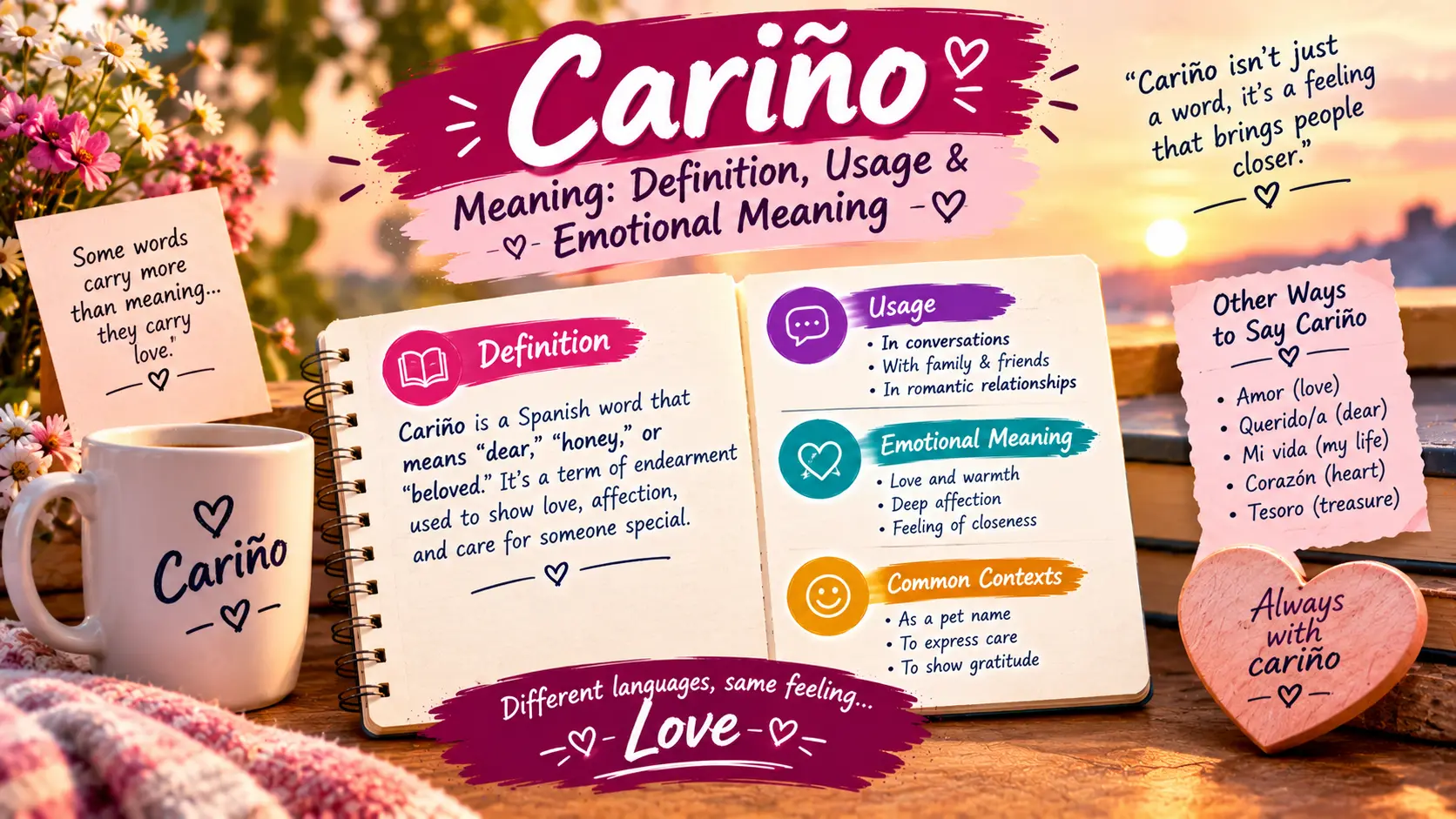
Cariño is a Spanish word that commonly expresses affection, fondness, tenderness, care, or love. Depending on the relationship and context, it can be used romantically, between family members, among friends, or as a warm term of endearment.
In English, cariño can sometimes be translated as “darling,” “dear,” “sweetheart,” “affection,” or “love.” However, no single English word captures every shade of its meaning. The speaker’s tone, relationship with the listener, and cultural setting all influence how it is understood.
TL;DR
- Cariño is a Spanish expression connected with affection, care, tenderness, and fondness.
- It can be romantic, friendly, familial, or simply warm.
- In texting, it may function like “dear,” “sweetie,” or “love.”
- It does not automatically mean romantic love.
- Its appropriateness depends heavily on the relationship and cultural context.
- In professional English, neutral words such as “dear,” “friend,” or the person’s name are generally safer.
What Does “Cariño” Mean?
Basic Definition of Cariño
The Spanish noun cariño refers to a feeling or expression of affection, fondness, tenderness, or care toward someone or something. It can describe an emotional bond as well as the affectionate way a person treats another individual.
For example, someone might say “Le tengo mucho cariño”, meaning that they have a lot of affection or fondness for someone. In another context, “cariño” can be used directly as a form of address, similar to calling someone “darling” or “dear.”
The word therefore has both an emotional meaning and a social function. It can describe how someone feels while also communicating warmth directly to another person.
English Translations and Closest Meanings
There is no perfect one-word English translation for cariño. Depending on context, possible translations include:
- Affection
- Fondness
- Tenderness
- Care
- Darling
- Dear
- Sweetheart
- Sweetie
- Love
When cariño describes an emotion, “affection” or “fondness” may be the most accurate translation. When it is used as a form of address, “dear,” “darling,” or “sweetheart” may sound more natural.
This flexibility is important because translating cariño literally can sometimes miss the emotional nuance intended by the speaker.
How Context Changes Its Meaning
Context is one of the most important factors in understanding cariño. The same word can communicate different levels of closeness depending on who says it and how it is said.
A romantic partner may use cariño as an intimate pet name, while a parent may use it affectionately toward a child. Friends may also use it warmly, especially in cultures or communities where affectionate forms of speech are common.
Where Does the Word “Cariño” Come From?
Spanish and Latin Roots
Cariño belongs to the Spanish vocabulary of affection and emotional attachment. Its history is associated with the broader development of Romance languages from Latin, although its specific historical development is more complex than simply being a direct modern form of a single Latin word.
The modern Spanish word developed within the history of Spanish and came to express ideas involving affection, fondness, tenderness, and emotional attachment.
Historical Development of the Word
Over time, cariño became established in Spanish as both an emotional noun and an affectionate way of addressing another person. Its meaning expanded naturally through everyday communication.
Words connected with affection often develop nuanced meanings because people use them in many relationships. As a result, cariño can communicate anything from gentle fondness to deep emotional attachment without necessarily indicating romance.
What Does “Cariño” Mean in Spanish?
Affection and Tenderness
At its heart, cariño expresses warmth and affection. It can describe the feeling someone has for another person, a pet, a place, or even an object that holds sentimental value.
For example, a person may have cariño for an old family home because it represents memories and emotional connection. In this sense, the word is closer to “fondness” than romantic love.
Love, Care, and Endearment
When used toward a person, cariño can communicate care, tenderness, and emotional closeness. It is often warmer than a completely neutral form of address.
The exact emotional intensity varies. Sometimes it is deeply affectionate; at other times, it is simply a warm and familiar expression. The relationship between the speakers provides much of the meaning.
Meaning in Everyday Conversation
In everyday Spanish, cariño can appear naturally in conversations between people who share some degree of familiarity.
A parent might say it to a child, partners may use it with one another, and close friends may occasionally use affectionate language depending on their personal communication style. The word should therefore be interpreted through context rather than translation alone.
Is “Cariño” Romantic or Friendly?
Romantic Use Between Partners
Yes, cariño can be strongly romantic. Couples may use it as a pet name comparable to “darling,” “sweetheart,” or “honey.”
In a romantic relationship, the word can communicate emotional intimacy and reassurance. However, its presence alone does not prove that a relationship is romantic because cariño also has non-romantic uses.
Friendly and Familial Use
C ariño can also be used affectionately among family members and, depending on cultural norms and personal habits, among friends.
Parents, grandparents, and other relatives may use affectionate expressions without any romantic implication. In these situations, cariño generally communicates care, closeness, and warmth.
How Is “Cariño” Used in the United States?
Common Uses Among Spanish Speakers
In the United States, cariño is commonly encountered in Spanish-speaking families, bilingual communities, relationships, entertainment, restaurants, social interactions, and online conversations.
Spanish speakers living in the U.S. may use the word naturally even when most of their conversation is in English. Its meaning remains dependent on the speaker’s cultural background and relationship with the listener.
Use in Multicultural and Bilingual Communities
In bilingual settings, cariño may appear alongside English expressions such as “honey,” “sweetie,” “dear,” or “love.”
A bilingual speaker may switch between languages without intending to change the emotional meaning. For someone unfamiliar with Spanish, however, the word may sound more romantic or intimate than the speaker intended.
How English Speakers May Interpret It
English speakers who do not regularly encounter Spanish may interpret cariño as romantic because affectionate Spanish words are often associated with romantic relationships in movies, music, and popular culture.
That interpretation is not always accurate. The safest approach is to consider the relationship, tone, and surrounding conversation.
See Also: ATP Meaning in Texting: What Does ATP Mean in 2026?
What Does “Cariño” Mean in Texting and Social Media?
Cariño in Text Messages
In texting, cariño can function as an affectionate nickname or expression of warmth. A message containing cariño may feel similar to one using “dear,” “sweetie,” “darling,” or “love.”
The meaning becomes especially clear when it appears alongside other affectionate language, supportive messages, or relationship-specific expressions.
Use in Comments, Captions, and DMs
On social media, cariño may appear in comments, captions, direct messages, and replies. Its use can range from genuinely intimate to casually affectionate.
Someone might address a close friend as cariño without suggesting romantic interest. Social-media communication also tends to use expressive language more freely than formal communication.
Emojis and Other Expressions of Affection
Texting style can add another layer of meaning. Heart emojis, affectionate nicknames, kisses, or romantic statements may make cariño feel more intimate.
On the other hand, a casual message without romantic cues may indicate simple warmth or friendliness. The surrounding language matters more than the word by itself.
Emotional and Psychological Meaning of “Cariño”
Feelings Associated With Cariño
The emotional associations of cariño include:
- Warmth
- Affection
- Comfort
- Trust
- Fondness
- Tenderness
- Emotional closeness
- Caring
Because the word communicates positive emotional regard, it can make an interaction feel more personal and reassuring.
Emotional Closeness and Comfort
Affectionate language can strengthen feelings of social connection. When cariño is used between people who already have a close relationship, it may reinforce a sense of belonging and emotional safety.
Its effect is especially noticeable when used during supportive conversations. Calling someone cariño can make a message sound gentler than using their name alone.
How the Word Can Create a Sense of Warmth
Language associated with affection often influences how a message is emotionally perceived. Cariño carries a naturally warm tone, although individual reactions vary.
For some people, hearing the word may feel comforting and familiar. For others, especially those unfamiliar with Spanish-speaking communication styles, it may feel overly personal.
When Can “Cariño” Feel Inappropriate?
Professional and Formal Situations
Using cariño in a workplace can be risky if the relationship does not already support affectionate language. In professional communication, neutral forms of address are generally more appropriate.
A person’s name, “hello,” “thank you,” “team,” or another context-appropriate expression can avoid unintended intimacy.
Using It With Strangers
Whether cariño feels natural with a stranger depends on the speaker, region, social setting, and cultural norms. Some speakers use affectionate terms broadly, while others reserve them for close relationships.
Someone unfamiliar with this usage may perceive the term as overly familiar. When uncertain, it is better to follow the other person’s communication style.
Cultural and Personal Boundaries
Not everyone interprets affectionate language in the same way. Age, upbringing, region, personality, relationship status, and cultural experience can all affect how cariño is received.
A word intended as kindness can still feel too personal if the listener does not share the same communication norms.
See Also: BFE Meaning in Texting (2026): What Does BFE Stand For?
Cariño vs. Similar Spanish Terms
Cariño vs. Amor
Amor generally means “love” and can have a stronger romantic or deeply emotional association. Cariño is broader and can describe affection or fondness without necessarily implying romantic love.
Someone can have cariño for a friend, family member, pet, place, or memory. Amor can also be used broadly, but it often carries stronger emotional intensity.
Cariño vs. Querido or Querida
Querido and querida literally relate to being dear or beloved and can be used as affectionate forms of address.
The appropriate choice depends on sentence structure, gender, relationship, and regional usage. Cariño is often particularly recognizable as a warm term of endearment.
Cariño vs. Corazón
Corazón literally means “heart.” As an affectionate expression, it can function similarly to English terms such as “sweetheart.”
Both cariño and corazón can communicate tenderness, but they have different literal meanings and may carry different nuances depending on the speaker.
Cariño vs. Mi Amor
Mi amor means “my love” and is often strongly associated with romantic or intimate relationships, although affectionate family usage also exists.
Compared with mi amor, cariño generally has a broader emotional range and does not inherently identify the relationship as romantic.
Polite English Alternatives to “Cariño”
Friendly Alternatives
If you want to communicate warmth without sounding strongly romantic, possible English alternatives include:
- Dear
- Friend
- Sweetie
- My friend
- Lovely
- Take care
- You’re a dear
The best choice depends on the relationship and setting. “Dear” can be particularly useful because it can sound warm without necessarily being romantic.
Romantic Alternatives
In a romantic relationship, English equivalents might include:
- Darling
- Sweetheart
- Honey
- Love
- My love
- Babe
These alternatives should still be used according to the relationship and the preferences of the person receiving them.
Professional and Neutral Alternatives
For professional situations, neutral language is usually safer:
- Hello
- Hi
- Thank you
- Dear [Name]
- Colleague
- Team
A person’s name is often the clearest and most respectful option when you do not know whether affectionate language is appropriate.
Cariño in Pop Culture and Modern Media
Music and Entertainment
Spanish-language music frequently uses affectionate vocabulary to express romantic relationships, longing, tenderness, and emotional connection. As a result, English-speaking audiences may encounter cariño through songs and entertainment.
Movies and television have also helped introduce Spanish terms of endearment to wider audiences. Their portrayal can sometimes emphasize romance, even though everyday Spanish usage is broader.
Movies and Television
In fictional dialogue, cariño may be translated as “honey,” “darling,” “sweetheart,” or simply omitted when an English translation would sound unnatural.
Subtitles and dubbing may therefore provide different English equivalents for the same Spanish word. This is another reason why there is no single universal translation.
Social Media and Internet Culture
Social media has made affectionate multilingual expressions increasingly visible to international audiences. People may use Spanish terms such as cariño even when their primary online language is English.
The word can therefore function as part of a broader internet vocabulary of affection, friendship, and cultural expression.
Cariño Across Spanish-Speaking Cultures
Spain
In Spain, cariño can be used as a term of affection in romantic, family, and other familiar relationships. Its naturalness varies according to the speaker and situation.
Spanish communication often allows considerable flexibility in affectionate forms of address, but individual preferences remain important.
Mexico and Latin America
Across Mexico and other parts of Latin America, cariño can similarly express affection, tenderness, or fondness. However, the exact frequency and social meaning can vary by country and community.
There is no single “Latin American” rule for the word. Regional language habits matter, and the same expression may feel more or less natural depending on the location.
Regional Differences in Tone and Usage
Spanish is spoken across many countries, and affectionate vocabulary can vary significantly between regions.
Tone of voice, familiarity, age, and social setting all influence interpretation. A word that sounds perfectly natural in one community may sound unusually intimate in another.
Common Misunderstandings About “Cariño”
Assuming It Always Means Romantic Love
One of the biggest misunderstandings is assuming that cariño automatically means romantic love.
It does not. The word can describe affection between family members, friends, and even toward non-human things such as pets or cherished possessions.
Confusing Affection With Intimacy
Affection and romantic intimacy are not identical. Cariño can communicate emotional warmth without establishing a romantic relationship.
Understanding this distinction helps prevent unnecessary assumptions when someone uses the word in conversation or a message.
Why Translation Alone Can Be Misleading
A dictionary may provide several English equivalents, but translation cannot always communicate the full social meaning of a word.
For cariño, the correct interpretation depends on who is speaking, who is listening, why the word was used, and what surrounds it.
“Cariño” Meaning at a Glance
| Context | Likely Meaning | Typical Tone |
|---|---|---|
| Romantic relationship | Darling, sweetheart, love | Intimate |
| Parent and child | Dear, sweetheart, affection | Loving |
| Close friends | Dear, sweetie, affection | Warm |
| General Spanish conversation | Affection, fondness, care | Context-dependent |
| Texting | Dear, love, sweetie | Casual to intimate |
| Social media | Affection or endearment | Informal |
| Professional setting | Usually too personal | Potentially inappropriate |
| Talking about an object/place | Fondness or attachment | Sentimental |
The central idea is simple: cariño communicates affection, but affection does not always equal romance.
FAQs About Cariño
Does “cariño” mean love?
C ariño can express love and deep affection, but it does not always mean romantic love. Depending on context, it can mean affection, fondness, tenderness, care, dear, or darling.
Is “cariño” romantic or friendly?
It can be either. Romantic partners commonly use cariño, but family members and friends can also use it affectionately. The relationship and context determine the intended meaning.
Can you call a stranger “cariño”?
In some Spanish-speaking environments, affectionate terms may be used more broadly with people who are not close friends. However, usage varies, and some people may find it too familiar. When uncertain, a neutral form of address is safer.
What does “cariño” mean in texting?
In texting, cariño commonly functions as an affectionate nickname or expression of warmth. Depending on the conversation, it can correspond to “dear,” “sweetie,” “darling,” or “love.”
Is “cariño” appropriate in the workplace?
Usually, caution is advisable. In a professional setting, cariño may sound overly personal or familiar unless the workplace culture and relationship clearly support that style of communication.
What is the closest English word to “cariño”?
There is no single perfect equivalent. “Affection” is often appropriate when describing the feeling, while “dear,” “darling,” “sweetheart,” or “love” may work when addressing a person.
What is the difference between “cariño” and “amor”?
Amor directly means “love” and can have a stronger romantic or deeply emotional association. Cariño is broader and can refer to affection, tenderness, care, or fondness in both romantic and non-romantic relationships.
Why might someone call me “cariño”?
They may be expressing friendliness, affection, familiarity, or romantic interest. The word alone cannot establish which meaning is intended. Consider the person’s tone, your relationship, and the surrounding conversation.
Conclusion: Understanding the Meaning of Cariño
Cariño is a versatile Spanish word centered on affection, tenderness, care, and fondness. It can be romantic, but it can just as naturally be familial, friendly, or sentimental.
In the United States, its interpretation may depend on whether the listener is familiar with Spanish-speaking cultural conventions. In texting and social media, it can work as an affectionate term similar to “dear,” “sweetheart,” or “love.”
The most important point is that cariño does not automatically signal romantic interest. Understanding the relationship, setting, tone, and cultural background provides a much more accurate interpretation than translating the word by itself.