Wave Symbolism: Spiritual Meaning, Love, and Life
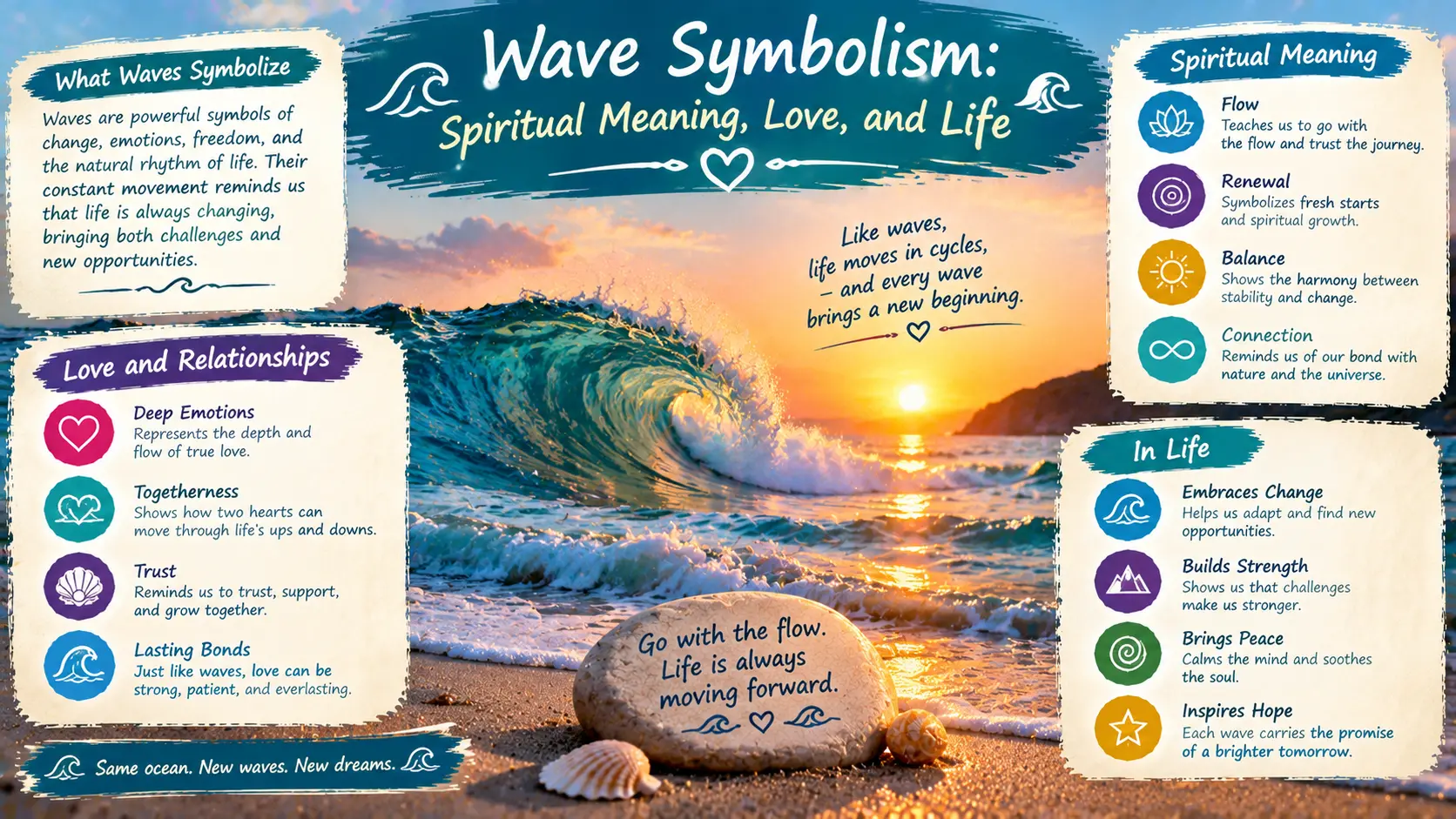
Waves are powerful symbols of change, emotions, freedom, resilience, and the natural rhythm of life. Their constant movement reminds us that life is always evolving, bringing peaceful moments, unexpected challenges, and opportunities for growth. Wave symbolism helps us understand how these natural movements reflect our feelings, relationships, and personal experiences.
Spiritually, waves often represent renewal, inner strength, and the ability to move forward through difficult times. Just as waves rise and fall, our emotions and circumstances change throughout life. They remind us that challenging moments are not permanent and that every new wave can represent a fresh beginning.
In dreams, art, literature, and spiritual traditions, waves carry different meanings depending on their size, movement, and surroundings. Gentle waves may symbolize peace and harmony, while powerful ocean waves can represent overwhelming emotions or major life transitions. Wave symbolism encourages us to embrace change, trust our growth, and find strength in life’s natural ups and downs.
What Does Wave Symbolism Mean?
Wave symbolism represents change, emotional depth, freedom, strength, and the continuous flow of life. Waves never remain in one place, reflecting how people grow, adapt, and move through different experiences. They remind us that life includes both calm periods and challenging transitions.
The meaning often depends on the waves themselves. Gentle waves may suggest peace, balance, and contentment, while rough waves can symbolize uncertainty, emotional struggles, or obstacles. At its heart, wave symbolism reminds us that change is natural and that we can learn to navigate life’s challenges with patience and courage.
Spiritual Meaning of Waves
Spiritually, waves symbolize renewal, transformation, inner peace, and the ongoing journey of personal growth. Their movement can serve as a reminder to release old worries, accept new possibilities, and remain open to life’s lessons. Like the ocean, our spiritual journey may include periods of stillness and moments of powerful change.
For many people, watching waves encourages mindfulness, reflection, and a deeper connection with nature. Waves can also represent the idea that difficult experiences may lead to greater understanding and appreciation. Although spiritual interpretations differ among individuals and cultures, waves offer a meaningful reminder to trust the process of growth and welcome each new chapter with an open heart.
Waves as Symbols of Change and Transformation
Waves are natural symbols of transformation because they constantly rise, move, and reshape the shoreline. Their changing patterns reflect the different stages of life, from new beginnings to unexpected challenges and eventual acceptance.
In everyday life, wave symbolism may represent leaving behind old habits, starting a new chapter, or adapting to circumstances beyond our control. A wave can remind us that progress does not always happen in a straight line.
Waves teach us that change is not necessarily something to fear. Even when a transition feels difficult, it can create opportunities for learning, resilience, and personal discovery.
Emotional Meaning of Waves
Waves often symbolize the changing nature of human emotions. Just as the sea can shift from peaceful to turbulent, people experience happiness, sadness, excitement, worry, and relief at different points in life. This symbolism reminds us that emotions naturally change and do not define our entire experience.
Gentle waves may represent emotional balance, comfort, and contentment, while stormy waves can reflect stress, confusion, or feelings that seem difficult to manage. These interpretations are personal rather than fixed rules.
Wave symbolism encourages us to acknowledge our feelings instead of suppressing them. Emotional strength does not mean staying calm all the time; it means learning to navigate difficult feelings with awareness, patience, and self-compassion.
Wave Symbolism in Love and Relationships
In love and relationships, waves symbolize emotional connection, changing feelings, passion, and the natural ups and downs of being together. Calm waves may represent trust, understanding, and harmony, while powerful waves can reflect disagreements, uncertainty, or challenges that require patience.
Waves also represent how relationships develop over time. Partners and friends may experience periods of closeness, distance, happiness, and growth. Through honest communication and mutual respect, they can learn to navigate these changes together.
The symbolism of waves in love reminds us that strong relationships are not always perfectly calm. Lasting connections grow through understanding, flexibility, forgiveness, and a willingness to face challenges as a team.
Waves and Personal Growth
Wave symbolism offers meaningful lessons for personal development and everyday life.
- Resilience: Waves represent the strength to keep moving forward during difficult times.
- Adaptability: Their constant movement symbolizes adjusting to new circumstances.
- Patience: Waves remind us that meaningful growth takes time.
- Self-Discovery: They represent exploring our feelings, values, and purpose.
- Letting Go: Waves symbolize releasing old worries and making room for new experiences.
- Confidence: Powerful waves can represent courage and inner strength.
- New Beginnings: Rising and breaking waves can symbolize fresh opportunities.
- Emotional Balance: Gentle waves remind us to seek peace amid life’s changes.
- Learning from Challenges: Rough waters can represent experiences that teach valuable lessons.
- Moving Forward: Waves symbolize continuing our journey even when the future feels uncertain.
The central lesson is to remain flexible without losing sight of who you are. Like the ocean, personal growth involves movement, adjustment, and the courage to begin again.
Ocean Waves Symbolism
Different types of waves can suggest different emotions and life experiences. Their symbolism often depends on the surrounding conditions and the observer’s personal interpretation.
| Type of Wave | Symbolic Meaning |
|---|---|
| Gentle waves | Peace, calmness, and harmony |
| Powerful waves | Strength, courage, and determination |
| Stormy waves | Emotional struggles and uncertainty |
| Crashing waves | Release, transformation, and major change |
| Endless waves | Continuity and life’s ongoing journey |
| Rising waves | New opportunities or growing challenges |
| Breaking waves | Letting go and embracing transitions |
| Blue ocean waves | Tranquility, clarity, and emotional balance |
| Dark ocean waves | Mystery, uncertainty, and hidden feelings |
| Small waves | Everyday joys and gentle changes |
The same wave can carry different meanings depending on the situation. For example, a crashing wave may represent an overwhelming challenge to one person but emotional release or freedom to another.
Wave Symbolism in Dreams
Dreams about waves may reflect emotions, recent experiences, personal concerns, or changes taking place in everyday life. Their meaning depends on the dream’s details and how the dreamer feels during the experience. Wave dreams should not be treated as definite predictions of the future. Instead, they can offer an opportunity for personal reflection.
Common interpretations include:
- Calm waves: May reflect peace, emotional stability, or a desire for balance.
- Big waves: Can represent major changes or situations that feel overwhelming.
- Stormy waves: May reflect stress, uncertainty, or unresolved emotions.
- Crashing waves: Can symbolize emotional release or a significant transition.
- Watching waves from shore: May suggest taking time to understand your feelings before acting.
- Swimming through waves: May represent facing challenges and developing confidence.
- Waves pulling you underwater: May reflect feeling overwhelmed by responsibilities or emotions.
When interpreting a wave dream, consider what is happening in your life and which feelings the dream brings to mind. Your personal experiences are often more useful than a universal dream interpretation.
Wave Symbolism in Art and Literature
In art and literature, waves express emotions and experiences that words alone may struggle to capture. Writers often use waves to represent inner conflict, changing circumstances, freedom, or the uncertainty of life. Artists use their shapes, colors, and movement to create feelings of peace, excitement, fear, or wonder.
A peaceful sea may symbolize harmony and hope, while a turbulent ocean can represent emotional conflict or an unpredictable future. Waves may also illustrate the relationship between people and the natural world, showing both its beauty and immense power.
Waves are enduring artistic symbols because they can represent both destruction and renewal. A breaking wave may signal the end of one stage of life while suggesting the possibility of a fresh beginning.
Cultural and Mythological Meanings of Waves
Across cultures and mythologies, oceans and waves have represented creation, mystery, danger, protection, and the power of nature. Their meanings vary according to cultural traditions, religious beliefs, and historical experiences.
In Greek mythology, the sea is closely associated with Poseidon, a deity connected with the ocean and earthquakes. Stories involving the sea often emphasize its immense power and the challenges faced by those who travel across it.
In Māori traditions, the ocean holds important cultural and spiritual significance, with meanings that differ among communities and traditions. In Japanese art, waves frequently express the beauty and force of nature. One famous example is The Great Wave off Kanagawa, which portrays the ocean as both magnificent and powerful.
These examples demonstrate that waves can inspire respect, reflection, and a sense of connection with nature. There is no single universal meaning of wave symbolism, and cultural interpretations should be understood within their specific contexts.
Conclusion: The Deeper Meaning of Waves
Wave symbolism represents change, emotional strength, freedom, resilience, and personal growth. The constant movement of waves reminds us that life includes both peaceful moments and unexpected challenges. Gentle waves symbolize harmony, while powerful waves can reflect courage, transformation, and the ability to overcome obstacles. Whether waves appear in nature, dreams, relationships, or art, they encourage us to accept change and remain open to new possibilities. Ultimately, waves remind us that life is a continuous journey, and every rise and fall can offer an opportunity to learn, grow, and begin again.
Frequently Asked Questions About Wave Symbolism
What does wave symbolism mean?
Wave symbolism represents change, emotions, freedom, strength, and the natural flow of life. It reminds us that experiences are constantly evolving and that challenges can create opportunities for growth.
What is the spiritual meaning of waves?
Spiritually, waves often symbolize renewal, transformation, inner peace, and personal growth. They can encourage people to release the past and approach new experiences with an open mind.
What do ocean waves symbolize?
Ocean waves commonly symbolize freedom, emotional depth, strength, mystery, and change. Their meaning depends on their movement, surroundings, and personal or cultural interpretations.
What do calm waves symbolize?
Calm waves often represent peace, harmony, emotional balance, and contentment. They may serve as a reminder to slow down and appreciate moments of stability.
What do big waves symbolize?
Big waves can represent powerful emotions, significant life changes, or challenges that seem overwhelming. They may also symbolize courage and the strength needed to face uncertainty.
What does wave symbolism mean in love?
In love, waves symbolize emotional connection, changing feelings, and relationship growth. They remind couples that patience, communication, and mutual understanding can help them navigate difficult periods.
What do waves symbolize in dreams?
Waves in dreams may reflect emotions, personal experiences, or changes in life. Calm water may suggest peace, while rough waves may reflect stress or uncertainty, depending on the dreamer’s circumstances.
What do crashing waves symbolize?
Crashing waves often symbolize emotional release, transformation, and major transitions. They may represent confronting difficult feelings, letting go of the past, or entering a new stage of life.
What do waves symbolize in art and literature?
In art and literature, waves often represent emotions, freedom, conflict, change, and the power of nature. Their movement helps artists and writers express the unpredictable nature of human experience.
Why are waves a symbol of personal growth?
Waves symbolize personal growth because their constant movement reflects life’s changing circumstances. They encourage adaptability, patience, resilience, and the willingness to keep moving forward.