WTM Meaning in Text: What Does WTM Stand For?
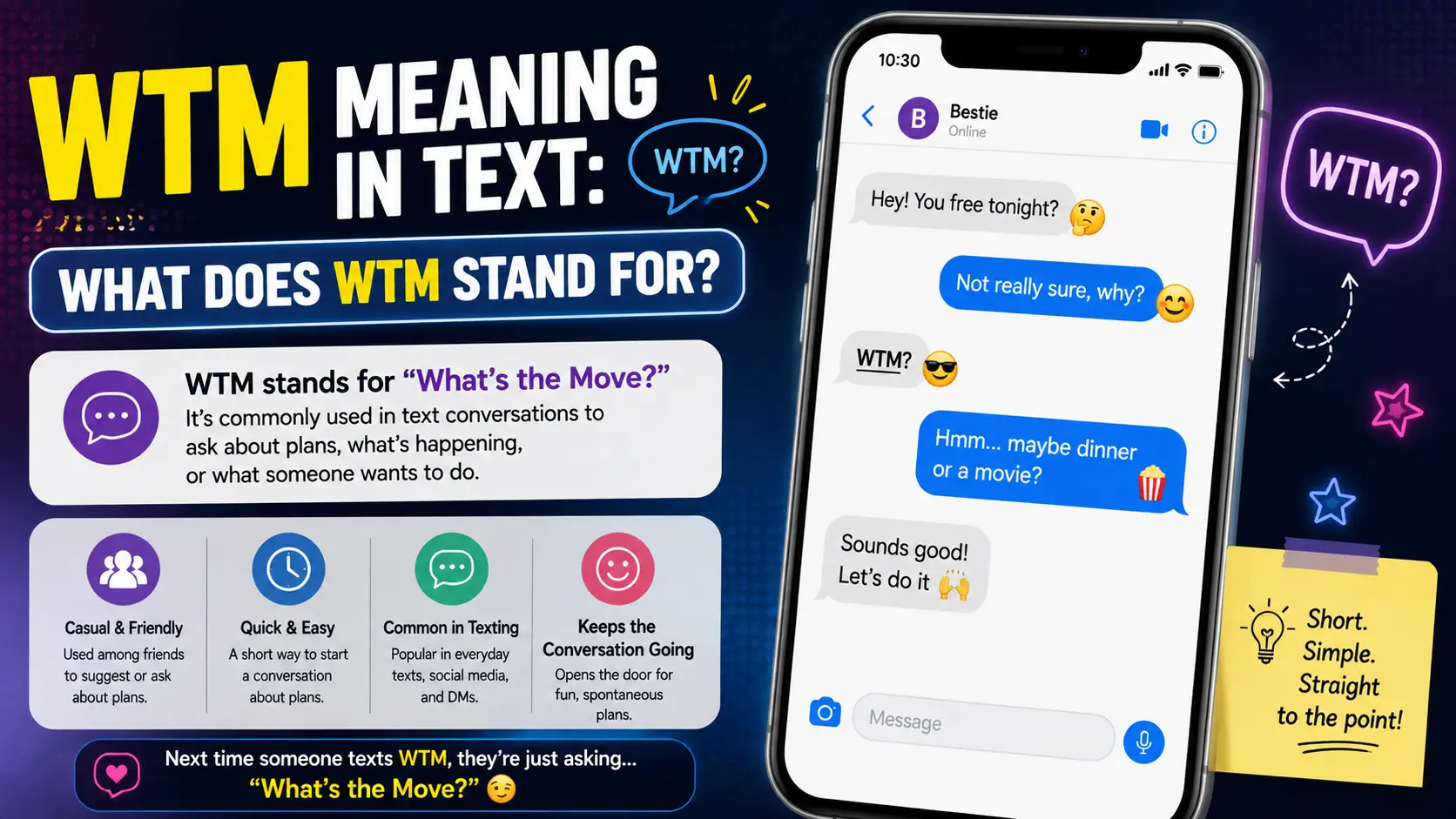
WTM most commonly means “What’s the move?” in text messages and casual online conversations. It is a short way to ask about plans, what is happening next, or what everyone should do.
For example, if a friend texts “WTM tonight?”, they are usually asking something like, “What are we doing tonight?” or “What’s the plan?”
The meaning is generally casual and social. However, abbreviations can have different meanings depending on the conversation, so context is important.
The Most Common Meaning of WTM
In modern American texting and slang, WTM most often stands for “What’s the move?” The phrase asks about the next plan, activity, destination, or decision.
It can be directed at one person or an entire group. Someone might use it when they want to make plans without sending a longer message.
Example:
“WTM after work?”
This could mean, “What’s the plan after work?” or “What are we doing after work?”
What “What’s the Move?” Means
“What’s the move?” is an informal expression that essentially means “What are we doing?”, “What’s the plan?”, or “What should we do next?”
The word “move” does not necessarily refer to physically moving somewhere. It can refer to a decision, activity, plan, or next step.
Because of this flexibility, WTM can work in many casual situations, from deciding where to eat to figuring out weekend plans.
Other Possible Meanings of WTM
Although “What’s the move?” is the most common slang interpretation, WTM can have other meanings in different contexts.
One possible interpretation is “What’s the matter?”, particularly when the surrounding conversation involves someone appearing upset or having a problem. In specialized environments, WTM can also represent unrelated phrases or abbreviations.
The safest approach is to look at the words surrounding WTM. If someone is discussing plans, “What’s the move?” is likely. If they are checking whether something is wrong, another interpretation may make more sense.
How Is WTM Used in Text Messages?
WTM is primarily used in informal digital communication. It works particularly well when people already understand each other’s conversational style.
It is common in one-to-one messages, group chats, social media conversations, and casual discussions where brevity is valued.
Common Texting Examples
Here are some natural examples:
- “WTM tonight?”
- “WTM this weekend?”
- “WTM after the game?”
- “Everyone’s here. WTM?”
- “WTM tomorrow?”
- “WTM for dinner?”
In each example, WTM invites the other person to suggest or discuss a plan.
Questions, Plans, and Invitations
WTM frequently appears when someone wants to start making plans.
Instead of writing, “What do you want to do tonight?” a person may simply send “WTM tonight?” This makes the message shorter while preserving the same basic idea.
It can also function as an informal invitation. A person may use WTM to signal that they are available and interested in doing something.
How Context Changes the Meaning
Context determines how WTM should be interpreted.
Consider:
“WTM after class?”
This almost certainly relates to plans. But:
“You seem upset. WTM?”
could potentially be interpreted differently depending on the conversation.
When an acronym has multiple possible meanings, the surrounding words, relationship between the people, and topic of conversation provide important clues.
What Does “What’s the Move?” Mean?
The phrase “What’s the move?” is an informal way of asking about the next action or plan.
It can communicate curiosity, availability, or a desire to participate. In many situations, the speaker is essentially saying, “I’m interested—what are we doing?”
The Phrase Behind WTM
“What’s the move?” uses “move” in the broader sense of an action or decision. Similar expressions include “What’s the plan?” and “What are we doing?”
The phrase became particularly useful in casual conversations because it is short, flexible, and easy to adapt to different situations.
How It Became a Texting Acronym
Digital communication encouraged people to shorten frequently used expressions. Instead of typing the complete phrase, texters can reduce it to its initial letters: W-T-M.
Like many texting abbreviations, its popularity depends on familiarity. People who regularly use internet slang may understand WTM immediately, while someone unfamiliar with the acronym may need clarification.
WTM Meaning in American Slang
In American slang, WTM generally has a casual, social, and conversational character.
It is not normally used as formal English. Instead, it belongs to the kind of abbreviated language commonly found in texts, direct messages, comments, and group conversations.
Casual and Social Conversations
WTM works particularly well between friends and acquaintances.
Someone might write:
“WTM Friday?”
The message can communicate both interest and availability without sounding overly formal.
Making Plans With Friends
One of the most common purposes of WTM is planning social activities.
It can be used to discuss restaurants, parties, entertainment, trips, sports, or simply hanging out.
The acronym leaves the details open, allowing the recipient to suggest an idea.
Expressing Openness or Curiosity
WTM can also communicate that someone is open to suggestions.
Rather than proposing a specific activity, the sender gives the other person an opportunity to choose. This makes WTM useful when nobody has decided on a plan yet.
What Tone Does WTM Have?
WTM generally has a relaxed tone, but its exact feeling depends on punctuation, timing, and the relationship between the people communicating.
Friendly and Casual Tone
Between friends, WTM usually sounds natural and informal.
For example:
“WTM tonight 😂”
The message can feel friendly, spontaneous, and conversational.
Playful or Excited Use
WTM can sometimes express enthusiasm about doing something.
A person who has just finished work, arrived in town, or joined a group chat might use it to ask what is happening next.
The surrounding emojis, punctuation, and conversation can make the message feel more energetic or playful.
When WTM Can Sound Impatient
WTM is not inherently rude, but repetition or timing can change its tone.
If someone repeatedly sends “WTM?” without receiving an answer, it could sound impatient or demanding. Likewise, using it in a serious conversation may seem too casual.
Tone is therefore determined by more than the acronym itself.
WTM Examples in Text Conversations
Seeing WTM in realistic conversations makes its meaning easier to understand.
WTM for Making Plans
Person A: “You free tonight?”
Person B: “Yeah.”
Person A: “WTM?”
Here, WTM means “What’s the move?” or “What should we do?”
WTM for Asking What’s Happening
Person A: “Everyone is meeting downtown.”
Person B: “WTM?”
The speaker is asking about the plan or next step.
WTM in Group Chats
WTM can be especially useful in group chats because one short message can ask everyone about their plans.
For example:
“WTM Saturday?”
A group can then respond with suggestions, locations, or times.
WTM on Social Media
On social platforms, WTM may appear in comments, captions, replies, and direct messages.
Its meaning generally remains connected to plans, activities, or what happens next, although the surrounding conversation should always be considered.
WTM vs Similar Texting Acronyms
WTM is sometimes confused with other short expressions because many texting acronyms begin with similar letters.
WTM vs WYA
WYA usually means “Where you at?” It asks about someone’s location.
WTM, by contrast, generally asks about a plan or activity.
For example:
- “WYA?” = Where are you?
- “WTM?” = What’s the plan?
WTM vs WYD
WYD usually means “What are you doing?”
WTM and WYD can overlap, but their emphasis differs.
WYD is commonly about what someone is currently doing, while WTM is more likely to ask about a plan or what should happen next.
WTM vs WBU
WBU usually means “What about you?”
It is generally used to return a question or ask for the other person’s perspective.
WTM is more specifically associated with plans or actions.
WTM vs LMK
LMK means “Let me know.”
It is often used when someone wants another person to provide information later.
WTM is a question about what the plan or next action is.
WTM Meaning on Social Media
WTM can appear across social media because short-form communication is common on these platforms.
WTM on TikTok and Instagram
On visual social platforms, WTM may appear in comments, captions, replies, or private messages.
For example, someone might comment “WTM?” when asking friends or followers what they are doing or whether there is a plan.
WTM in Snapchat and Group Chats
Fast-moving messaging environments are particularly suited to abbreviations.
WTM allows users to ask about plans without writing a complete sentence, especially when the conversation is already informal.
WTM as a Social Invitation
Depending on the context, WTM can subtly communicate:
“I’m available—what are we doing?”
That makes it more than a simple question. It can also signal interest in participating in whatever activity is being discussed.
Who Uses WTM?
WTM is not limited to one specific age group, although familiarity with texting abbreviations varies between individuals.
Younger Generations
Younger users who frequently communicate through texting, messaging apps, and social media may recognize WTM quickly.
They are generally more accustomed to initialisms and shortened expressions in digital communication.
Adults and Casual Texters
Adults can use WTM too, especially in conversations with friends, family members, coworkers they know well, or other people who communicate casually.
Its use is determined more by communication style and context than by age alone.
Why Acronyms Spread Across Age Groups
Once an abbreviation becomes familiar, it can move beyond the group that originally popularized it.
People often learn slang from friends, social media, entertainment, and everyday online communication. As a result, acronyms can become recognizable across different generations.
Can WTM Have Different Meanings?
Yes. Although “What’s the move?” is the common slang interpretation, WTM can represent different phrases in different contexts.
“What’s the Matter?”
In some conversations, WTM may be interpreted as “What’s the matter?”
For example, if someone suddenly seems upset, a message containing WTM could potentially be asking whether something is wrong.
However, this is less likely when the conversation clearly concerns plans.
Context-Dependent Interpretations
Acronyms do not always have one universal meaning.
The topic, previous messages, punctuation, and relationship between the speakers can all influence interpretation.
When someone says WTM after discussing weekend activities, “What’s the move?” is the natural reading.
How to Identify the Intended Meaning
Ask yourself:
- Is the conversation about plans?
- Is someone asking what happens next?
- Does the surrounding message suggest a problem?
- Does the sender commonly use slang abbreviations?
These clues can usually reveal the intended meaning.
Common WTM Misunderstandings
Because WTM can have more than one interpretation, misunderstandings occasionally happen.
Confusing WTM With Other Acronyms
People unfamiliar with texting slang may confuse WTM with other three-letter abbreviations.
The best way to avoid this is to interpret the acronym alongside the entire message rather than treating it as an isolated word.
Misreading the Tone
WTM normally sounds casual, but it does not automatically indicate friendliness, excitement, or impatience.
For example, “WTM?” and “WTM!!!” can create different impressions because punctuation affects the perceived tone.
How to Respond When the Meaning Is Unclear
If you are unsure what someone means, asking directly is usually the simplest solution.
You can say:
“Do you mean what’s the plan?”
This avoids guessing and gives the other person an opportunity to clarify.
Has WTM Meaning Changed Over Time?
The basic idea behind WTM is connected to the informal phrase “What’s the move?”, while its abbreviated form fits naturally into modern digital communication.
From Spoken Slang to Texting
“What’s the move?” can be used as spoken informal language, particularly when people are deciding what to do.
Texting simply provides an environment where shortening the phrase to WTM is convenient.
The Rise of Short-Form Digital Language
Messaging platforms have encouraged concise communication. Acronyms save typing time and can become recognizable shorthand within online communities.
WTM fits this broader pattern of transforming familiar spoken expressions into compact digital forms.
WTM Usage in 2026
In 2026, WTM remains understandable in casual slang contexts, particularly when the conversation involves plans or social activities.
However, slang changes quickly, and not every person will recognize every abbreviation. Context remains more important than assuming universal familiarity.
WTM Meaning Across Different Contexts
| Context | Likely Meaning | Typical Use |
|---|---|---|
| Text messages | What’s the move? | Making plans |
| Group chats | What’s the move? | Asking about plans |
| Social media | What’s the move? | Starting a casual conversation |
| Casual speech | What’s the move? | Asking what happens next |
| Serious conversations | Context-dependent | May require clarification |
| Workplace | Usually too informal | Better replaced with clear wording |
Is WTM Appropriate in Professional Messages?
WTM is generally not the best choice for formal or professional communication.
Professional messages benefit from clear wording, especially when communicating with clients, managers, customers, or people you do not know well.
Workplace Communication
Instead of:
“WTM tomorrow?”
a professional message could say:
“What is the plan for tomorrow?”
This version is clearer and avoids requiring the recipient to understand slang.
When Casual Acronyms May Be Acceptable
There are exceptions. If coworkers have an established informal communication style, WTM may be understood in a casual internal conversation.
Even then, clarity should come first. If there is any possibility of confusion, writing the full phrase is safer.
Better Alternatives to WTM
Depending on the situation, alternatives include:
- What’s the plan?
- What are we doing?
- What’s next?
- What should we do?
- Do we have a plan yet?
These expressions work across a wider range of situations.
See Also: What Does It Mean When Your Finger Itches Spiritually?
How Should You Respond to WTM?
Your response depends on what the sender is asking and whether you already have a plan.
Casual Responses
If you have an idea, you can respond directly:
“Let’s grab dinner.”
Or:
“Not sure yet. You have any ideas?”
When Someone Is Asking About Plans
If plans are already established, simply provide the details.
For example:
“We’re meeting downtown at 8.”
This answers the question without needing to discuss the acronym itself.
When You Are Unsure What They Mean
If the context does not make the meaning obvious, ask for clarification.
A quick response such as “What do you mean by WTM?” can prevent unnecessary confusion.
Frequently Asked Questions About WTM
What does WTM usually mean in texting?
WTM most commonly means “What’s the move?” in casual texting. It is generally used to ask about plans, activities, or what should happen next.
What does WTM stand for in slang?
In slang, WTM usually stands for “What’s the move?” It is an informal expression commonly associated with social plans and casual conversations.
Can WTM mean “What’s the matter?”
Yes, WTM can potentially mean “What’s the matter?” in some contexts, but this is less common than “What’s the move?” when WTM is used as modern texting slang.
Is WTM rude or aggressive?
WTM is not inherently rude or aggressive. It is usually casual. However, punctuation, timing, and the relationship between the people can affect how the message feels.
Is WTM used by adults?
Yes. Adults can use WTM, particularly in informal conversations. Its use is not restricted to teenagers or younger people.
Is WTM still popular in 2026?
WTM remains recognizable in casual digital communication in 2026, particularly when discussing plans. Like other slang, its popularity can vary between communities and individuals.
What should I reply when someone texts WTM?
If they mean “What’s the move?”, you can tell them your plan, suggest an activity, or ask what they would like to do. For example, “Want to grab food?” is a natural response.
Conclusion
WTM most commonly means “What’s the move?” in texting and American slang. It is a casual way to ask about plans, activities, or the next thing that should happen.
Although WTM can have other interpretations, the surrounding conversation usually makes the intended meaning clear. It is best suited to texts, group chats, social media, and other informal communication, rather than formal workplace writing.