Symbolism of Snake: Spiritual Meaning, Cultural Power, and Psychological Depth
Few creatures have inspired as much fear, fascination, reverence, and symbolism as the snake. Across continents and millennia, the serpent has represented both life and death, danger and healing, temptation and divine wisdom. From the sacred cobra crowns of ancient pharaohs to the serpent in the Garden of Eden, from Jungian archetypes to modern snake tattoos, the snake remains one of humanity’s most powerful and complex symbols.
This article explores the symbolism of the snake through spiritual traditions, ancient civilizations, psychology, biology, dream interpretation, and modern culture, offering a comprehensive, analytical, and authoritative perspective.
What Does a Snake Symbolize? (Clear Definition for Featured Snippets)
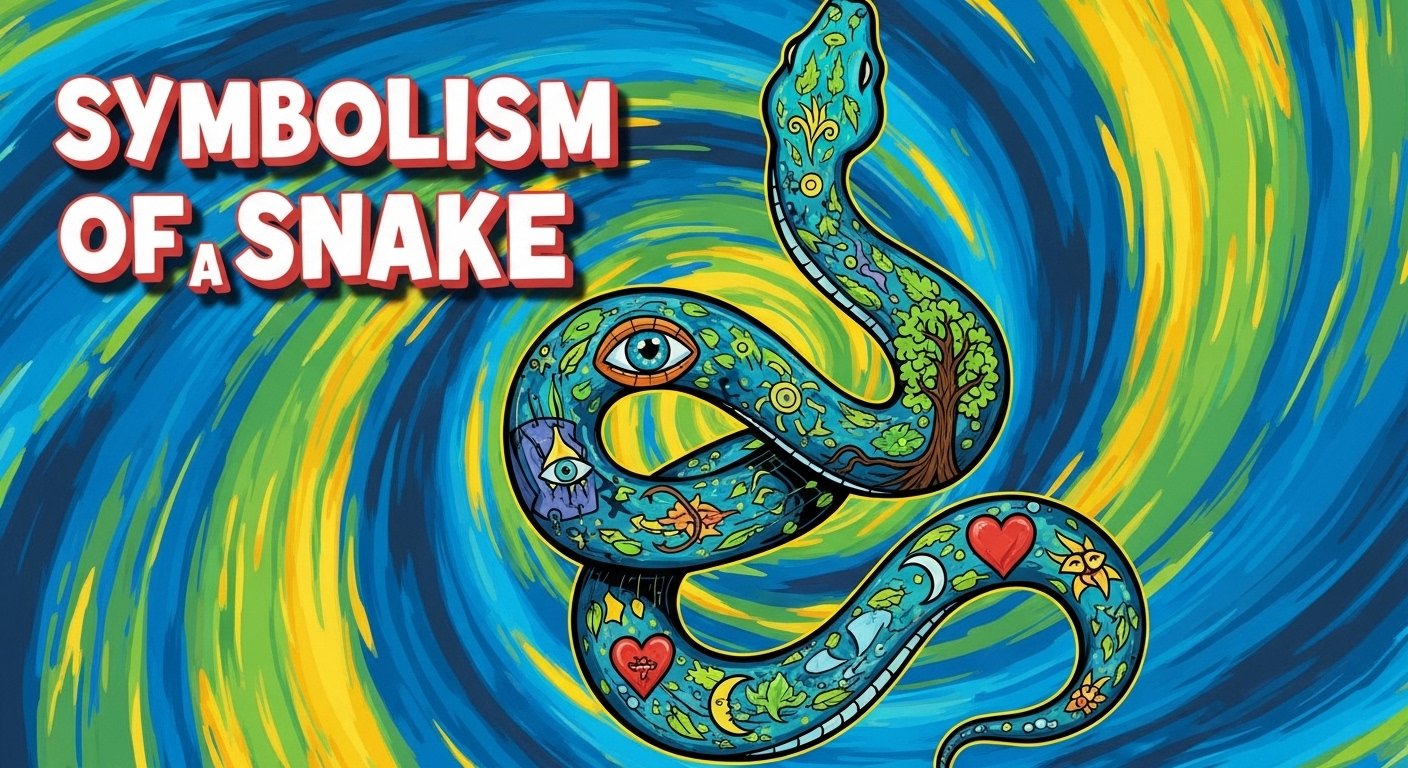
A snake symbolizes transformation, rebirth, healing, wisdom, temptation, sexual energy, and the cyclical nature of life. Because snakes shed their skin and move between hidden and visible worlds, they represent renewal, hidden knowledge, mortality, and spiritual awakening across cultures and religions.
Core symbolic meanings of the snake:
- Transformation
- Rebirth
- Temptation
- Healing
- Wisdom
- Death & renewal
- Sexual energy
Why Snakes? The Biological Traits That Shaped Their Symbolism
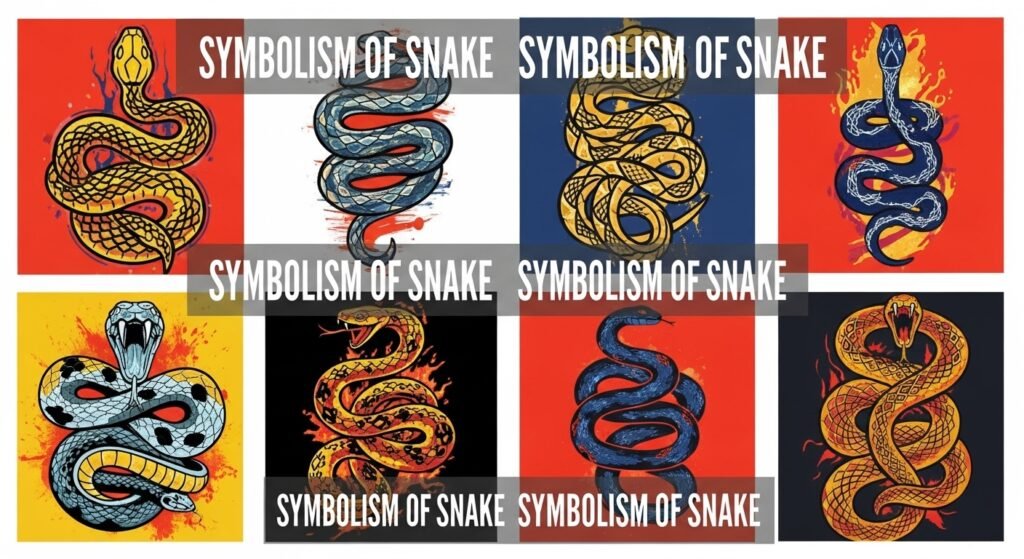
Symbolism rarely emerges randomly. Human interpretations of snakes are deeply rooted in observable biological traits. Understanding these traits helps explain why this reptile became such a powerful archetype.
Related Post: Horses Symbolism
Shedding Skin and the Archetype of Rebirth
One of the most striking features of snakes is ecdysis—the shedding of their skin. Unlike mammals, snakes periodically discard their outer layer, emerging visibly renewed.
This biological process naturally gave rise to symbolism associated with:
- Rebirth
- Renewal
- Immortality
- Transformation
Ancient cultures viewed this shedding as a literal representation of life after death or spiritual evolution. The circular serpent symbol known as the Ouroboros, a snake eating its own tail, embodies eternal renewal and cyclical time.
Venom: Destruction and Medicine
Snake venom is paradoxical. It can kill—but it can also heal.
Modern medicine has derived treatments from snake venom for:
- Blood pressure regulation
- Anticoagulants
- Pain management
This duality explains why snakes symbolize both danger and healing. The medical emblem known as the Rod of Asclepius—a serpent wrapped around a staff—originates from ancient healing traditions.
Silent Movement and Hidden Power
Snakes move silently and close to the ground. Their lack of limbs enhances their mysterious presence.
Symbolically, this led to associations with:
- Subtle influence
- Hidden knowledge
- Stealth
- Intuition
- The subconscious
Their ability to appear suddenly reinforces their role as symbols of the unknown or the unconscious.
The Snake’s Life Cycle Explained Scientifically
Snakes are reptiles belonging to the suborder Serpentes. They:
- Hatch from eggs (most species)
- Undergo growth cycles requiring shedding
- Can live from 10 to over 30 years depending on species
- Occupy nearly every continent except Antarctica
Their adaptability across deserts, forests, water, and underground habitats reinforces their symbolism as creatures bridging multiple realms—earth, water, and symbolic underworlds.
See Also: Vampire Symbolism Meaning
Ancient Civilizations and the Sacred Serpent
Across civilizations, snakes were rarely seen as “just animals.” They were sacred, divine, or cosmic forces.
Serpents in Ancient Egypt: Wadjet and the Uraeus
In Ancient Egypt, the cobra goddess Wadjet symbolized protection and royal authority. The upright cobra, known as the Uraeus, adorned pharaohs’ crowns.
Here, the snake represented:
- Divine protection
- Sovereignty
- Fire and destructive power
- Spiritual authority
Unlike later Christian interpretations, the serpent in Egypt was largely positive and protective.
Greek Mythology: Asclepius, Medusa, and the Ouroboros
In Ancient Greece, snakes were associated with healing and prophecy.
- Asclepius carried a serpent-entwined staff.
- Medusa had snakes for hair, symbolizing dangerous feminine power.
- The Ouroboros emerged as a philosophical emblem of infinity.
Greek symbolism emphasized duality: healing and danger coexisted.
Hinduism and Kundalini Energy
In Hinduism, snakes are deeply sacred. The cosmic serpent Shesha supports the universe.
The concept of Kundalini describes dormant spiritual energy coiled like a serpent at the base of the spine. When awakened, it rises through chakras, symbolizing enlightenment.
Here, the snake represents:
- Spiritual awakening
- Divine energy
- Cosmic power
The Chinese Zodiac and the Snake Archetype
In the Chinese zodiac, the Snake is one of the twelve animals.
People born in the Year of the Snake are said to be:
- Intelligent
- Strategic
- Intuitive
- Elegant
The snake here symbolizes wisdom and calculated power.
Mesoamerican Feathered Serpents: Quetzalcoatl
In Mesoamerican cultures, the feathered serpent Quetzalcoatl combined sky and earth symbolism.
This deity represented:
- Creation
- Knowledge
- Civilization
- Wind and life force
The serpent was not evil—but civilizing and divine.
Native American Serpent Spirits and Earth Power
Many Native Americans traditions viewed snakes as earth spirits.
Symbolism included:
- Fertility
- Rain
- Earth energy
- Protection
The serpent often functioned as a guardian of sacred knowledge.
European Folklore: Dragons, Basilisks, and Pagan Symbolism
In European lore, serpents evolved into dragons and mythical beasts.
The Basilisk represented lethal gaze and corruption.
Yet pre-Christian pagan traditions often associated serpents with:
- Fertility
- Nature
- Seasonal cycles
Christian influence later reshaped serpent symbolism toward moral duality.
Read Also: Hawk Symbolism Spirituality
Snake Symbolism in the Bible: Temptation, Wisdom, and Redemption
The Serpent in Genesis (Garden of Eden)
In the Book of Genesis, the serpent tempts Eve to eat forbidden fruit.
This narrative shaped Western symbolism of the snake as:
- Temptation
- Deception
- Moral testing
However, the serpent also introduces knowledge—suggesting complexity beyond simple evil.
Moses and the Bronze Serpent
In the Book of Numbers, Moses raises a bronze serpent to heal Israelites bitten by snakes.
Here, the serpent becomes a symbol of:
- Healing
- Divine intervention
- Redemption
New Testament Symbolism
In the New Testament, Jesus advises followers to be “wise as serpents.”
Wisdom—not evil—is emphasized.
Is the Snake Evil in Christianity? Analytical Perspective
Christian symbolism is paradoxical. The serpent represents:
- Sin
- Knowledge
- Wisdom
- Healing
Thus, the snake is not purely evil—it symbolizes moral complexity.
Spiritual Meaning of the Snake Across Belief Systems
Across traditions, the snake represents:
- Transformation and awakening
- Death of ego
- Kundalini rising
- Healing energy
- Protection
- Cycles of time
The serpent’s circular symbolism reflects the eternal cycle of birth, death, and rebirth.
Snake as a Spirit Animal or Totem
Core Traits of Snake People
Those who identify with snake energy are often:
- Intuitive
- Emotionally perceptive
- Strategic
- Transformational
When the Snake Appears in Your Life
Spiritually, a snake may symbolize:
- Upcoming transformation
- Shedding old patterns
- Awakening hidden potential
Shadow Aspects of the Snake Totem
Negative traits may include:
- Manipulation
- Secrecy
- Emotional coldness
Integration requires balance.
Psychological Meaning of the Snake (Jungian Interpretation)
Snake as an Archetype of the Unconscious
Psychologist Carl Jung identified the snake as a universal archetype representing the unconscious.
Snakes emerge from darkness—just as unconscious material emerges into awareness.
Sexual Energy and Libido Symbolism
Freudian interpretations link snakes to phallic symbolism and libido.
Fear Projection and Shadow Self
Humans evolved to fear snakes. This biological fear amplifies symbolic meaning, projecting inner anxieties outward.
The Ouroboros in Analytical Psychology
Jung saw the Ouroboros as representing psychic wholeness—unity of conscious and unconscious.
Is Seeing a Snake a Good or Bad Omen?
Interpretation depends on context.
| Context | Cultural View | Possible Meaning |
|---|---|---|
| Spiritual awakening | Eastern traditions | Positive transformation |
| Biblical lens | Western Christianity | Temptation or testing |
| Personal growth phase | Psychological | Shadow integration |
| Sudden fear reaction | Biological | Instinctual alertness |
Meaning is situational, not absolute.
Snake Symbolism in Dreams: Scenario-Based Interpretations
Being Bitten by a Snake
May symbolize emotional pain, betrayal, or sudden awakening.
Killing a Snake
Overcoming fear or defeating internal struggles.
Multiple Snakes
Overwhelming anxiety or transformation in multiple life areas.
Friendly Snake
Healing energy or intuitive guidance.
Snake in Water
Emotions rising from the unconscious.
Dead Snake
End of a toxic situation.
Symbolism of Snakes by Color
| Color | Core Meaning | Emotional Tone |
|---|---|---|
| Black snake | Mystery, shadow | Fear, depth |
| White snake | Purity, spiritual awakening | Clarity |
| Green snake | Growth, healing | Renewal |
| Red snake | Passion, danger | Intensity |
| Golden snake | Divine wisdom | Enlightenment |
Snake Tattoos and Their Deeper Meanings
Ouroboros Tattoo
Represents eternity and cyclical life.
Coiled Snake Tattoo
Power held in reserve.
Snake and Rose
Love and temptation intertwined.
Snake and Dagger
Conflict, betrayal, survival.
Minimalist Snake Design
Personal transformation and subtle strength.
Culturally, meanings may differ, but personally they often symbolize rebirth and resilience.
Snake Symbolism in Love and Relationships
The snake embodies:
- Seduction
- Passion
- Emotional intensity
- Betrayal
- Deep transformation
In tantric traditions, serpent energy aligns with sexual vitality and intimate awakening.
Comparative Symbolism Table: Snake Across Cultures
| Culture | Core Meaning | Positive Aspect | Negative Aspect | Associated Deity/Concept |
|---|---|---|---|---|
| Ancient Egypt | Protection | Royal power | Destruction | Wadjet |
| Greece | Healing | Medicine | Danger | Asclepius |
| Hinduism | Spiritual energy | Enlightenment | Destruction | Kundalini |
| Christianity | Temptation | Wisdom | Sin | Genesis serpent |
| Mesoamerica | Creation | Civilization | Chaos | Quetzalcoatl |
Philosophical Lessons from the Snake Archetype
- Embrace change
- Use silence wisely
- Accept cyclical life patterns
- Integrate your shadow
The snake teaches that growth requires shedding old identities.
Frequently Asked Questions (FAQ Schema-Ready)
What does a snake symbolize spiritually?
Spiritually, a snake symbolizes transformation, rebirth, awakening, healing energy, and the cyclical nature of life.
Is the snake a good or bad symbol?
The snake is both positive and negative depending on cultural, religious, and psychological context.
What does it mean to dream of snakes?
Snake dreams often symbolize hidden fears, transformation, healing, or emotional awakening.
What is the biblical meaning of a snake?
Biblically, the snake represents temptation, wisdom, testing, and sometimes healing.
What does a snake tattoo symbolize?
Snake tattoos typically represent transformation, resilience, protection, or eternal cycles.
Is snake symbolism connected to Kundalini energy?
Yes. In Hindu philosophy, Kundalini is depicted as a coiled serpent representing dormant spiritual energy.
What does the Ouroboros represent?
The Ouroboros symbolizes eternity, self-renewal, and the infinite cycle of life and death.
Conclusion: The Serpent as a Universal Archetype of Transformation
The symbolism of the snake emerges from biology, mythology, psychology, and spirituality. Its ability to shed skin shaped associations with rebirth. Its venom inspired both fear and healing symbolism. Ancient civilizations revered it as divine power. The Bible cast it as tempter and healer. Jung recognized it as a deep unconscious archetype.
The snake endures because it mirrors the human condition—complex, dual, transformative.
In the end, the serpent is neither purely good nor purely evil. It is a symbol of change itself.
You have not enough Humanizer words left. Upgrade your Surfer plan.