Storm Symbolism: Meaning, History, and Modern Use
Quick Answer
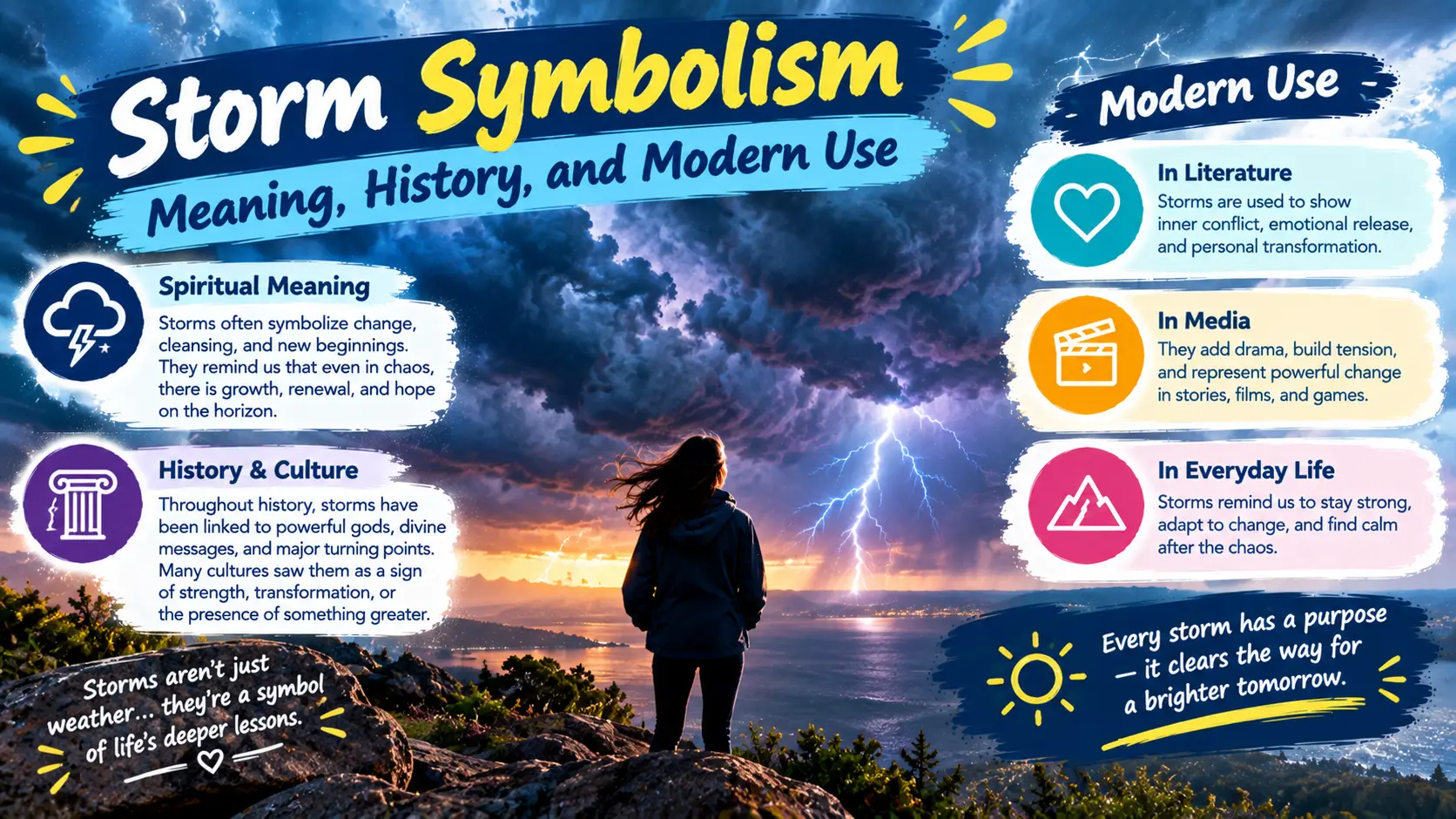
Storm symbolism represents power, change, conflict, emotional intensity, cleansing, and transformation. Across cultures and historical periods, storms have been viewed as powerful natural events that can destroy, refresh, challenge, or completely change the landscape. Their meaning often depends on the context in which a storm appears.
A storm can symbolize inner emotional turmoil, a difficult life transition, spiritual testing, or the release of something that has been building for a long time. At the same time, the storm can represent resilience because difficult weather eventually passes, leaving behind clearer skies and a changed environment.
TL;DR
Storms commonly symbolize change, strength, conflict, cleansing, uncertainty, and renewal. In spiritual and cultural traditions, thunder and storms have often been associated with powerful natural or divine forces.
In dreams, art, literature, tattoos, and everyday language, storms can represent emotional pressure or a major turning point. A storm does not automatically have a negative meaning. It may also symbolize personal growth, release, transformation, and the possibility of a fresh beginning.
What Does Storm Symbolism Mean?
A storm is one of nature’s most dramatic symbols because it combines several forces at once. Dark clouds, strong winds, thunder, lightning, and rain create an image of movement and uncertainty. For this reason, storms frequently represent situations that feel powerful or difficult to control.
The Core Meaning of a Storm
At its simplest, a storm can symbolize power and disruption. Something stable may suddenly become unpredictable, forcing people to react rather than continue with their normal routines.
Symbolically, this can represent a period when life changes unexpectedly. A storm may therefore reflect uncertainty, challenges, major decisions, or circumstances that require patience and adaptability.
Storms as Power and Transformation
Storms demonstrate how quickly nature can transform a familiar environment. A clear sky can become dark, winds can reshape landscapes, and heavy rain can change rivers and fields.
Because of this dramatic transformation, storms often symbolize personal transformation. They can represent a stage of life when old patterns are being disrupted so that something new can emerge.
Storms as Conflict and Emotional Turmoil
Storm imagery is frequently connected with emotional intensity. A person experiencing anger, grief, anxiety, frustration, or confusion may describe their inner experience as a storm.
The metaphor works because emotional turmoil can feel unpredictable and overwhelming. The storm becomes an image for feelings that are difficult to organize or express.
Storms as Cleansing and Renewal
Rain can wash away dust and nourish the ground, making storms a symbol of cleansing and renewal. Although severe weather can cause damage, rainfall can also support new growth.
This dual nature explains why storms can represent the end of one phase and the beginning of another. Symbolically, something difficult may create the conditions for a fresh start.
What a Storm Symbol Looks Like
Storm symbolism is often represented through visual elements associated with dramatic weather.
Dark Clouds and Changing Skies
Dark clouds are among the most recognizable storm symbols. They can represent uncertainty, mystery, approaching change, or emotions that have not yet been expressed.
A clearing sky can carry the opposite meaning, suggesting relief, hope, understanding, and the conclusion of a difficult period.
Thunder, Lightning, Wind, and Rain
Each storm element can add another layer of meaning.
Thunder can symbolize power, warning, authority, or a message that demands attention. Lightning is often associated with sudden insight, revelation, energy, or dramatic change. Wind can symbolize movement and forces beyond personal control, while rain may represent cleansing, emotion, fertility, or renewal.
Calm Before and After a Storm
The calm before a storm can symbolize anticipation and uncertainty. It may represent a situation in which something significant is about to happen.
The calm after a storm has a different emotional quality. It often represents relief, recovery, clarity, and renewal. This is why the phrase “calm after the storm” has become such a powerful metaphor for overcoming hardship.
Storm Symbolism Compared With Lightning and Rain
Storm, lightning, and rain are related symbols, but they do not always communicate exactly the same idea.
Storm vs. Lightning Symbolism
A storm usually represents a larger period of disruption or transformation, while lightning often represents a sudden event.
Lightning can symbolize a flash of understanding, unexpected news, inspiration, danger, or rapid change. A storm has a broader meaning because it includes multiple forces working together.
Storm vs. Rain Symbolism
Rain is often more closely connected with renewal, nourishment, emotion, cleansing, and growth.
Storms can include rain, but their symbolism is more intense. A gentle rain may suggest peace and restoration, whereas a powerful storm may represent conflict, upheaval, or a major transition.
How the Symbols Work Together
When storm, lightning, and rain appear together, they can create a complete symbolic story. The storm represents the challenge, lightning represents the sudden realization or turning point, and rain represents cleansing or renewal.
This combination is especially common in visual art and storytelling because it naturally communicates struggle followed by transformation.
See Also: Snapdragon Symbolism: Spiritual Meaning, History & Culture
What Storms Commonly Symbolize in the United States
Storms have a strong presence in American culture because severe weather is part of everyday life in many regions of the country.
Storms in American Culture
From hurricanes and tornadoes to thunderstorms and winter storms, Americans often encounter weather that can interrupt normal life. As a result, storm imagery is commonly associated with preparation, uncertainty, survival, and recovery.
Storm symbolism can therefore have a practical meaning alongside its spiritual or artistic meanings.
Weather, Resilience, and Survival
Communities affected by severe weather often emphasize preparation and rebuilding. This has contributed to the broader symbolic connection between storms and resilience.
A storm may damage homes or landscapes, but recovery can demonstrate human determination and community support.
Storms as Metaphors for Life Challenges
In American English, storms are frequently used metaphorically to describe difficult periods. Someone may speak about “weathering the storm” when discussing financial pressure, relationship difficulties, career challenges, or personal struggles.
The metaphor suggests that hardship is temporary and that endurance can help a person reach a calmer period.
Ancient Roots and Storm Gods
Long before modern meteorology explained thunderstorms and atmospheric systems, storms were often interpreted through mythology and religion.
Storm Deities in Ancient Civilizations
Many ancient societies associated thunder, lightning, rain, and storms with powerful supernatural beings. Storm gods frequently appeared as figures connected with authority, fertility, warfare, or protection.
These traditions reflected the enormous importance of weather to agricultural societies. Rain could support crops, while destructive storms could threaten entire communities.
Thunder and Divine Power
Thunder was particularly striking because its sound could be heard across great distances without an obvious visible source.
As a result, thunder was often interpreted as a sign of extraordinary power. In mythology, it could represent divine speech, authority, warning, or judgment.
Storms as Forces of Nature
Ancient storm symbolism was not limited to fear. Storms were also essential natural processes.
Rain supported crops, rivers, forests, and ecosystems. This created a complicated symbolic relationship in which storms could represent both danger and life-giving power.
Storm Symbolism Across Cultures
Storm symbolism differs from one culture to another, but several themes appear repeatedly.
Ancient Greek and Roman Traditions
In ancient Greek and Roman mythology, thunder and lightning were closely associated with the authority of the sky god Zeus or Jupiter.
These associations connected storms with power, authority, divine presence, and judgment. The imagery became influential in Western literature and art.
Norse Traditions
Norse mythology associated thunder with Thor, a powerful deity whose hammer was connected with thunder and protection.
The tradition helped establish a long-lasting cultural association between thunder and strength, protection, courage, and supernatural power.
Ancient Near Eastern Traditions
Storm deities were important in several ancient Near Eastern traditions. Weather could be associated with fertility because rainfall was essential for agriculture.
Storm imagery could therefore combine power, fertility, kingship, and natural authority.
Asian Cultural Interpretations
Across Asia, thunder, rain, clouds, and storms have appeared in diverse religious and cultural traditions. Dragons, deities, spirits, and other symbolic figures have sometimes been connected with rain and weather.
Interpretations vary considerably between cultures, so storm symbolism should not be treated as having one universal meaning.
African and Other Global Traditions
Many African and other global traditions contain cultural interpretations of thunder, rain, wind, and storms. These meanings can involve spiritual power, ancestors, seasonal cycles, fertility, protection, or warnings.
Because traditions differ between communities, it is important to understand storm symbolism within its specific cultural context rather than combining unrelated beliefs.
Storms in Religious Symbolism
Storms have played an important role in religious imagination because they demonstrate forces that humans cannot easily control.
Storms in Christianity and the Bible
Storms appear in several biblical narratives and are sometimes connected with divine power, danger, testing, and deliverance.
One well-known New Testament account describes Jesus and his disciples encountering a storm while traveling by boat. The story has traditionally been interpreted in connection with faith, fear, trust, and divine authority.
Storms as Divine Power and Judgment
Biblical storm imagery can also communicate the overwhelming power of God. Thunder, clouds, wind, and lightning may appear in descriptions of divine manifestations.
These passages should be understood according to their literary and theological contexts rather than treating every modern storm as a direct spiritual message.
Storms as Tests of Faith and Protection
The storm can also function as a metaphor for periods when faith is challenged. The symbolic lesson may focus on remaining grounded during uncertainty.
For many readers, the storm becomes an image of fear followed by trust, difficulty followed by endurance, and uncertainty followed by renewed confidence.
Indigenous Traditions and the Meaning of Thunder
Indigenous cultures have diverse relationships with storms, thunder, rain, and other natural forces.
Thunder and Sacred Natural Forces
In some Indigenous traditions, thunder and storms have been understood through sacred stories involving powerful spiritual beings or forces of nature.
However, there is no single Indigenous interpretation of thunder. Different nations and communities have their own languages, histories, teachings, and ceremonial traditions.
Cultural Differences in Interpretation
A respectful approach recognizes that Indigenous cultures should not be treated as one unified belief system.
The meaning of thunder may differ significantly between communities. Any interpretation should therefore identify the particular tradition being discussed rather than presenting a generalized “Native American” meaning.
Respecting Indigenous Traditions and Context
Modern symbolic discussions sometimes simplify Indigenous beliefs into generalized spiritual themes. This can remove important cultural context.
A better approach is to recognize specific tribal or community traditions, historical context, and living cultural practices when discussing Indigenous storm symbolism.
Storms in Literature, Art, and Film
Storms have been powerful storytelling devices for centuries.
Storms as Dramatic Symbols
A storm can immediately create tension in a story. Dark skies, thunder, and dangerous weather naturally suggest that something important is happening.
Writers and filmmakers can use storms to signal danger, uncertainty, conflict, or an approaching turning point.
Storms as Inner Emotional Landscapes
Storms are particularly effective when a character is experiencing intense emotions.
A violent storm outside can mirror anger, grief, fear, or confusion inside the character. This technique allows the environment to reflect the emotional atmosphere of a story.
Storms as Turning Points in Stories
A storm can also mark the moment when a story changes direction. Characters may be forced to leave familiar surroundings, confront danger, reveal secrets, or make difficult choices.
In this sense, the storm becomes a symbol of transition rather than simply bad weather.
Emotional and Psychological Meaning of Storms
Storm imagery can strongly connect with human emotions because storms are visually and physically intense.
Storms and Emotional Overwhelm
A storm may symbolize feelings that seem too powerful to manage. Anxiety, anger, grief, and stress can all be described using storm imagery.
The metaphor suggests that emotions can build gradually before reaching a point where they demand attention.
Storms and Inner Conflict
Conflicting thoughts or emotions can feel like a storm happening inside the mind.
This interpretation is especially common in poetry, art, and personal reflection, where weather imagery provides a simple way to communicate complicated emotional experiences.
Finding Strength After Difficult Experiences
The end of a storm can symbolize recovery. After experiencing difficulty, a person may develop patience, confidence, perspective, or resilience.
The symbolism does not mean every hardship has a predetermined purpose. Rather, it can provide a meaningful framework for reflecting on recovery and personal growth.
Storm Symbolism in Dreams
Dream symbolism is highly personal, and storms can mean different things depending on the dreamer’s circumstances and emotions.
Dreaming of a Powerful Storm
A powerful storm may reflect feelings of uncertainty, pressure, or emotional intensity.
If the dream feels frightening, the storm may mirror concerns that currently feel difficult to control.
Watching a Storm From a Safe Place
Watching a storm through a window or from shelter may suggest that the dreamer feels separated from a difficult situation.
It can symbolize observation, caution, emotional distance, or awareness of a problem without being directly overwhelmed by it.
Being Caught in a Storm
Being caught in a storm may represent feeling directly involved in a challenging situation.
The dream’s emotional tone matters. Fear, excitement, calmness, or determination can each change the possible interpretation.
Surviving or Escaping a Storm
Surviving a storm can symbolize endurance and resilience. Escaping one may represent finding a way out of a difficult circumstance.
Such dreams can sometimes reflect a person’s sense that a challenging period is becoming manageable.
A Storm That Suddenly Becomes Calm
A storm that becomes calm can symbolize relief, emotional balance, or the conclusion of a difficult period.
It may also represent hope after uncertainty.
Dreaming of Thunder, Lightning, or Heavy Rain
Thunder may represent a powerful message or emotional reaction. Lightning can suggest sudden insight or an unexpected event, while rain may symbolize emotional release or renewal.
Dream interpretation is not an exact science, so personal experiences and feelings should remain central.
Storms as Symbols of Change, Conflict, and Cleansing
Storms are especially powerful symbols because they can represent several stages of transformation.
Storms as Life Transitions
A storm can symbolize a period when familiar circumstances are changing.
Moving, changing careers, ending a relationship, beginning a new chapter, or experiencing personal growth can all feel like a storm because they disrupt established patterns.
Storms as Conflict and Challenges
The turbulence of a storm makes it a natural symbol for conflict.
It can represent disagreement, uncertainty, obstacles, or circumstances that force a person to make difficult decisions.
Storms as Emotional or Spiritual Cleansing
Rain can create a sense of washing away what is old or stagnant.
Symbolically, this may represent releasing outdated habits, emotional burdens, or beliefs that no longer fit a person’s current life.
The Calm After the Storm
The phrase “calm after the storm” captures one of the most enduring meanings of storm symbolism.
It represents the possibility that intense circumstances can eventually give way to peace, clarity, stability, and renewal.
Positive and Negative Meanings of Storms
Storm symbolism contains both positive and negative associations.
Positive Storm Symbolism
Positive meanings may include:
- Transformation
- Resilience
- Courage
- Renewal
- Cleansing
- Emotional release
- Personal growth
- Strength through adversity
- New beginnings
The positive interpretation often focuses on what can happen after disruption.
Negative Storm Symbolism
Negative meanings may include:
- Conflict
- Fear
- Uncertainty
- Emotional overwhelm
- Loss of control
- Danger
- Destruction
- Stress
- Unexpected disruption
These meanings often arise when storm imagery is associated with destructive or frightening conditions.
Why Context Changes the Meaning
A storm seen from a safe distance is symbolically different from being trapped inside one. A gentle rainstorm can communicate something different from a destructive hurricane.
Therefore, there is no single fixed meaning for every storm symbol. Context, culture, personal experience, and surrounding imagery all matter.
Storm Symbolism in Tattoos
Storm imagery is popular in tattoos because it can communicate complex personal ideas through a recognizable natural image.
Storm Cloud Tattoos
Storm clouds can symbolize difficult experiences, emotional depth, uncertainty, or strength.
Some people may also use them to represent something they have endured rather than something they currently experience.
Lightning and Thunderstorm Tattoos
Lightning tattoos often emphasize sudden change, energy, inspiration, or a major turning point.
When combined with clouds and rain, the image can communicate a broader story of struggle and transformation.
Storm and Ocean Tattoos
Stormy ocean imagery combines two powerful natural symbols. The ocean may represent depth and mystery, while the storm adds movement and uncertainty.
Together, they can symbolize navigating difficult experiences while continuing forward.
Personal Meanings Behind Storm Tattoos
A tattoo’s meaning ultimately belongs to the person wearing it. One individual may associate a storm with survival, while another may see it as creativity, emotional intensity, or transformation.
Storms in Jewelry, Fashion, and Home Decor
Storm imagery is also used outside tattoos.
Storm-Inspired Jewelry
Cloud, lightning, raindrop, and thunder-inspired jewelry can carry meanings related to strength, change, or personal identity.
A lightning pendant, for example, may represent energy or sudden transformation, while a cloud design may suggest mystery or emotional depth.
Storm Motifs in Fashion
Storm imagery appears in prints, accessories, graphic designs, and artistic clothing.
Dark clouds and lightning can create a dramatic aesthetic while also communicating themes of individuality and intensity.
Storm Imagery in Home Decor
Storm photographs, paintings, cloud patterns, and lightning-inspired artwork can create a dramatic visual atmosphere.
Some people choose storm imagery because it represents strength, movement, nature, or the beauty found in changing conditions.
Storms in Digital Culture and Everyday Language
Storm metaphors remain common in modern communication.
Storm Metaphors in Modern Communication
Expressions such as “weather the storm” describe enduring difficult circumstances.
Other phrases connect storms with controversy, conflict, or rapidly changing situations. These metaphors work because people already understand the basic experience of facing unpredictable weather.
Social Media and Storm Imagery
Storm photography is popular online because dramatic skies create visually powerful images.
Users may pair storm photographs with messages about resilience, change, emotional experiences, or new beginnings.
Common Expressions About Storms
Common expressions include ideas such as:
- Weathering the storm
- Calm before the storm
- After the storm
- Riding out the storm
- A storm is coming
- Weathering difficult times
These expressions show how deeply storm imagery has become part of everyday language.
Common Misunderstandings About Storm Symbolism
Storm symbolism is sometimes simplified too much.
Are Storms Always a Bad Sign?
No. Storms can symbolize danger or destruction, but they can also represent cleansing, renewal, strength, and transformation.
The context determines which interpretation makes the most sense.
Are Storm Symbols Always Spiritual?
No. Storm imagery can be spiritual, psychological, cultural, artistic, literary, or simply aesthetic.
A storm tattoo, photograph, or dream does not automatically have a spiritual meaning.
Why Personal Context Matters
Personal experience strongly influences symbolism.
Someone who has survived a difficult event may view a storm as a symbol of resilience. Another person may associate the same image with fear or uncertainty.
How Storm Symbolism Has Changed Over Time
The meaning of storms has developed alongside human understanding of nature.
Ancient Interpretations
Ancient communities often connected storms with gods, spirits, sacred forces, or supernatural authority.
These interpretations reflected both the mystery of weather and its importance to survival.
Religious and Medieval Interpretations
Religious traditions often incorporated storm imagery into stories about divine power, judgment, protection, fear, and faith.
Storms could function as symbols that communicated the limits of human control.
Modern Psychological Interpretations
Modern interpretations often focus less on supernatural explanations and more on emotional symbolism.
A storm may represent stress, internal conflict, change, uncertainty, or emotional release.
Contemporary Symbolism
Today, storm symbolism combines ancient, religious, psychological, artistic, and personal meanings.
It can represent anything from natural power to personal resilience, depending on the context.
Storm Symbolism in Different Life Situations
The meaning of storm imagery can become especially relevant when connected to everyday experiences.
Storms and Personal Growth
A storm can represent a challenging period that encourages reflection and adaptation.
The symbolism emphasizes that growth can happen during uncertain or uncomfortable periods.
Storms and Relationships
In relationship symbolism, a storm may represent conflict, emotional tension, or a period of uncertainty.
At the same time, the end of the storm can symbolize reconciliation, understanding, or a new stage in the relationship.
Storms and Career Changes
Career transitions can feel unpredictable. Storm imagery may represent leaving a familiar path and entering an uncertain one.
The storm can therefore symbolize both the difficulty of transition and the possibility of a new direction.
Storms and Spiritual Transformation
For people who interpret life through a spiritual framework, storms may represent testing, reflection, surrender, renewal, or transformation.
However, spiritual meaning is personal and should not be treated as a universal prediction about someone’s future.
Frequently Asked Questions About Storm Symbolism
What does a storm symbolize spiritually?
A storm can symbolize transformation, testing, cleansing, divine power, or emotional struggle. Its spiritual meaning depends on the specific religious or personal tradition being used.
What does a storm symbolize in dreams?
A storm in a dream may represent emotional intensity, uncertainty, conflict, or a major life transition. The dreamer’s feelings and circumstances are important when considering its possible meaning.
Are storms a symbol of change?
Yes. Storms are commonly used as symbols of change and transformation because they dramatically alter the environment and eventually give way to different conditions.
What does thunder symbolize spiritually?
Thunder has often been associated with power, authority, divine communication, warning, or sacred forces. Specific meanings differ significantly between religious and cultural traditions.
What does a storm symbolize in the Bible?
Biblical storm imagery can relate to divine power, fear, faith, testing, protection, and deliverance. Individual passages need to be interpreted within their specific biblical context.
Is storm symbolism positive or negative?
Storm symbolism can be either positive or negative. It may represent destruction, fear, and conflict, but it can also symbolize strength, cleansing, renewal, resilience, and new beginnings.
Conclusion: Understanding the Meaning of Storm Symbolism
Storm symbolism is powerful because storms contain contradiction. They can be destructive yet life-giving, frightening yet beautiful, disruptive yet transformative.
Across mythology, religion, literature, art, dreams, tattoos, and everyday language, storms have represented power, conflict, uncertainty, emotional intensity, cleansing, change, and renewal.
The most meaningful interpretation depends on context. A storm in a dream may reflect personal emotions, while a storm in mythology may represent divine power. In modern art, it may simply express beauty and intensity.
Ultimately, the storm can be understood as a reminder that change is often part of life, difficult periods can pass, and the landscape after a storm may look different from what came before.