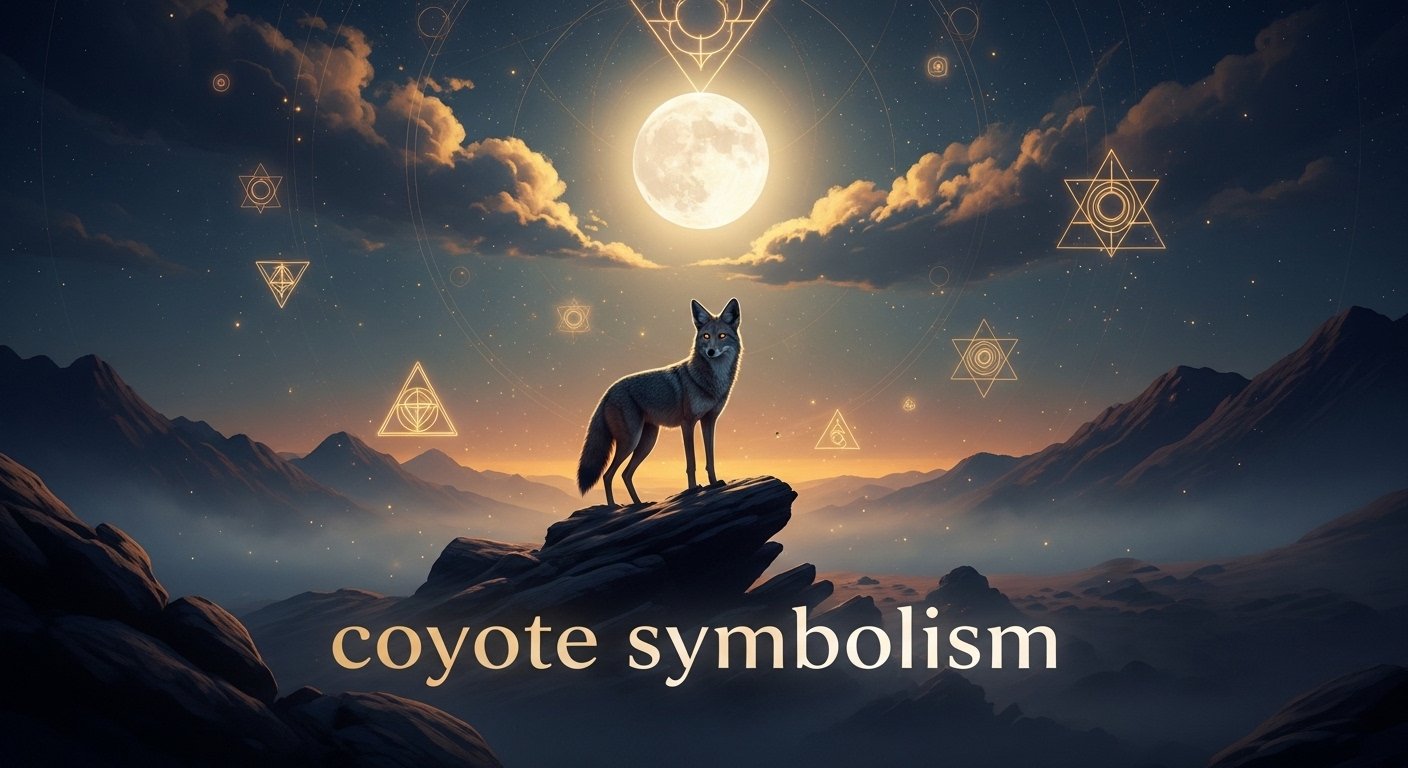
Coyote Symbolism: Spiritual, Cultural & Psychological Meaning
Across deserts, forests, and ancient storytelling traditions, the coyote has remained one of the most fascinating and misunderstood symbolic animals in human history. Neither fully feared nor fully admired, it exists in a strange in-between space—an archetype of intelligence, survival, trickery, and adaptability.
In symbolism, the coyote represents contradiction itself: wisdom wrapped in foolishness, destruction paired with creation, and chaos that leads to transformation. This dual nature is exactly why “coyote symbolism” continues to appear in spirituality, psychology, mythology, dreams, and modern cultural interpretations.
To understand it deeply, we must explore its spiritual roots, cultural meanings, psychological symbolism, and even biological behavior.
What is Coyote Symbolism? (Featured Snippet Definition)
Coyote symbolism refers to the spiritual, cultural, and psychological meanings associated with the coyote, an animal often representing intelligence, adaptability, trickery, survival, and transformation. In many traditions, the coyote symbolizes both wisdom and chaos, teaching lessons through mistakes, humor, and unexpected change.
Spiritual Meaning of Coyote Symbolism
Spiritually, the coyote is considered a messenger of transformation and awareness. It often appears in life when a person is resisting change or becoming too rigid in thinking.
Key Spiritual Themes:
- Adaptability in chaos
- Learning through mistakes
- Breaking illusions
- Spiritual awakening through humor and humility
- Shadow self confrontation
In many spiritual systems, the coyote is not a “comforting” guide. Instead, it challenges you. It forces growth through discomfort and irony, often making you question your assumptions about life.
Seeing coyote symbolism repeatedly can indicate:
- You are resisting necessary change
- You are overthinking a situation
- Life is pushing you toward flexibility and awareness
Cultural Symbolism of the Coyote
Native American Symbolism
In Native American traditions, the coyote is one of the most important mythological figures. It is often known as a trickster spirit.
appears in countless tribal stories where it:
- Creates both problems and solutions
- Teaches moral lessons through chaos
- Represents cleverness and survival instincts
For example:
- In Navajo mythology, Coyote is both a creator and a disruptor
- In Hopi traditions, Coyote often brings consequences for arrogance
- In Lakota stories, it is a teacher through foolish behavior
Core idea: Coyote is not evil—it is a teacher disguised as chaos.
Egyptian Symbolism (Indirect Connection)
Coyotes are not native to Egypt, but symbolically they are often compared to the jackal, associated with the god Anubis.
Anubis represents:
- Death and rebirth
- Protection of the dead
- Transition between worlds
This creates a symbolic overlap:
- Coyote → transformation through chaos
- Jackal/Anubis → transformation through death and rebirth
Both represent threshold guardians between one state of existence and another.
Christian Symbolism
In Christian symbolism, the coyote is not a traditional biblical animal, but it is often interpreted through moral archetypes.
It can represent:
- Deception and temptation (similar to the serpent archetype)
- Human weakness and folly
- Lessons learned through sin and redemption
However, modern interpretations also view it differently:
- A reminder of humility
- The need for discernment
- Awareness of illusion vs truth
European Folklore
In European folklore, coyotes are often replaced by wolves or foxes, but carry similar symbolic meanings:
- Trickster behavior (like the fox)
- Outsider energy
- Survival intelligence
- Wild unpredictability
The coyote aligns closely with the fox archetype in Celtic and Norse myths, representing cleverness that bends rules but ensures survival.
Psychological Interpretation of Coyote Symbolism
Psychologically, the coyote is a representation of the shadow self—the unconscious part of the mind that contains instincts, fears, humor, and suppressed impulses.
Key Psychological Meanings:
- Cognitive flexibility
- Self-sabotage patterns
- Adaptive intelligence
- Humor as coping mechanism
- Chaos-driven learning
When someone resonates with coyote symbolism, it may indicate:
- They learn through mistakes rather than instruction
- They adapt quickly to unpredictable environments
- They may struggle with consistency but excel in crisis situations
The coyote archetype aligns with psychological theories of:
- Jungian shadow integration
- Behavioral adaptation
- Survival-based intelligence patterns
Scientific Life Cycle and Behavior of Coyotes
Understanding real biology strengthens symbolic interpretation.
Coyotes are highly adaptable members of the Canidae family. Their survival success is linked directly to their intelligence and behavioral flexibility.
Key Biological Traits:
- Omnivorous diet (plants, small animals, carrion)
- Highly adaptive habitats (deserts, forests, cities)
- Strong social and solo survival capability
- High reproductive success rate
Life Cycle Overview:
- Birth: Typically 4–7 pups per litter
- Juvenile Stage: Learning survival through play and observation
- Adolescence: Dispersal to find territory
- Adulthood: Territorial or nomadic survival behavior
- Reproduction: Seasonal breeding patterns
Symbolic Connection:
Their life cycle reinforces symbolism of:
- Independence after growth
- Learning through experimentation
- Survival through adaptation
Coyote Symbolism in Dreams (Multiple Scenarios)
Dreams involving coyotes carry strong psychological and spiritual messages.
Seeing a Coyote
Meaning:
- You are ignoring a truth in your life
- A situation requires adaptability
Being Chased by a Coyote
Meaning:
- Avoidance of responsibility
- Fear of consequences
- Running from self-awareness
Friendly Coyote
Meaning:
- Acceptance of your inner shadow
- Integration of humor and wisdom
Pack of Coyotes
Meaning:
- Social manipulation or group dynamics
- Need for awareness in relationships
Killing a Coyote
Meaning:
- Suppression of instincts
- Loss of adaptability or creativity
Biblical Meaning of Coyote Symbolism
Although coyotes are not directly mentioned in the Bible, symbolic interpretation connects them with biblical themes:
- Deception and cunning behavior
- Wilderness testing (like Jesus in the desert)
- Moral trials and spiritual endurance
Biblically aligned meanings:
- Need for discernment
- Warning against manipulation
- Importance of wisdom over impulse
The coyote can represent the testing phase of faith, where individuals must choose between instinct and spiritual guidance.
Is the Coyote a Good or Bad Omen?
The coyote is neither purely good nor bad—it is neutral and transformative.
Positive Omen:
- Adaptability and survival
- Intelligence in difficult situations
- Breaking stagnation in life
Negative Omen:
- Deception or self-deception
- Chaos without direction
- Poor decision-making patterns
Conclusion: The coyote is a mirror—it reflects your current life path.
Spirit Animal Meaning of the Coyote
If the coyote is your spirit animal, it suggests:
- You are highly adaptable
- You thrive in unpredictable environments
- You learn through experience rather than instruction
- You use humor to survive hardship
- You may struggle with consistency but excel in creativity
The coyote spirit animal teaches:
“Do not fear mistakes—they are your greatest teachers.”
Coyote Tattoo Symbolism
Coyote tattoos are powerful symbolic expressions.
Common meanings include:
- Survival through hardship
- Embracing chaos and change
- Trickster wisdom
- Personal transformation
- Humor as strength
Tattoo placements:
- Forearm: adaptability and action
- Back: protection and guidance
- Chest: emotional transformation
- Shoulder: resilience and burden strength
A coyote tattoo often represents someone who has survived life through intelligence rather than force.
Coyote Symbolism in Love & Relationships
In relationships, coyote symbolism can be complex.
Positive meanings:
- Playfulness and humor in love
- Adaptability in relationships
- Emotional intelligence
Negative meanings:
- Fear of commitment
- Emotional unpredictability
- Avoidance of deep vulnerability
The coyote teaches:
- Love requires both stability and flexibility
- Humor can heal emotional tension
- Avoiding truth leads to chaos in relationships
Comparison Table: Coyote Symbolism Across Domains
| Domain | Meaning | Interpretation |
| Spiritual | Transformation & awakening | Growth through chaos |
| Cultural (Native American) | Trickster teacher | Lessons through mistakes |
| Psychological | Shadow self | Hidden instincts & adaptability |
| Biblical | Deception & testing | Moral awareness |
| Dreams | Life confusion or guidance | Inner subconscious messages |
| Spirit Animal | Intelligence & survival | Flexible mindset |
| Tattoo | Personal transformation | Resilience & independence |
| Love | Playful yet unstable energy | Emotional adaptability |
Psychological Archetype of the Coyote
In Jungian psychology, the coyote aligns closely with the Trickster Archetype, which represents:
- Chaos as a form of learning
- Breaking rigid belief systems
- Humor as psychological defense
- Innovation through disruption
This archetype appears in many cultures because it reflects a universal truth:
Growth often comes from mistakes, not perfection.
FAQ: Coyote Symbolism
What does coyote symbolize spiritually?
It symbolizes transformation, adaptability, and learning through chaos.
Is seeing a coyote a good omen?
Yes, but it depends—it often signals change and adaptation rather than fixed fortune.
What does coyote mean in Native American culture?
It represents a trickster teacher who guides through humor and mistakes.
What does a coyote mean in dreams?
It reflects confusion, adaptability, or hidden truths in your subconscious.
What does coyote symbolize in love?
It symbolizes playful but sometimes unstable emotional energy.
Is coyote a spirit animal?
Yes, it represents intelligence, survival, and flexibility.
What does a coyote tattoo mean?
It represents resilience, transformation, and embracing chaos.
What is the psychological meaning of coyote?
It represents the shadow self and adaptive intelligence.
What does coyote mean in Christianity?
It is often linked to deception, temptation, and moral testing.
Are coyotes symbols of good or bad luck?
Neither—they symbolize change, which can be positive or challenging.
Conclusion
Coyote symbolism is one of the richest and most layered symbolic systems in global mythology. It represents contradiction itself—wisdom hidden inside foolishness, survival born from chaos, and transformation triggered by unpredictability.
Whether viewed spiritually, psychologically, or culturally, the coyote teaches a universal truth:
Life does not always reward control—it rewards adaptability.