Amazigh Symbol Meaning: History, Culture & Freedom Explained
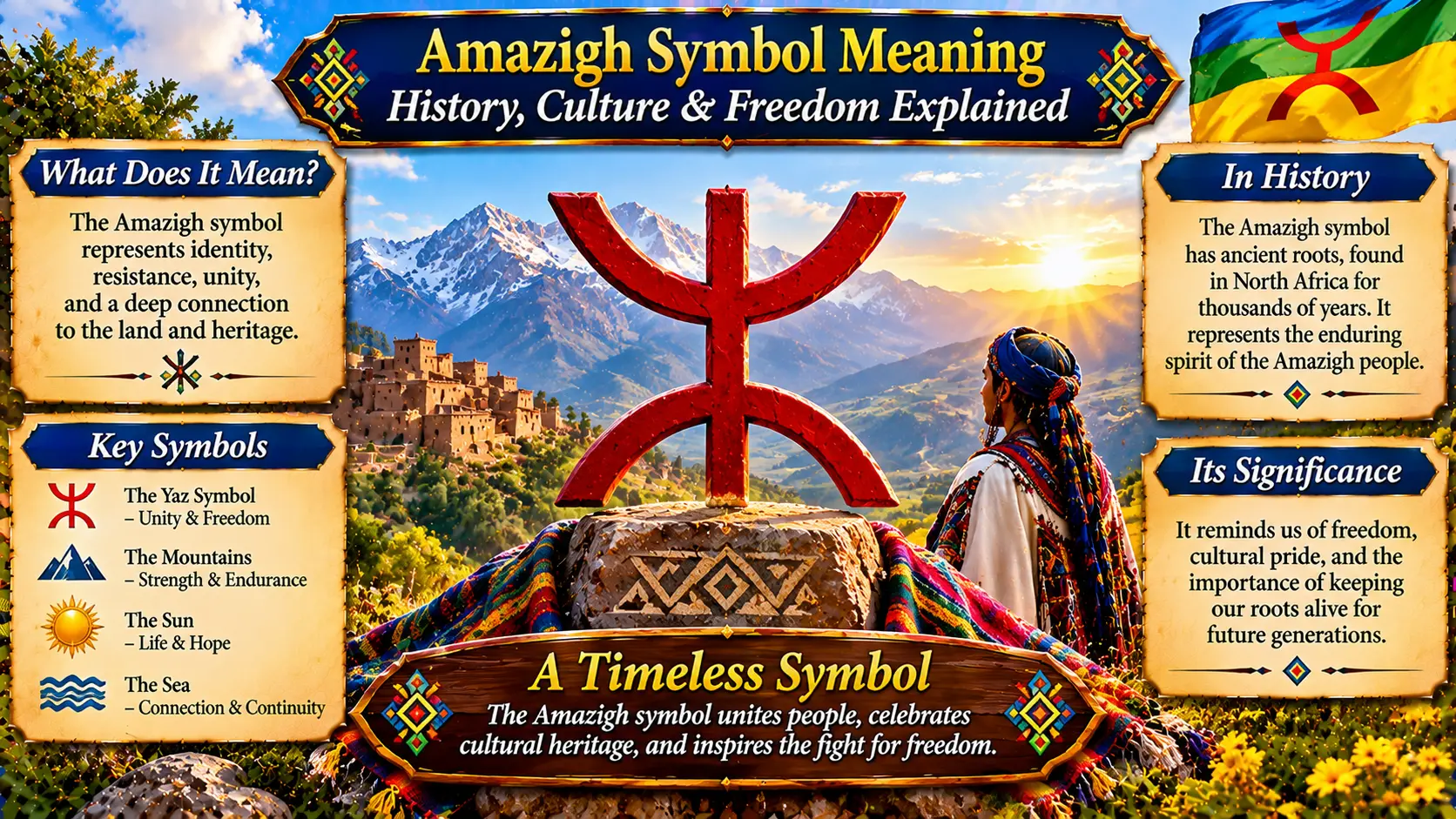
The Amazigh symbol, also known as the Yaz symbol is an important representation of Amazigh identity, freedom, and cultural heritage. It is closely connected to the Indigenous Amazigh people of North Africa, who are also known as Berbers.
The symbol is widely recognized for its connection to freedom, dignity, unity, and cultural pride. It represents the history and traditions of Amazigh communities across countries such as Morocco, Algeria, Tunisia, and Libya.
Today, the Amazigh symbol appears on flags, clothing, jewelry, artwork, and social media. It serves as a reminder of a rich cultural identity and the importance of preserving the Amazigh language and traditions
What Is the Amazigh Symbol?
The Amazigh symbol is represented by the letter ⵣ, called Yaz in the Tifinagh writing system. It is one of the most recognizable symbols associated with Amazigh culture and identity.
Its distinctive human-like shape makes it visually meaningful. It is commonly displayed in red and appears in the center of the Amazigh flag.
Amazigh Symbol Meaning
The Amazigh symbol represents freedom, identity, dignity, and cultural pride. It reflects the connection between Amazigh people and their historical roots, language, and traditions.
It is also associated with unity and the preservation of cultural heritage. For many Amazigh communities, the symbol expresses belonging and respect for their ancestors.
Amazigh Symbol Meaning in History
The Amazigh symbol is connected to the long history of Indigenous communities in North Africa. The Amazigh people have maintained distinct languages, traditions, and cultural practices across generations.
The modern use of the Yaz symbol became an important part of Amazigh cultural and identity movements. It is now widely used to celebrate and represent Amazigh heritage.
Amazigh Symbol Meaning in Culture
In Amazigh culture, the Yaz symbol represents a strong connection to ancestral traditions, community, and cultural identity. It is an important expression of belonging among Amazigh people.
The symbol also celebrates the uniqueness of Amazigh languages, customs, music, clothing, and traditional celebrations. It helps keep cultural heritage visible for future generations.
Amazigh Symbol Meaning in Spirituality
The Amazigh symbol is sometimes given personal spiritual meanings related to freedom, strength, connection, and belonging. Some people view it as a reminder of their roots and the importance of living with dignity.
However, the Yaz symbol is primarily a cultural and identity symbol rather than a universal religious symbol. Its spiritual interpretation can differ from person to person.
Amazigh Symbol Meaning in the Flag
The Amazigh flag features the Yaz symbol in red at its center. It is displayed against three horizontal colors: blue, green, and yellow.
These colors are commonly associated with the sea and sky, mountains and nature, and the Sahara Desert. Together, the flag represents Amazigh identity and the diversity of North African landscapes.
Amazigh Symbol Meaning in Freedom
Freedom is one of the most widely recognized meanings associated with the Amazigh symbol. The Yaz character is often interpreted as representing a free person and the desire to live with dignity.
It also expresses the importance of cultural rights, language preservation, and respect for Indigenous identity. For many people, wearing or displaying this symbol is a statement of cultural pride.
Amazigh Symbol Meaning in Tattoos
Amazigh symbol tattoos are often chosen to express cultural identity, heritage, freedom, and personal pride. People with Amazigh roots may use the design to celebrate their connection to family history and ancestral traditions.
Others may appreciate its association with independence and strength. The simple shape makes it recognizable and suitable for different tattoo styles.
Amazigh Symbol Meaning in Jewelry and Art
The Amazigh symbol appears in necklaces, bracelets, rings, earrings, and traditional artwork. These designs often celebrate the history and creativity of Amazigh communities.
Jewelry featuring the Yaz symbol can represent cultural belonging, personal identity, and respect for heritage. It is also used in modern fashion and handmade decorative pieces.
Amazigh Symbol Meaning in Texting and Social Media
On social media, the Amazigh symbol (ⵣ) is commonly used to express cultural pride, identity, and support for Amazigh heritage. People may include it in their usernames, biographies, captions, and profile pictures.
It is also shared during cultural celebrations and discussions about Amazigh history and language. For many users, the symbol communicates belonging and appreciation for North African Indigenous traditions.
Amazigh Symbol vs. Other Cultural Symbols
The Amazigh symbol has a specific connection to Indigenous North African identity. Other cultural symbols may represent different communities, traditions, or historical experiences.
Symbol Common Meaning
Amazigh Freedom and Amazigh identity
Ankh Life and ancient Egyptian beliefs
Celtic Knot Eternity and interconnectedness
Hamsa Protection and good fortune
Om Sacred sound in Indian religions
Yin-Yang Balance and complementary forces
Interesting Facts About the Amazigh Symbol
The Amazigh symbol is known as Yaz.
- It is represented by the Tifinagh character
- It is closely associated with Amazigh identity.
- The symbol appears in the center of the Amazigh flag.
- It is commonly associated with freedom and dignity.
- Amazigh communities have a long history in North Africa.
- Tifinagh is used to write Amazigh languages.
- The symbol appears in jewelry, clothing, and artwork.
- It is widely used in cultural celebrations.
- It represents pride in Amazigh heritage and traditions.
Frequently Asked Questions About the Amazigh Symbol
What does the Amazigh symbol mean?
The Amazigh symbol represents freedom, cultural identity, dignity, and heritage. It is an important symbol of the Indigenous Amazigh people of North Africa.
What is the Amazigh symbol called?
Yaz is one of the most recognizable symbols of Amazigh culture. It is widely associated with freedom, dignity, identity, and cultural pride, and it appears in the center of the Amazigh flag.
What does the Amazigh symbol represent spiritually?
Some people associate it with inner strength, freedom, and connection to their roots. However, it is mainly a cultural identity symbol.
Is the Amazigh symbol a symbol of freedom?
Yes, the Yaz symbol is widely associated with freedom and dignity. It represents the desire to preserve Amazigh identity and cultural rights.
What does the Amazigh symbol mean in a tattoo?
An Amazigh symbol tattoo often represents cultural pride, heritage, independence, and connection to ancestral traditions.
What does the Amazigh flag symbol mean?
The red Yaz symbol in the center represents Amazigh identity and freedom. It is displayed against blue, green, and yellow stripes.
Where does the Amazigh symbol come from?
The symbol is associated with the Tifinagh writing system and Amazigh cultural heritage in North Africa. It has become an important emblem of modern Amazigh identity.
Is the Amazigh symbol religious?
The Amazigh symbol is not tied to one particular religion. It primarily represents cultural identity, heritage, and freedom.
What does the Amazigh symbol mean on social media?
On social media, it commonly expresses Amazigh pride, cultural belonging, and support for preserving Amazigh traditions and languages.
Why is the Amazigh symbol important?
It is important because it represents the history, identity, and cultural heritage of Amazigh communities. It also helps promote awareness of their languages and traditions.
Conclusion
The Amazigh symbol (ⵣ), also known as Yaz, is a powerful representation of freedom, dignity, cultural identity, and heritage. Deeply connected to the Indigenous Amazigh people of North Africa, it reflects their history, traditions, and pride. From the Amazigh flag to tattoos, jewelry, and social media, the symbol continues to celebrate cultural belonging. Its simple design carries an important message about preserving identity and respecting ancestral roots.