
FFA Emblem Meaning: Symbols, Colors and History
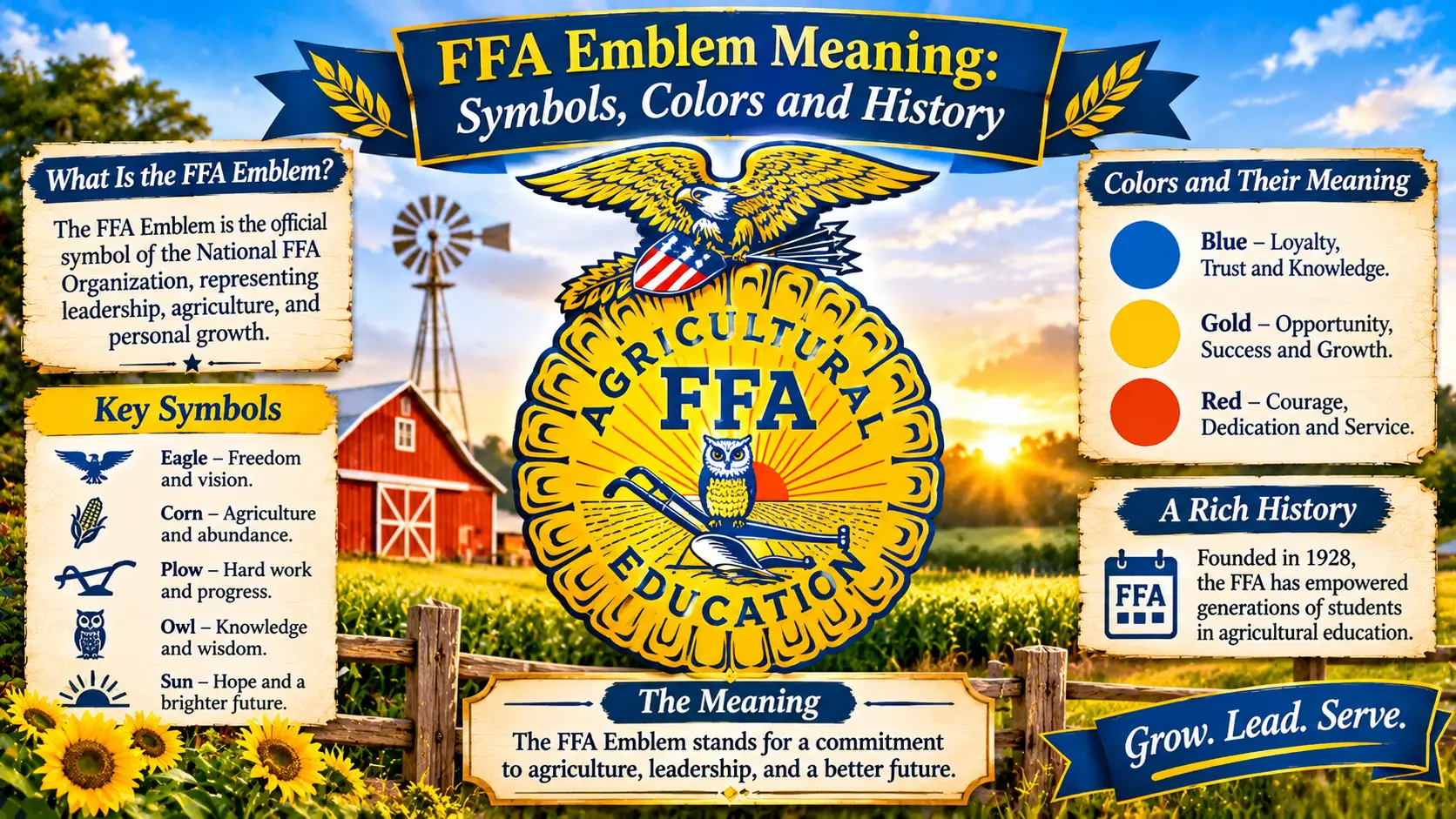
The FFA symbol, officially known as the National FFA Emblem, is one of the most recognizable symbols of the National FFA Organization in the United States. Its design brings together five meaningful elements: an ear of corn, a rising sun, a plow, an owl, and an American eagle. Each element represents an important value connected with agriculture, education, knowledge, progress, and freedom.
The FFA symbol meaning goes beyond traditional farming. It represents unity, hard work, leadership, personal growth, and opportunities for the future. The emblem reflects the belief that agricultural education can prepare students for diverse careers while helping them become responsible and confident members of their communities.
The organization’s official colors, National Blue and Corn Gold, add another layer of meaning to its identity. Together, the emblem, colors, and traditions connect today’s members with generations of agricultural leaders while celebrating the future of agriculture.
What Is the FFA Symbol?
The FFA symbol is officially called the National FFA Emblem. It represents the National FFA Organization, a U.S. youth organization that helps students develop leadership abilities, personal growth, and career skills through agricultural education.
The emblem features five main elements: an ear of corn, a rising sun, a plow, an owl, and an American eagle. Each represents a different aspect of agriculture and the organization’s educational mission.
The letters FFA appear beneath the central design, accompanied by the words Agricultural Education. Together, these details communicate the relationship between learning, agricultural opportunities, and responsible leadership.
FFA originally stood for Future Farmers of America. Although the organization’s official name changed to the National FFA Organization in 1988, the letters FFA were retained to honor its history and traditions.
What Does the FFA Symbol Mean?
The FFA symbol represents agricultural education, unity, progress, knowledge, hard work, freedom, and opportunity. Its five elements work together to communicate the organization’s commitment to preparing students for meaningful futures.
The emblem also reflects an important idea: agriculture is much more than farming. It includes science, technology, business, environmental management, engineering, and numerous other professional fields.
The main meanings associated with the FFA emblem include:
- Unity: The ear of corn represents common agricultural interests.
- Progress: The rising sun symbolizes development and future opportunities.
- Hard work: The plow represents labor and the cultivation of soil.
- Knowledge: The owl represents wisdom and education.
- Freedom: The American eagle represents freedom and the national scope of the organization.
- Leadership: The emblem reflects the development of responsible future leaders.
- Education: The words Agricultural Education emphasize the importance of learning.
Together, these meanings highlight how education, dedication, and cooperation can strengthen agriculture and communities.
FFA Symbol Meaning: The Five Main Elements
The National FFA Emblem contains five major symbols. Each has a distinct meaning that contributes to the organization’s identity and mission.
1. Cross Section of an Ear of Corn
The ear of corn forms the foundation of the FFA emblem. It represents common agricultural interests and unity among members.
Corn has historically played an important role in American agriculture and food production. Its presence in the emblem reflects the agricultural foundation that connects FFA members across different states and communities.
It also represents the idea that people with different interests and career goals can share a common commitment to agriculture.
2. Rising Sun
The rising sun symbolizes progress and the promise of new opportunities. Just as sunrise marks the beginning of a new day, it represents hope and a positive outlook for agriculture’s future.
This element also reflects the organization’s forward-thinking approach. Agriculture continues to develop through research, technology, education, and innovation.
The rising sun encourages students to embrace new ideas and contribute to a stronger agricultural future.
3. Plow
The plow represents labor and the tillage of the soil. It recognizes the hard work required to prepare land, grow crops, and support agricultural production.
Beyond its practical agricultural meaning, the plow reminds members that meaningful achievements require dedication, patience, and responsibility.
It also connects modern agricultural education with the historical foundations of farming.
4. Owl
The owl traditionally represents wisdom and knowledge. In the FFA emblem, it symbolizes the importance of education and understanding.
Modern agriculture requires knowledge of subjects such as science, technology, business, engineering, and environmental studies. The owl reflects the value of continuous learning in these areas.
It reminds students that education is essential for making informed decisions and becoming effective leaders.
5. American Eagle
The American eagle represents freedom and the national scope of the organization. It reflects FFA’s connection with students and agricultural communities throughout the United States.
The eagle also symbolizes ambition, independence, and the opportunity to explore new possibilities.
Its position in the emblem highlights the organization’s broader purpose of preparing students to contribute to their communities and the nation.
| FFA emblem element | Symbolic meaning |
|---|---|
| Ear of corn | Common agricultural interests and unity |
| Rising sun | Progress and new opportunities |
| Plow | Labor and tillage of the soil |
| Owl | Wisdom and knowledge |
| American eagle | Freedom and national scope |
Meaning of the FFA Colors
The official FFA colors are National Blue and Corn Gold. Adopted in 1929, these colors have become an essential part of the organization’s visual identity.
National Blue
National Blue is inspired by the blue field of the American flag. It represents a recognizable organizational identity and reflects the unity shared by FFA members.
The color is especially familiar through the traditional blue FFA jacket, which remains one of the organization’s most recognizable symbols.
Corn Gold
Corn Gold represents the golden fields of ripened corn and the agricultural heritage of the United States.
It connects the organization’s identity with farming, food production, and the importance of agriculture in everyday life.
Why Are the FFA Colors Important?
National Blue and Corn Gold create a consistent identity for FFA chapters and members across the country.
These colors appear in official clothing, awards, chapter materials, educational resources, and organizational events. They also help connect current members with the organization’s long-standing traditions.
| Official color | Inspiration | Association |
|---|---|---|
| National Blue | Blue field of the American flag | Unity and identity |
| Corn Gold | Golden fields of ripened corn | Agriculture and heritage |
FFA Symbolism in Leadership and Education
The FFA emblem is closely connected with leadership, education, and personal development. Its elements communicate that successful agriculture requires more than physical labor. It also depends on knowledge, cooperation, planning, and responsible decision-making.
Learning Through Education
The owl represents the importance of knowledge. FFA encourages students to develop agricultural understanding through classroom instruction, hands-on activities, and practical experiences.
Developing Leadership
Leadership is central to the organization’s mission. Members have opportunities to strengthen communication, teamwork, confidence, and decision-making skills.
Preparing for Careers
Agriculture offers many career possibilities beyond traditional farming. Students can explore animal science, plant science, agricultural engineering, business, environmental science, and other professional fields.
Understanding Responsibility
The plow and ear of corn connect the emblem with the responsibility involved in producing food and supporting communities. They remind members that agriculture requires commitment and thoughtful decisions.
FFA Symbol Meaning in History and Origins
The history of the FFA emblem is closely connected with the growth of agricultural education in the United States.
Beginning of FFA in 1928
The National FFA Organization was established on November 20, 1928, in Kansas City, Missouri. Agricultural education leaders and students created the organization to give young people opportunities to develop agricultural knowledge and leadership skills.
The first national convention included 33 delegates representing 18 states.
Official Colors in 1929
In 1929, National Blue and Corn Gold were adopted as the official FFA colors. These colors helped establish a recognizable identity as the organization continued to grow.
Development of the Emblem
The emblem developed from earlier agricultural education imagery. Its five elements were selected to communicate important ideas about agriculture, education, hard work, progress, and national identity.
Over time, the emblem became a lasting representation of the organization’s mission and traditions.
Name Change in 1988
In 1988, the organization changed its official name from Future Farmers of America to the National FFA Organization.
This change recognized that agricultural education had expanded beyond traditional farming to include many career opportunities in science, business, technology, and other industries.
The letters FFA were retained to preserve the organization’s historical identity.
Today, the emblem continues to connect its original agricultural roots with modern educational opportunities.
FFA Symbolism in the Organization’s Mission and Motto
The FFA emblem reflects the organization’s mission of making a positive difference in students’ lives by developing their potential for leadership, personal growth, and career success through agricultural education.
The official FFA motto is:
“Learning to Do, Doing to Learn, Earning to Live, Living to Serve.”
This motto describes an educational approach that combines knowledge, practical experience, career preparation, and community service.
Learning to Do
Students develop useful skills by participating in activities, completing projects, and applying what they learn.
Doing to Learn
Practical experiences help students understand concepts, improve their abilities, and gain confidence.
Earning to Live
Education and career preparation help students develop the knowledge and skills needed for employment and professional opportunities.
Living to Serve
The motto emphasizes helping others and making positive contributions to communities.
Together, the motto and emblem demonstrate that true leadership involves learning, action, responsibility, and service.
FFA Symbol Meaning in the Blue Jacket
The blue FFA jacket is one of the most recognizable parts of the organization’s identity. It represents tradition, unity, pride, and membership.
The jacket became part of FFA’s official dress tradition in 1933, after members of the Fredericktown, Ohio, chapter wore blue corduroy jackets to the national convention.
More than an item of clothing, the jacket connects current members with generations of students who have participated in agricultural education and leadership activities.
Its symbolism includes:
- Unity: Members from different schools and communities share a recognizable identity.
- Pride: The jacket represents pride in agricultural education and FFA membership.
- Tradition: It connects today’s students with earlier generations.
- Responsibility: Wearing official FFA dress encourages members to represent their organization respectfully.
The blue jacket remains a powerful reminder of belonging to something larger than an individual chapter or school.
FFA Symbolism in Personal Growth and Career Development
The FFA emblem also represents the personal and professional skills students can develop through agricultural education.
These qualities extend beyond agriculture and can benefit students throughout their lives.
Important skills include:
- Communication: Expressing ideas clearly and confidently.
- Teamwork: Cooperating with others to achieve shared goals.
- Problem-solving: Finding practical solutions to challenges.
- Responsibility: Making thoughtful decisions and completing tasks.
- Knowledge: Building understanding through education and experience.
- Confidence: Developing trust in personal abilities.
- Career exploration: Discovering opportunities in different industries.
- Community service: Using personal skills to support others.
These values demonstrate why FFA is not limited to students who plan to become farmers. Its programs help prepare members for a wide range of educational and professional opportunities.
FFA Symbolism in Modern Agriculture
Agriculture has changed significantly over the years. Today, it includes advanced machinery, scientific research, digital technology, environmental management, and international business.
The FFA emblem continues to connect traditional agricultural values with modern opportunities.
Agricultural Science
Students can explore plant science, animal science, soil science, and other subjects that contribute to agricultural development.
Technology and Innovation
Modern agriculture uses digital tools, advanced equipment, and innovative methods to improve production and manage resources.
Business and Entrepreneurship
Agriculture also involves marketing, finance, management, entrepreneurship, and business ownership.
Environmental Responsibility
Agricultural education encourages students to understand natural resources and the importance of responsible land and water management.
Future Career Opportunities
FFA helps students explore career paths in science, engineering, education, business, agricultural production, and related industries.
The emblem’s message remains relevant because agriculture continues to evolve while depending on knowledge, hard work, and responsible leadership.
What Does the FFA Symbol Teach Students?
The FFA emblem communicates valuable lessons about education, work, leadership, and the future.
1. Education Creates Opportunities: The owl represents knowledge and encourages students to continue learning and exploring new possibilities.
2. Hard Work Matters: The plow reminds members that meaningful achievements require dedication, effort, and patience.
3. Progress Requires New Ideas: The rising sun represents opportunity and encourages students to contribute to a changing world.
4. Unity Makes a Difference: The ear of corn symbolizes shared agricultural interests and the importance of working together.
5. Freedom Encourages Possibility: The American eagle represents freedom and the opportunity to explore new directions.
6. Leadership Includes Service: The organization’s mission and motto encourage students to use their abilities to help others and strengthen their communities.
These lessons make the emblem more than an organizational design. It becomes a reminder of the values students can carry into their education, careers, and everyday lives.
FFA Symbol vs. FFA Logo and Lettermark
People sometimes use the words symbol, emblem, and logo interchangeably. However, the National FFA Organization uses different visual elements to represent its identity.
| Design element | Description | Main purpose |
|---|---|---|
| FFA emblem | Full design containing five symbolic elements | Represents history and values |
| FFA lettermark | The letters FFA | Identifies the organization |
| FFA colors | National Blue and Corn Gold | Establishes visual identity |
| FFA name | National FFA Organization | Official organizational identity |
The emblem communicates the organization’s history and mission through its individual elements, while the lettermark provides a simpler way to identify FFA in everyday materials.
The organization also maintains official brand guidelines to help chapters and members use its visual identity consistently.
Common Misconceptions About the FFA Symbol
There are several misunderstandings about the FFA emblem and its meaning.
Misconception 1: FFA Is Only for Future Farmers
FFA began with a strong connection to farming, but modern agricultural education includes science, business, engineering, technology, and many other career fields.
Misconception 2: FFA Has a Completely Different Name Today
The letters originally stood for Future Farmers of America. The official name changed to the National FFA Organization in 1988, but FFA was retained to honor its history.
Misconception 3: The Owl Represents Farming
The owl specifically symbolizes wisdom and knowledge. The plow and ear of corn have more direct connections with agricultural labor and shared agricultural interests.
Misconception 4: The Rising Sun Represents Only Nature
Within the emblem, the rising sun represents progress and future opportunities rather than simply a natural sunrise.
Misconception 5: The Colors Are Just Decorative
National Blue and Corn Gold are official colors adopted in 1929. They represent the organization’s identity and agricultural heritage.
Misconception 6: The Emblem Contains Only One Symbol
The FFA emblem includes five main elements: an ear of corn, rising sun, plow, owl, and American eagle. The letters FFA and the words Agricultural Education also contribute to its design.
Frequently Asked Questions About FFA Symbol Meaning
What does the FFA symbol mean?
The FFA emblem represents agriculture, unity, progress, knowledge, freedom, and education. Its five main elements communicate the organization’s history, mission, and values.
What are the five symbols of the FFA emblem?
The five symbols are an ear of corn, a rising sun, a plow, an owl, and an American eagle. Each represents an important aspect of agricultural education and FFA’s identity.
What does the ear of corn represent in FFA?
The ear of corn represents common agricultural interests and unity among members. It forms the foundation of the FFA emblem.
What does the rising sun symbolize in FFA?
The rising sun represents progress, hope, and new opportunities. It reflects a positive outlook for the future of agriculture.
What does the owl represent in the FFA emblem?
The owl symbolizes wisdom and knowledge. It represents the importance of education in developing agricultural understanding and leadership skills.
What does the plow symbolize in FFA?
The plow represents labor and the tillage of the soil. It recognizes the hard work and dedication involved in agriculture.
What does the eagle represent in FFA?
The American eagle represents freedom and the national scope of the organization. It also reflects opportunities to explore new possibilities.
What are the official FFA colors?
The official colors are National Blue and Corn Gold. Adopted in 1929, they represent organizational unity, American identity, and agricultural heritage.
What does FFA stand for?
FFA originally stood for Future Farmers of America. The organization’s official name changed to the National FFA Organization in 1988, but the letters FFA were retained.
When was the FFA emblem created?
The emblem developed during the early history of the organization, which was established in 1928. Its design grew from agricultural education imagery and became a lasting part of FFA’s identity.
Final Thoughts
The FFA symbol meaning reflects the lasting connection between agriculture, education, leadership, and progress. Its five elements represent unity, hard work, wisdom, opportunity, and freedom. Together with National Blue and Corn Gold, the emblem creates a recognizable identity rooted in American agricultural history. Whether displayed on a blue jacket, award, or official material, the FFA emblem reminds students that knowledge, dedication, and responsible leadership can shape a brighter future for agriculture and their communities.