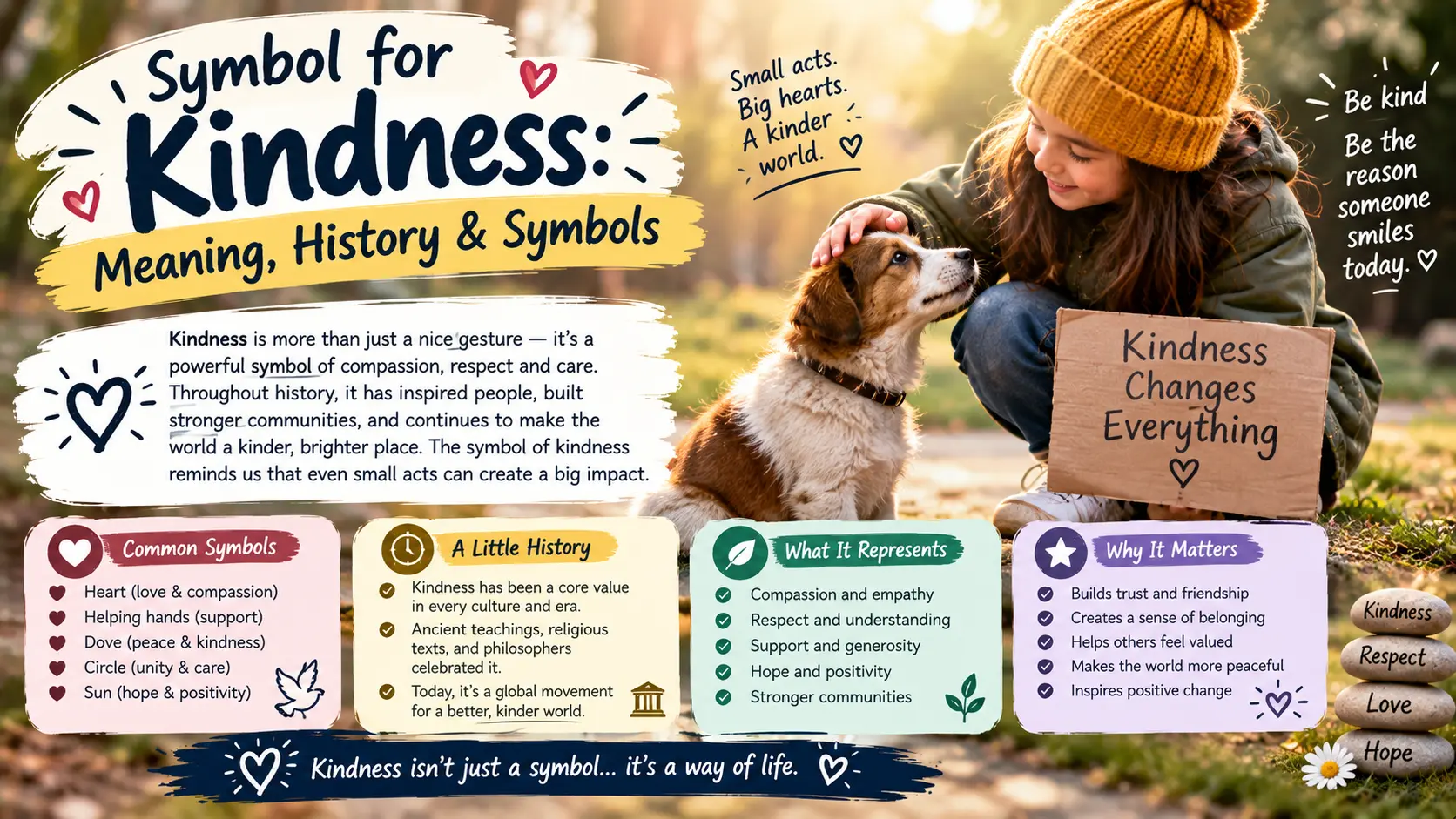
Symbol for Kindness: Meaning, History & Symbols
Quick Answer
A symbol for kindness is an image, object, color, animal, flower, or gesture that represents compassion, generosity, empathy, care, and goodwill toward others. There is no single universal symbol of kindness, but several symbols are widely associated with these qualities.
The heart is one of the most recognizable symbols of kindness because it represents love, emotional warmth, and care. Helping hands can represent generosity and support, while doves are often connected with peace and gentle intentions. Flowers such as pink roses, daisies, lavender, and forget-me-nots can also communicate affection, compassion, remembrance, and thoughtful care.
The meaning of a kindness symbol depends on its cultural background, personal context, and how it is used. A symbol on a piece of jewelry may express personal values, while the same image in artwork may communicate a broader message about compassion and human connection.
TL;DR
- Heart: Love, compassion, care, and emotional warmth.
- Helping hands: Support, generosity, service, and cooperation.
- Dove: Peace, gentleness, and goodwill.
- Lotus: Compassion, inner growth, and spiritual development.
- Pink rose: Affection, appreciation, tenderness, and kindness.
- Daisy: Innocence, friendliness, simplicity, and positive feelings.
- Butterfly: Transformation, hope, and gentle personal growth.
- Sun: Warmth, positivity, generosity, and encouragement.
- Deer: Gentleness, sensitivity, and peaceful behavior.
- Elephant: Compassion, loyalty, care, and strong social bonds.
A kindness symbol can be especially meaningful when it reflects how a person wants to treat others, rather than simply representing an attractive image.
What Is a Symbol for Kindness?
A symbol for kindness is something that visually or culturally communicates the idea of treating others with care, compassion, respect, generosity, or understanding. It can be a simple shape, an animal, a flower, a color, an object, or even a familiar gesture.
Symbols work because people attach shared meanings to recognizable images. For example, a heart can communicate affection without using words. Helping hands can immediately suggest assistance or support. A warm sun can create associations with comfort, positivity, and emotional warmth.
Kindness itself is a behavior rather than a physical object, so symbolic representations help turn an abstract quality into something visible. This is why kindness symbols appear in art, jewelry, tattoos, gifts, religious imagery, community campaigns, greeting cards, and social media graphics.
Why People Use Symbols to Represent Kindness
Kindness is difficult to represent literally because it is an internal value expressed through actions. A symbol gives that value a recognizable visual form. Someone may wear a particular pendant, display an image at home, or choose a tattoo because the symbol reminds them to practice compassion.
Symbols can also communicate kindness across language barriers. A pair of helping hands, for example, can suggest assistance even when no written explanation accompanies the image.
On a personal level, a kindness symbol can represent gratitude, forgiveness, empathy, friendship, generosity, or a commitment to helping others. Its meaning can therefore be broader than simply being “nice.”
Common Symbols for Kindness at a Glance
| Symbol | Common Meaning |
|---|---|
| Heart | Love, compassion, care |
| Helping hands | Support, generosity, service |
| Dove | Peace, gentleness, goodwill |
| Lotus | Compassion, growth, spiritual awareness |
| Pink rose | Affection, appreciation, tenderness |
| Daisy | Friendliness, innocence, positivity |
| Lavender | Calmness, care, devotion |
| Butterfly | Transformation, hope, renewal |
| Sun | Warmth, optimism, encouragement |
| Deer | Gentleness, sensitivity, peace |
| Elephant | Compassion, loyalty, social connection |
These meanings are common associations rather than universal rules. Cultural traditions and individual experiences can change what a particular symbol means.
The Heart as a Symbol of Kindness and Compassion
The heart is perhaps the most familiar visual representation of affection and emotional care. While the stylized heart is not an anatomical representation of the human heart, it has become a widely recognized symbol for love and emotional connection.
When used specifically as a symbol of kindness, the heart can represent compassion, generosity, empathy, warmth, and concern for other people. A heart-shaped gift may communicate appreciation, while a heart incorporated into artwork can suggest emotional openness.
The heart can also represent self-kindness. In modern wellness and personal-growth contexts, treating oneself with patience and understanding is often considered part of compassionate living.
The Dove as a Symbol of Peace and Gentle Kindness
The dove is strongly associated with peace in many modern Western contexts. Its white appearance, gentle behavior, and long history in religious and artistic imagery have contributed to its peaceful symbolism.
As a kindness symbol, the dove can represent gentleness, reconciliation, peaceful intentions, forgiveness, and goodwill. It can be especially appropriate when kindness involves resolving conflict rather than simply expressing affection.
A dove may therefore symbolize a form of kindness that seeks to reduce hostility and encourage peaceful relationships.
The Lotus Flower and Its Connection to Compassion
The lotus has important symbolic associations across several Asian religious and cultural traditions. Its ability to grow from muddy water while producing a striking flower has made it a powerful image of transformation and spiritual development.
In Buddhist traditions, the lotus is particularly associated with spiritual awakening, purity, and the journey toward wisdom and compassion. Because compassion is central to Buddhist thought, the lotus can function as a meaningful symbol when kindness is understood as a deliberate practice rather than merely an emotion.
For modern audiences, the lotus may also represent resilience, personal growth, inner peace, and compassionate living.
The Rose as a Symbol of Love, Care, and Kindness
Roses have accumulated many meanings over centuries, with color often influencing their symbolism. Pink roses, in particular, are commonly associated with appreciation, affection, admiration, gratitude, and gentleness.
These qualities overlap naturally with kindness. Giving someone a pink rose can communicate that the person is valued without necessarily carrying the romantic meaning often associated with a red rose.
Roses can therefore work as kindness symbols in friendship gifts, thank-you arrangements, memorial settings, artwork, and personal keepsakes.
Helping Hands as a Modern Symbol of Kindness
Few images communicate practical kindness as directly as helping hands. Two hands reaching toward one another can represent assistance, cooperation, generosity, and human connection.
Unlike symbols that focus primarily on emotion, helping hands emphasize action. They suggest that kindness is something people do through volunteering, supporting someone in difficulty, sharing resources, or offering encouragement.
This makes helping hands particularly suitable for organizations, community projects, charitable events, and artwork centered on service.
The Butterfly as a Symbol of Gentle Transformation
The butterfly commonly symbolizes transformation because of its dramatic life cycle. The movement from caterpillar to chrysalis to adult butterfly creates a natural metaphor for change and development.
When connected with kindness, the butterfly can represent gentle growth, emotional healing, hope, and becoming more compassionate through life experiences.
A butterfly does not necessarily mean kindness by itself. Instead, its symbolism can become connected to kindness when the surrounding context involves personal growth, empathy, recovery, or positive change.
The Sun as a Symbol of Warmth, Generosity, and Hope
The sun is frequently used as a metaphor for warmth, energy, optimism, and life. Its light can create an association with emotional brightness and encouragement.
As a kindness symbol, the sun can represent someone who brings warmth and positivity into other people’s lives. It may also symbolize encouragement during difficult periods.
Sun imagery is common in artwork, jewelry, tattoos, home decor, and inspirational designs because it has an immediately recognizable visual quality.
Animals Commonly Associated With Kindness
Animals can become kindness symbols because people often associate particular species with recognizable behavioral qualities.
Deer and Gentle Nature
Deer are commonly portrayed as gentle, alert, graceful, and peaceful. Their quiet appearance makes them useful symbols for tenderness and sensitivity.
In symbolic artwork, a deer can represent a soft approach to life and a preference for peaceful interaction.
Elephants and Compassion
Elephants are often associated with strong family relationships, social bonds, memory, loyalty, and protective behavior. Their complex social lives make them meaningful symbols of connection and care.
In kindness-themed artwork, elephants can represent compassion expressed through community, family support, and protection.
Dogs and Loyalty
Dogs are commonly associated with loyalty, companionship, affection, and devotion. Their close relationship with humans has made them familiar symbols of friendship and emotional support.
A dog can therefore symbolize kindness through dependable companionship and unconditional affection.
Swans and Loving Connection
Swans are often used in art as symbols of devotion, partnership, grace, and emotional connection. Their association with pairs makes them especially relevant to themes of enduring relationships.
When used as a kindness symbol, swans can represent caring relationships built on mutual respect and affection.
Flowers That Symbolize Kindness
Flowers are especially effective kindness symbols because different varieties and colors have developed rich cultural associations.
Pink Roses
Pink roses commonly communicate appreciation, affection, admiration, and tenderness. They can be appropriate when the message is warm but not strongly romantic.
Daisies
Daisies often create associations with simplicity, innocence, friendliness, and cheerful affection. Their uncomplicated appearance makes them suitable for expressing a gentle form of kindness.
Lavender
Lavender is frequently connected with calmness, tranquility, devotion, and care. It can represent kindness that brings emotional peace rather than excitement.
Forget-Me-Nots
Forget-me-nots are strongly associated with remembrance. In kindness symbolism, they can represent remembering someone with affection, maintaining meaningful connections, or honoring a person who remains important.
Colors That Can Symbolize Kindness
Color symbolism varies considerably across cultures, but several colors commonly appear in kindness-themed designs.
Pink and Compassion
Pink is often associated with tenderness, affection, warmth, and caring relationships. It can communicate a softer form of emotional connection.
Green and Caring Energy
Green is frequently connected with nature, renewal, balance, and growth. In kindness imagery, it can represent nurturing relationships and positive development.
White and Peaceful Intentions
White is commonly associated with peace, simplicity, purity, and calmness in many Western contexts. It can support a visual message of peaceful kindness.
Yellow and Warmth
Yellow often creates associations with sunshine, happiness, friendliness, and optimism. It can represent the uplifting side of kindness.
Color meanings are not universal. Historical and cultural contexts can give the same color very different associations.
Religious and Spiritual Symbols of Kindness
Kindness appears as an important ethical theme in many religious traditions. However, the specific symbols and interpretations vary.
Kindness in Christianity
Christian teachings frequently emphasize love, mercy, compassion, forgiveness, and service to others. The cross is primarily a central Christian symbol rather than a symbol exclusively meaning kindness, but Christian art can use it in contexts emphasizing sacrificial love and compassion.
The heart can also appear in Christian symbolism, particularly in imagery connected with divine love and devotion.
Compassion in Buddhism
Compassion is a major concept in Buddhism and is closely associated with the aspiration to reduce suffering. The lotus can provide a visual representation of spiritual development, while certain Buddhist images and symbols may be interpreted through the broader themes of wisdom and compassion.
Here, kindness can be understood as a cultivated quality expressed through thought, speech, and action.
Kindness in Hindu Traditions
Hindu traditions contain diverse teachings and symbols, so there is no single universal Hindu symbol exclusively representing kindness. Concepts such as compassion, non-harming, generosity, and duty toward others appear in different philosophical and devotional contexts.
Images of deities, lotus flowers, lamps, and other sacred objects may carry meanings that extend beyond kindness alone.
Mercy and Kindness in Islam
Islamic teachings place significant emphasis on mercy, charity, generosity, and care for others. The Arabic concept of rahmah, commonly translated in contexts involving mercy or compassion, is important in Islamic thought.
There is not one universal Islamic visual symbol that simply means “kindness.” Instead, kindness is often expressed through ethical action, charity, hospitality, and compassionate treatment of others.
Historical and Cultural Meanings of Kindness Symbols
Kindness symbolism does not have one historical beginning. Different societies developed their own ways of representing compassion, hospitality, generosity, peace, and friendship.
Flowers, animals, religious imagery, gestures, and colors have acquired meanings through folklore, literature, art, religion, social customs, and everyday experience. Some meanings have remained relatively stable, while others have changed over time.
Modern interpretations can also combine traditions. A person might choose a heart because of its contemporary association with love while giving it a personal meaning connected with empathy or helping others.
Symbol for Kindness in Different Cultures
Different cultures can interpret the same image in different ways. A flower may represent affection in one context and mourning in another. A particular animal can symbolize gentleness in one tradition while having a completely different cultural role elsewhere.
This is why it is useful to distinguish between widely recognized modern symbolism and culturally specific symbolism. Instead of assuming that an image has one fixed meaning everywhere, consider the historical and cultural setting in which it appears.
For personal artwork or tattoos, researching the intended cultural context can help avoid unintentionally assigning a meaning that does not belong to the tradition being represented.
What Does a Kindness Symbol Mean Spiritually?
Spiritually, a kindness symbol can represent the decision to live with compassion, patience, generosity, forgiveness, and awareness of other people’s experiences.
For some people, a symbol serves as a personal reminder. A heart might remind someone to respond with compassion. Helping hands might represent a commitment to service. A lotus might symbolize growing through difficult experiences while maintaining an open and compassionate outlook.
Spiritual symbolism is personal, so the meaning does not have to be identical for everyone. The strongest personal symbol is often the one connected to an individual’s experiences and values.
Kindness Symbols in Dreams and Personal Experiences
People sometimes notice hearts, flowers, animals, sunlight, or helping hands in dreams and interpret them symbolically. Such experiences can feel meaningful because the mind naturally connects familiar images with emotions and memories.
A dream involving a gentle animal, for example, might personally evoke feelings of safety or compassion. A flower received unexpectedly might become a reminder of a particular relationship.
Dream symbolism does not have one scientifically established meaning for every image. Personal experiences, emotions, memories, and cultural associations can influence interpretation.
Kindness Symbols in Jewelry, Tattoos, and Art
Kindness symbols work well in personal designs because they can communicate values without requiring a long explanation.
A heart necklace may represent compassion. Helping hands can work as a tattoo or bracelet charm representing service. A lotus can symbolize compassion combined with personal growth. A pink flower can serve as a reminder of appreciation and emotional warmth.
When choosing a tattoo or permanent artwork, the personal meaning should be considered alongside the historical and cultural associations of the image.
Kindness Symbols in Gifts and Home Decor
Kindness-themed gifts can include flower arrangements, heart-shaped objects, inspirational artwork, candles, jewelry, handmade crafts, and decorative pieces featuring gentle animals or nature imagery.
The most meaningful gift is often connected to the relationship between the giver and receiver. A small object with a thoughtful message can communicate kindness more effectively than an expensive item without personal significance.
Home decor featuring warm colors, flowers, sunlight, or nature can similarly create an atmosphere associated with peace, comfort, gratitude, and hospitality.
How to Choose a Symbol for Kindness
Start by deciding what aspect of kindness you want the symbol to express.
- Choose a heart for love and compassion.
- Choose helping hands for service and generosity.
- Choose a dove for peace and reconciliation.
- Choose a lotus for compassion and personal growth.
- Choose a pink rose for appreciation and tenderness.
- Choose a butterfly for transformation and hope.
- Choose a sun for warmth and encouragement.
- Choose a deer for gentleness.
- Choose an elephant for loyalty and caring relationships.
Also consider cultural context, personal experience, visual style, and intended use. A symbol that looks beautiful but has a meaning unrelated to your purpose may not communicate the message you want.
Symbol for Kindness in the United States Today
In the United States, kindness is commonly represented through familiar imagery such as hearts, helping hands, flowers, smiling figures, doves, and positive nature imagery.
These symbols appear in greeting cards, nonprofit campaigns, school activities, workplace initiatives, social media posts, community events, and personal gifts. The heart remains especially recognizable because its association with love and care is widely understood.
Modern American kindness symbolism also increasingly emphasizes inclusion, community support, volunteering, mental well-being, gratitude, and everyday acts of consideration. However, different communities may choose different symbols depending on their goals and traditions.
Emotional and Psychological Meaning of Kindness Symbols
Kindness symbols can have emotional significance because visual reminders can trigger memories and associations. Seeing a heart may remind someone of a loved one, while a particular flower may recall a meaningful event.
Symbols can also reinforce personal intentions. Keeping a kindness symbol visible can function as a reminder to practice patience, listen carefully, help others, or respond with empathy.
The psychological effect is personal rather than automatic. A symbol has meaning because people connect it with memories, values, emotions, and experiences.
Kindness, Compassion, Empathy, and Generosity: What Is the Difference?
These concepts overlap but are not identical.
Kindness generally refers to considerate or helpful behavior toward others. Compassion involves concern about another person’s suffering and a desire to help. Empathy involves understanding or sharing another person’s emotional perspective. Generosity involves willingly giving time, resources, attention, or support.
A single symbol can represent several of these qualities. Helping hands, for example, can represent kindness and generosity, while a heart may emphasize compassion and emotional care.
Understanding these distinctions can help you choose a symbol that communicates your intended message more precisely.
How Kindness Symbols Are Used on Social Media
Social media frequently uses simple visual symbols to communicate positive emotions quickly. Hearts, flowers, hands, butterflies, sunshine, and supportive illustrations can accompany messages about gratitude, friendship, encouragement, and compassion.
Hashtags, emojis, profile graphics, and inspirational posts can give familiar symbols new meanings within specific online communities.
Because online symbolism changes quickly, context matters. A heart emoji, for instance, can express friendship, appreciation, romantic affection, encouragement, or simple positive engagement depending on the conversation.
Common Misunderstandings About Kindness Symbols
One common misunderstanding is that there is one official universal symbol for kindness. In reality, kindness has many symbolic representations, and no single image owns the meaning.
Another misconception is that every culture interprets the same symbol identically. Symbolism is strongly influenced by cultural history, religion, language, and local traditions.
It is also important not to confuse symbolism with literal meaning. A butterfly does not inherently mean kindness. It can symbolize transformation, freedom, renewal, or other ideas depending on context.
How to Create Your Own Symbol for Kindness
Creating a personal kindness symbol can be more meaningful than choosing a traditional image. Begin with an experience or value that represents kindness to you.
You could combine a heart with helping hands, place a flower inside a circle, or use an animal associated with gentleness alongside a meaningful color. The design does not need to follow an established symbolic tradition.
A personal symbol becomes meaningful through repetition and association. If you use it consistently as a reminder of compassion, generosity, patience, and care, its significance can grow over time.
Frequently Asked Questions About Symbols for Kindness
What is the most common symbol for kindness?
The heart is one of the most recognizable symbols associated with kindness because it commonly represents love, care, compassion, and emotional warmth. Helping hands are another widely understood representation of practical kindness and support.
What flower is a symbol of kindness?
Pink roses and daisies can represent qualities associated with kindness, including affection, appreciation, friendliness, tenderness, and warmth. The exact meaning depends on cultural and personal context.
What animal represents kindness?
There is no single universal animal representing kindness. Deer, elephants, dogs, and swans are commonly used in symbolic contexts involving gentleness, loyalty, care, companionship, and peaceful relationships.
What color symbolizes kindness?
Pink is often associated with tenderness, affection, and caring. Green, white, and yellow can also support kindness-themed symbolism through associations with growth, peace, warmth, and positivity.
What symbol represents kindness and compassion?
A heart is a widely recognizable choice for kindness and compassion. A lotus can also represent compassion in certain Buddhist contexts, while helping hands emphasize compassionate action and practical support.
What is a spiritual symbol for kindness?
There is no single universal spiritual symbol for kindness. Depending on tradition, the lotus, heart, light, helping hands, and various religious images can represent compassion, mercy, love, service, or spiritual growth.
What symbol represents a kind-hearted person?
A heart is the simplest symbol for a kind-hearted person because it is widely associated with love and emotional warmth. A flower, dove, or helping-hands design can add meanings such as gentleness, peace, or generosity.
What is a good tattoo symbol for kindness?
Common choices include a heart, helping hands, lotus, butterfly, dove, flower, or sun. The best choice depends on whether you want the tattoo to emphasize compassion, service, peace, personal growth, or warmth.
What symbol represents helping others?
Helping hands are one of the clearest symbols of helping others. They can represent support, cooperation, generosity, community service, and human connection.
Is a heart a symbol of kindness?
Yes. A heart is widely used to symbolize love, care, compassion, affection, and emotional connection, all of which can be closely associated with kindness.
Final Thoughts on Symbols for Kindness
A symbol for kindness can take many forms, from the familiar heart and helping hands to flowers, animals, colors, and spiritual imagery. The meaning depends on the cultural setting, personal experience, and message surrounding the symbol.
The heart can express compassion, helping hands can represent service, a dove can suggest peaceful intentions, and flowers can communicate appreciation and tenderness. Other symbols may represent different dimensions of kindness, such as gentleness, generosity, empathy, hope, and connection.
Ultimately, the most meaningful kindness symbol is one that clearly reflects the value you want to express. A simple image can become powerful when it serves as a lasting reminder to treat yourself and others with care, patience, respect, and compassion.