Examples of Symbolism in Poetry: Meanings, Analysis & Famous Poem Examples (2026 Guide)
Symbolism is one of the most powerful tools in poetry because it allows poets to say more by showing less. Instead of directly stating emotions or ideas, poets use objects, images, or actions to represent deeper meanings. A simple thing like a rose, a river, or even the moon can carry emotional weight far beyond its literal form.
In this guide, you’ll learn what symbolism in poetry really means, how to identify it, why poets use it, and see clear examples from famous poems with easy explanations. By the end, you’ll be able to read poetry with a sharper, more analytical eye.
What Is Symbolism in Poetry? (Simple Definition + Deep Meaning)
Symbolism in poetry is a literary device where an object, image, or idea represents something beyond its literal meaning. Instead of directly stating emotions or messages, poets use symbols to communicate deeper layers of thought.
For example, a “storm” in a poem may not just describe weather. It could symbolize anger, confusion, or emotional conflict.
In simple terms:
Symbolism = when something stands for something deeper.
A symbol always has two meanings:
- Literal meaning (what it actually is)
- Emotional or conceptual meaning (what it represents)
This dual meaning is what makes poetry rich, expressive, and open to interpretation.
Why Poets Use Symbolism in Poetry
Poets rely on symbolism because it helps them express complex emotions in a subtle and artistic way. Instead of explaining feelings directly, they let readers discover meaning.
Here’s why symbolism is so powerful in poetry:
It adds emotional depth
A single symbol can carry sadness, hope, love, or fear depending on context.
It creates multiple interpretations
Different readers may understand the same symbol in different ways.
It strengthens themes
Symbols reinforce the central message of a poem without directly stating it.
It makes poetry more artistic
Indirect expression is often more beautiful and memorable than plain explanation.
It engages the reader’s imagination
Readers become active participants in discovering meaning.
How to Identify Symbolism in a Poem (Step-by-Step Guide)
Many readers struggle to spot symbolism because it is not always obvious. Here is a simple method to identify it:
Look for repeated images
If an object appears more than once, it may carry symbolic meaning.
Check emotional tone
Ask: Does the object match the mood of the poem?
Ask deeper questions
- Is this object just physical, or does it represent something else?
- What emotion does it trigger?
Compare context vs meaning
Sometimes the surrounding lines reveal hidden meaning.
Look for universal associations
Some symbols have common meanings:
- Water = life or cleansing
- Darkness = fear or mystery
- Light = hope or truth
Once you train your mind to think this way, symbolism becomes easier to detect.
Famous Examples of Symbolism in Poetry (With Analysis)
Let’s explore how famous poets use symbolism to add deeper meaning to their work.
The Raven – Edgar Allan Poe
In Edgar Allan Poe’s famous poem The Raven, the raven is not just a bird—it is a powerful symbol of grief, loss, and psychological torment.
The narrator is mourning the loss of Lenore, and the raven’s repeated presence represents:
- Endless sorrow
- Unanswered questions
- Mental descent into obsession
The word “Nevermore” becomes symbolic of hopelessness and emotional finality.
Symbol: Raven
Meaning: Grief and eternal loss
I Wandered Lonely as a Cloud – William Wordsworth
In William Wordsworth’s poem, the daffodils are not just flowers—they symbolize joy, memory, and emotional healing.
The poet describes how the memory of daffodils brings happiness even in solitude. This shows how nature becomes a source of inner peace.
Symbol: Daffodils
Meaning: Joy, memory, and emotional comfort
A Red, Red Rose – Robert Burns
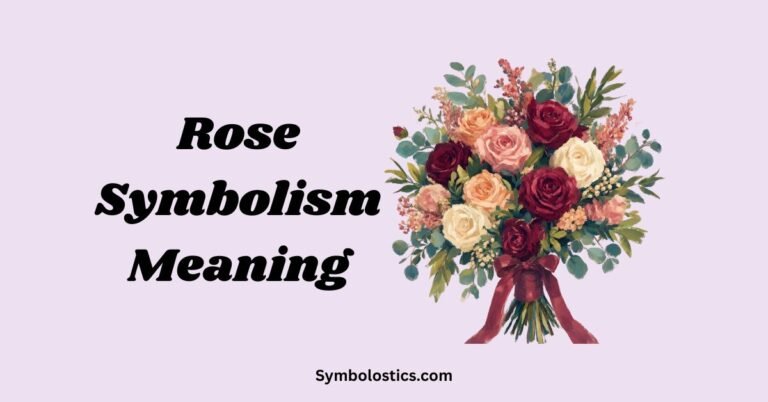
In Robert Burns’s love poem, the red rose symbolizes deep romantic love.
The poet compares his love to a rose that is fresh and beautiful, showing:
- Passion
- Loyalty
- Timeless affection
The rose is not just a flower—it becomes a living expression of love itself.
Symbol: Red rose
Meaning: Romantic love and devotion
Ah Sunflower – William Blake
In William Blake’s poem, the sunflower symbolizes human longing and spiritual pursuit.
The sunflower “seeks” the sun, just as humans seek meaning, truth, or spiritual fulfillment.
Symbol: Sunflower
Meaning: Desire for eternity and higher truth
Crossing Alone the Nighted Ferry – A.E. Housman
In A. E. Housman’s poem, the ferry symbolizes the journey from life to death.
The ferry crossing is not physical—it represents:
- Transition to the afterlife
- Final separation from the living world
- Acceptance of mortality
Symbol: Ferry
Meaning: Death and transition
The World’s a Stage – William Shakespeare
In works by William Shakespeare, the “stage” symbolizes life itself.
Human beings are compared to actors playing roles, representing:
- Life’s temporary nature
- Social identity as performance
- Fate and destiny
Symbol: Stage
Meaning: Life as performance
Types of Symbolism in Poetry
Symbolism appears in many forms. Understanding these categories helps you interpret poems more accurately.
Nature Symbolism
Nature is one of the most common symbolic tools in poetry.
Examples:
- Rivers → life journey
- Trees → growth and strength
- Storms → emotional chaos
Color Symbolism
Colors often carry strong emotional meanings.
- Red → love, danger, passion
- Black → death, mystery, grief
- White → purity, innocence
- Green → nature, growth, renewal
Object Symbolism
Everyday objects can represent deeper ideas.
- Chains → oppression or restriction
- Mirrors → truth or self-reflection
- Roads → life choices
Animal Symbolism
Animals are widely used in poetry symbolism.
- Owl → wisdom
- Raven → death or mystery
- Dove → peace
Common Symbols in Poetry (Quick Reference Table)
| Symbol | Common Meaning |
| Rain | Sadness or cleansing |
| Sun | Hope or life |
| Moon | Loneliness or mystery |
| Water | Emotion or rebirth |
| Fire | Passion or destruction |
| Snow | Silence or purity |
| Wind | Change or freedom |
Symbolism vs Other Literary Devices
Understanding differences helps avoid confusion.
Symbolism vs Metaphor
- Symbolism: one thing represents a deeper idea throughout the poem
- Metaphor: direct comparison used once or briefly
Symbolism vs Imagery
- Symbolism: meaning beyond the image
- Imagery: sensory description only
Symbolism vs Allegory
- Symbolism: individual symbols carry meaning
- Allegory: entire story has hidden meaning
How Symbolism Enhances Meaning in Poetry
Symbolism transforms simple poetry into layered meaning. It allows poets to:
- Communicate emotions indirectly
- Create mystery and depth
- Encourage interpretation
- Connect universal human experiences
A poem with symbolism is never just one meaning—it grows with every reader’s interpretation.
Real-Life Interpretation of Symbols
One of the most fascinating aspects of symbolism is its flexibility.
For example:
- A rose can mean love, sacrifice, or even secrecy
- Rain can mean sadness, renewal, or emotional release
- Darkness can represent fear or peace depending on context
This is why poetry remains timeless—meanings evolve with readers.
Common Mistakes When Interpreting Symbolism
Many beginners misread symbols. Here are common mistakes:
Taking everything literally
Not every object is symbolic.
Over-interpreting simple details
Sometimes a flower is just a flower.
Ignoring context
Meaning depends on surrounding lines.
Assuming one fixed meaning
Symbols can have multiple interpretations.
FAQs About Symbolism in Poetry
What is symbolism in poetry with examples?
Symbolism is when objects represent deeper meanings, like a rose symbolizing love or a raven symbolizing grief.
What are common symbols in poetry?
Common symbols include rain, sun, moon, fire, water, and flowers.
How do you identify symbolism in poetry?
Look for repeated images, emotional tone, and objects that suggest deeper meaning.
Is symbolism the same as metaphor?
No. Symbolism is ongoing representation, while a metaphor is a direct comparison.
Why do poets use symbolism?
Poets use symbolism to add depth, emotion, and multiple layers of meaning.
Can a symbol have multiple meanings?
Yes, symbols can change meaning depending on context.
What is color symbolism in poetry?
Color symbolism assigns meanings like red for passion or black for death.
What is nature symbolism in poetry?
Nature symbolism uses elements like rivers, trees, and weather to represent emotions or ideas.
What is the difference between symbol and imagery?
Imagery describes sensory details, while symbolism adds deeper meaning.
How does symbolism affect poetry?
It makes poetry more meaningful, emotional, and open to interpretation.
Conclusion
Symbolism is what transforms poetry from simple writing into deep emotional expression. It allows poets to communicate ideas indirectly, making readers think, feel, and interpret meaning in their own way.
From ravens symbolizing grief to flowers representing love, symbolism turns ordinary images into powerful storytelling tools. Once you understand how it works, every poem becomes richer, deeper, and more meaningful.