Anarchy Symbol Meaning: History, Punk Culture & Hidden Messages
The anarchy symbol is one of the most recognizable political and cultural icons in the world. Often seen painted on walls, jackets, and protest signs, it represents rebellion, freedom, and resistance to authority. For many people, the symbol sparks curiosity because it carries both political and artistic meaning.
At first glance, the famous “A” inside a circle may seem aggressive or chaotic. However, the symbol has a much deeper background connected to philosophy, anti-authoritarian beliefs, and social movements. Its meaning changes depending on culture, history, and personal interpretation.
Today, the anarchy symbol appears in punk music, tattoos, fashion, activism, and digital art. Some view it as a call for freedom, while others misunderstand it as support for disorder. Understanding its true meaning requires looking at its origins and the ideas behind anarchism itself.
Anarchy Symbol Meaning Punk
The punk movement adopted the anarchy symbol during the 1970s as a sign of rebellion against social rules and political control. Punk bands used the symbol on album covers, clothing, and graffiti to express frustration with authority and mainstream culture.
For punk communities, the symbol represented independence, nonconformity, and freedom of expression. It became more than a political sign because it reflected a lifestyle that rejected rigid systems and encouraged individuality.
Is the Anarchy Symbol Bad
The anarchy symbol is not automatically bad or evil. Its meaning depends on how people interpret anarchism and the context in which the symbol is used. Many supporters connect it with freedom, equality, and resistance to oppression rather than violence.
Some people associate the symbol with chaos because the word “anarchy” is often linked to disorder in movies and media. This misunderstanding has created fear around the symbol even though many anarchists promote peaceful cooperation and self-governance.
In modern culture, the symbol is used in art, music, fashion, and activism. While certain groups may use it aggressively, the symbol itself mainly represents anti-authoritarian ideas and personal freedom rather than criminal behavior.
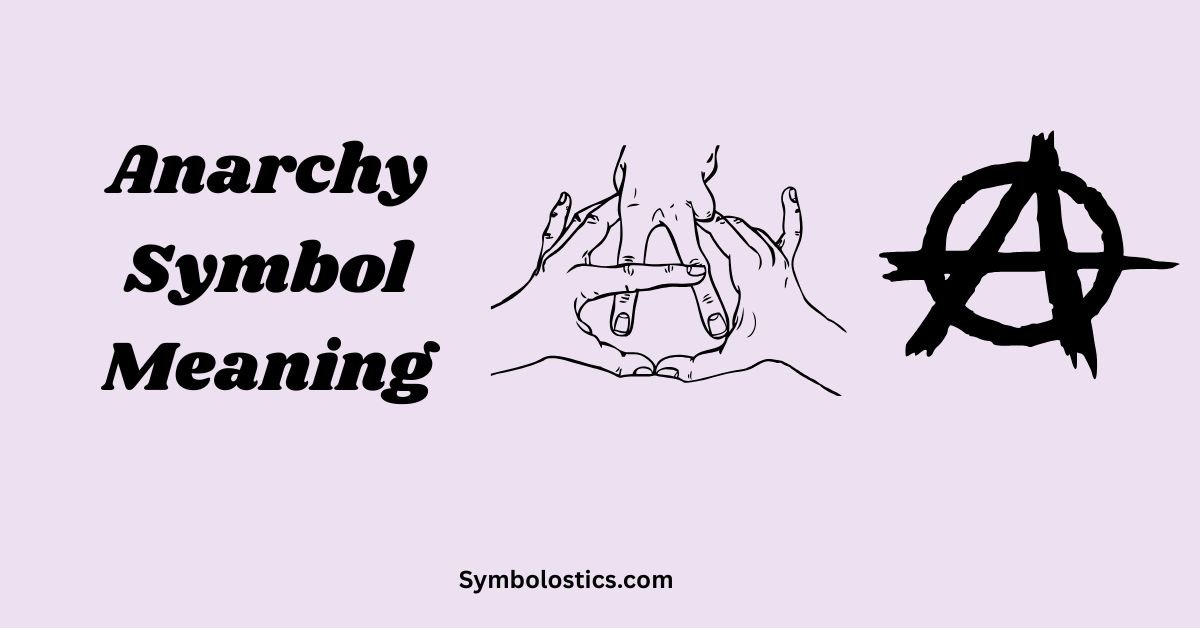
Anarchy Symbol Meaning A with a Circle Around It
- The “A” stands for “Anarchy” or “Anarchism.”
- The circle represents unity, wholeness, and global solidarity.
- Some interpret the circle as the letter “O” from the phrase “Anarchy is Order.”
- The design became popular in political movements during the 20th century.
- It symbolizes resistance against oppressive systems.
- Many people use it as a sign of personal independence.
- The symbol is widely connected to punk culture and activism.
- It often appears in graffiti, flags, and protest art.
- Different anarchist groups use different variations of the symbol.
- The Circle-A remains the most recognized anarchist icon worldwide.
Anarchy Symbol Meaning Tattoo
| Tattoo Style | Meaning |
| Small Circle-A | Personal freedom and rebellion |
| Punk-inspired tattoo | Connection to punk culture |
| Black ink design | Resistance against authority |
| Minimalist symbol | Independent thinking |
| Graffiti-style tattoo | Street activism and anti-establishment views |
| Red and black tattoo | Revolutionary anarchist symbolism |
| Combined skull design | Protest against oppressive systems |
| Flame-themed symbol | Radical transformation and resistance |
| Broken chain tattoo | Freedom from control |
| Abstract anarchy art | Individual interpretation of liberty |
Anarchist Symbol
Powerful Meanings and Associations
- Freedom
- Resistance
- Independence
- Equality
- Anti-authoritarianism
- Individuality
- Rebellion
- Revolution
- Mutual aid
- Justice
- Protest
- Self-governance
- Creativity
- Nonconformity
- Liberation
- Unity
- Defiance
- Civil resistance
- Social change
- Community cooperation
- Human rights
- Free expression
- Autonomy
- Collective action
- Grassroots movements
- Anti-oppression
- Direct action
- Cultural rebellion
- Radical thought
- Political activism
- Decentralization
- Personal power
- Symbolic protest
- Counterculture identity
- Alternative social systems
Anarchy Symbol Meaning Spiritual
Spiritually, some people view the anarchy symbol as a representation of inner freedom and liberation from mental or emotional control. It can symbolize breaking away from limiting beliefs and choosing an authentic path in life.
Others connect the symbol to spiritual independence and self-discovery. Instead of following rigid institutions, they see it as a reminder to trust personal truth and individual conscience.
Anarchy Symbol Tattoo
| Tattoo Placement | Common Interpretation |
| Wrist | Constant reminder of freedom |
| Chest | Deep personal beliefs |
| Neck | Fearless rebellion |
| Shoulder | Strength and resistance |
| Finger | Subtle anti-authoritarian message |
| Back | Lifelong commitment to ideals |
| Ankle | Quiet individuality |
| Forearm | Visible protest identity |
| Hand | Bold nonconformity |
| Behind ear | Minimalist symbolic rebellion |
Circle-A Meaning
The Circle-A symbol became internationally famous during anarchist movements in Europe and later spread through punk culture and political activism. It combines the letter “A” for anarchy with a circle representing order and unity.
Many historians connect the symbol to the phrase “Anarchy is Order,” showing that anarchism does not necessarily mean chaos. Instead, supporters believe societies can function through cooperation without strict rulers or centralized authority.
Foundations of Anarchist Thought
- Opposition to authoritarian rule
- Belief in voluntary cooperation
- Support for social equality
- Rejection of oppressive systems
- Advocacy for personal freedom
- Decentralized communities
- Mutual aid between individuals
- Criticism of state power
- Worker self-management
- Freedom of expression
- Community-based decision making
- Anti-hierarchy principles
Anarchism as a Movement, 1870–1940
| Period | Major Development |
| 1870s | Rise of organized anarchist groups in Europe |
| 1880s | Growth of labor activism and worker unions |
| 1890s | Increased political protests and publications |
| Early 1900s | Spread of anarchist ideas worldwide |
| 1910s | Influence during labor revolutions |
| 1920s | Strong presence in Spain and Italy |
| 1930s | Participation in anti-fascist struggles |
| 1940s | Decline due to war and political suppression |
Decline of European Anarchism
Important Factors
- Rise of fascism
- Government crackdowns
- Political imprisonment
- Internal divisions
- Economic instability
- World War conflicts
- Loss of public support
- Communist competition
- State censorship
- Military repression
- Exile of activists
- Weak organization
- Media propaganda
- Assassinations
- Decline of unions
- Centralized governments
- Police surveillance
- Nationalism growth
- Political fragmentation
- Fear of revolution
- Failed uprisings
- Declining publications
- Leadership disputes
- Anti-radical laws
- Public misunderstanding
- Reduced funding
- Ideological conflicts
- Loss of influence after wars
- Shift toward socialism
- Authoritarian political systems
Vietnam and Anarchism
Anarchist ideas reached Vietnam through anti-colonial activism and intellectual movements during the early 20th century. Some Vietnamese thinkers explored anarchism as a way to resist colonial power and promote social equality among workers and peasants.
Korea and Anarchism
In Korea, anarchism became connected to independence movements against Japanese colonial rule. Korean anarchists supported self-governance, education, and community organization while participating in resistance efforts during the early modern era.
Anarchism in the Arts
- Punk music and underground rock
- Protest graffiti and street art
- Revolutionary literature
- Independent filmmaking
- Political posters
- Experimental theater
- Anti-establishment fashion
- DIY art movements
- Underground comics
- Protest photography
- Radical poetry
- Counterculture design
History of the Anarchy Symbol
The modern anarchy symbol gained popularity during the 1960s and 1970s when activist groups and punk communities began using the Circle-A in protests and art. Its simple design made it easy to paint on walls, posters, and clothing.
Although anarchist ideas existed long before the symbol became famous, the Circle-A helped create a universal identity for anarchist movements worldwide. Today, it remains one of the most recognized political symbols in modern culture.
Other Anarchy Symbols and Flags
- Black flag
- Red and black flag
- Black cat symbol
- Wooden shoe sabotage symbol
- Libertarian socialist flag
- Anarcho-syndicalist emblem
- Green anarchism flag
- Purple anarchist flag
- Feminist anarchist symbol
- Anti-fascist action symbols
- Mutual aid imagery
- DIY protest logos
Frequently Asked Questions
What does the anarchy symbol actually mean?
The anarchy symbol mainly represents freedom, resistance to oppressive authority, and self-governance. It is connected to anarchist philosophy rather than simple chaos or destruction.
What is the true meaning of anarchy?
Anarchy refers to a society without centralized rulers where people cooperate voluntarily. Many anarchists believe communities can function through mutual aid and shared responsibility.
What does an anarchist believe in?
Anarchists generally support personal freedom, equality, and opposition to authoritarian systems. They often favor decentralized communities and voluntary cooperation.
Is the anarchy symbol religious?
The anarchy symbol is not a religious sign. It is primarily political and philosophical, although some individuals give it personal spiritual meanings.
Why is the anarchy symbol used in punk culture?
Punk culture adopted the symbol to express rebellion against social norms and authority. It became a visual statement of independence and anti-establishment identity.
Is anarchism the same as violence?
No, anarchism is not automatically linked to violence. Many anarchists focus on peaceful cooperation, social justice, and community organization.
What does the black anarchist flag represent?
The black flag symbolizes resistance against oppression and rejection of authoritarian systems. It is one of the oldest anarchist symbols.
Why do people get anarchy symbol tattoos?
People choose the tattoo to express freedom, individuality, rebellion, or political beliefs. Others simply connect with its punk or artistic meaning.
Is the Circle-A the official anarchist symbol?
The Circle-A is the most recognized anarchist symbol globally, but anarchism has many other symbols and flags connected to different movements.
Does the anarchy symbol still matter today?
Yes, the symbol remains influential in activism, music, fashion, and social movements. It continues to represent freedom and resistance for many people worldwide.
Conclusion
The anarchy symbol is far more complex than its chaotic reputation suggests. From political movements and punk culture to tattoos and artistic expression, the Circle-A has evolved into a global icon of rebellion, freedom, and individuality. While some people misunderstand anarchism as disorder, many supporters view it as a philosophy focused on equality, cooperation, and resistance to oppressive authority. Its presence in art, music, and activism shows how deeply it has influenced modern culture. Whether seen as political, spiritual, or personal, the anarchy symbol continues to spark debate and inspire people seeking independence and alternative ways of thinking.