Symbolism Clipart: Spiritual, Cultural, and Creative Uses of Symbolic Graphics
In a world flooded with visual content, symbolism clipart has quietly become one of the most powerful tools for communication. A single image—a dove, a tree, a serpent, a heart—can communicate ideas that entire paragraphs struggle to explain. From spiritual teachings and psychological archetypes to branding, tattoos, dreams, and digital storytelling, symbolic graphics carry layers of meaning that transcend language.
But what does symbolism clipart really represent? Is it merely decorative, or does it tap into ancient myth, collective memory, and unconscious archetypes?
This in-depth guide explores the spiritual meaning, cultural symbolism, psychological interpretations, biblical references, dream meanings, omens, spirit animal associations, and modern creative uses of symbolism clipart. By the end, you’ll understand not only what these images mean—but why they resonate so deeply across cultures and centuries.
What Is Symbolism Clipart?
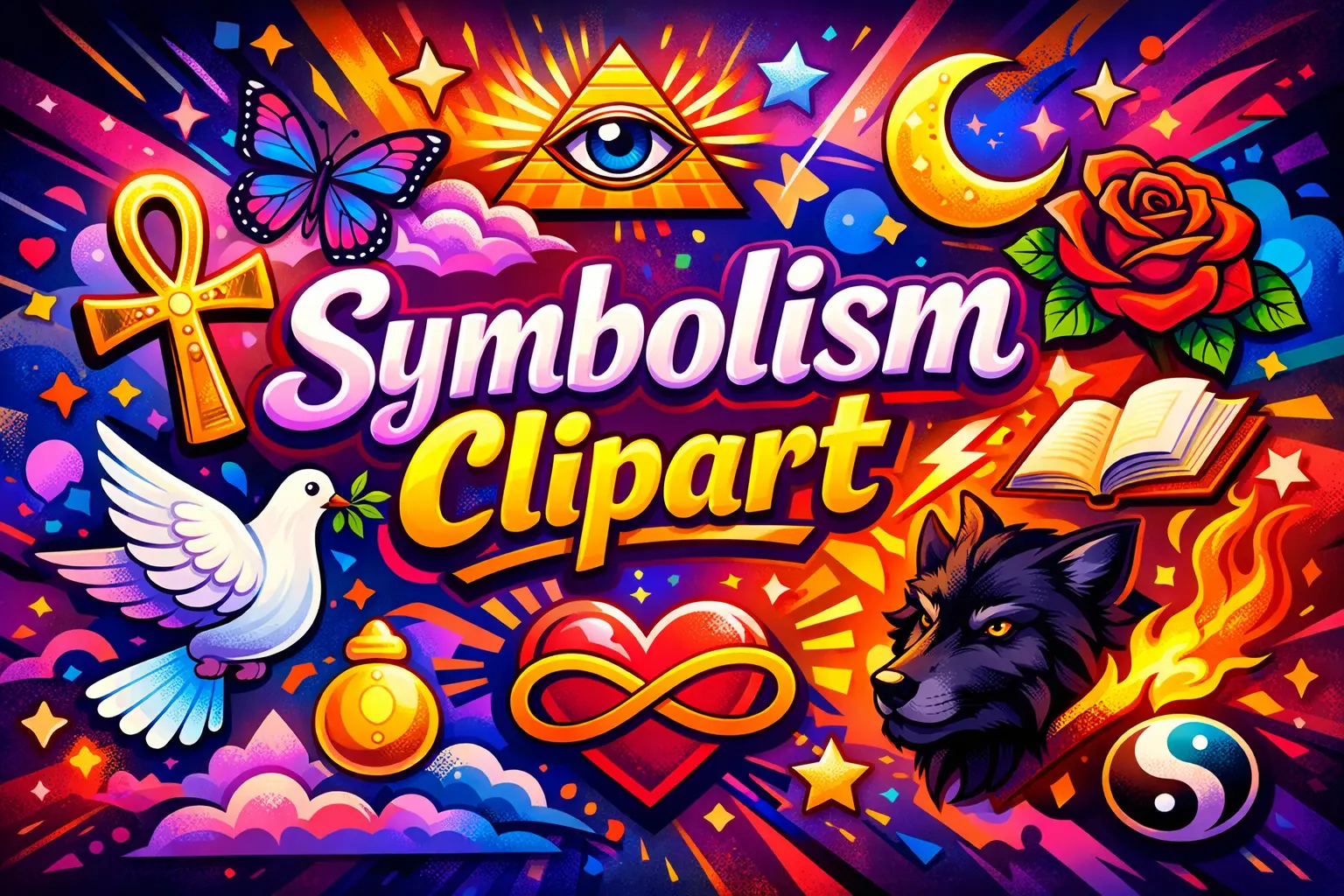
Symbolism clipart refers to pre-designed graphic images that visually represent abstract ideas, beliefs, emotions, or cultural concepts through symbolic imagery. These graphics often draw from ancient religious icons, mythological figures, animals, natural elements, and universal archetypes to communicate deeper meanings in education, design, spirituality, and media.
Unlike ordinary decorative images, symbolism clipart functions as a visual metaphor—compressing philosophical, spiritual, psychological, or cultural narratives into simplified graphical form.
Examples include:
- A dove representing peace
- A serpent representing transformation
- A lotus symbolizing spiritual awakening
- A heart symbolizing love
Because symbols operate at a subconscious level, symbolism clipart has become a powerful storytelling tool in modern digital culture.
Historical Origins of Symbolic Imagery
Symbolic imagery predates written language. Ancient civilizations used symbols as sacred communication tools.
Ancient Egypt
In Ancient Egypt, hieroglyphs were more than letters—they were sacred symbols. The ankh symbolized eternal life, while the Eye of Horus represented divine protection and healing.
Native American Traditions
Among many Native American tribes, animal imagery expressed spiritual identity and tribal values. The eagle symbolized vision and strength; the turtle represented Earth and longevity.
Early Christianity
In early Christian art, symbols like the fish (Ichthys), lamb, and cross carried hidden meanings during times of persecution. Symbolism was both spiritual expression and coded communication.
European Folklore
Medieval European art featured dragons, ravens, and roses—each holding layers of allegorical meaning tied to morality, prophecy, or divine messages.
Symbolic imagery evolved from sacred ritual tools into modern clipart libraries—yet the archetypal meanings remain embedded in cultural memory.
Categories of Symbolism Clipart
1. Spiritual & Religious Symbols
Common examples:
- Cross (Christianity)
- Crescent moon (Islamic heritage)
- Lotus (Eastern spirituality)
- Om symbol (Hindu philosophy)
These symbols function as visual theology—instantly invoking belief systems and sacred narratives.
2. Nature & Animal Symbols
Nature symbolism often reflects universal life cycles:
- Butterfly: rebirth and transformation
- Owl: wisdom and intuition
- Tree: growth and interconnectedness
- Wolf: instinct and loyalty
Animal symbolism frequently connects to spirit animal interpretations.
3. Love & Relationship Symbols
- Heart: romantic love
- Rose: passion and sacrifice
- Swan: eternal partnership
- Infinity symbol: unending bond
Such clipart is widely used in weddings, greeting cards, and social media.
4. Cultural & Mythological Symbols
- Phoenix: resurrection
- Dragon: power or chaos (varies by culture)
- Celtic knot: eternity
- Yin-Yang: duality and balance
These images embody mythological storytelling traditions.
Symbolism Clipart in Spirituality
Spiritual symbolism clipart often reflects universal metaphysical concepts:
Light and Illumination
Candles and rays symbolize enlightenment and divine guidance.
Water
Represents purification, emotional depth, and renewal.
Serpent
Across traditions, the serpent can represent:
- Temptation
- Healing
- Rebirth (shedding skin)
Lotus Flower
In Eastern traditions, the lotus grows in mud yet blooms pure—symbolizing spiritual awakening and transcendence.
Symbolism clipart used in meditation guides or spiritual blogs often taps into these universal metaphors.
Psychological Interpretation (Jungian Symbolism)
Swiss psychiatrist Carl Jung proposed that symbols emerge from the collective unconscious—a shared reservoir of archetypes inherited by humanity.
Common Jungian archetypes seen in symbolism clipart:
- The Shadow (dark figures, wolves, serpents)
- The Self (mandalas, circles)
- The Hero (sword, lion)
- The Great Mother (tree, earth symbols)
According to Jungian theory, symbolic images resonate because they activate unconscious archetypal memory patterns.
For example:
- A butterfly clipart may trigger subconscious associations with personal transformation.
- A tree symbol can evoke stability, ancestry, and psychological grounding.
Symbolism clipart works because it speaks to both conscious interpretation and unconscious recognition.
Scientific Life Cycle Explanation (Using Nature Symbols)
Many symbolic clipart designs originate from observable biological processes.
Butterfly Transformation
Life cycle stages:
- Egg
- Larva (caterpillar)
- Pupa (chrysalis)
- Adult butterfly
Scientifically, metamorphosis involves complete cellular restructuring. Symbolically, this process represents radical personal change.
Tree Growth
A tree grows from seed to sapling to maturity. Its rings record time. Symbolically, trees represent growth, wisdom, and life continuity.
Serpent Shedding
Snakes shed skin through ecdysis, enabling growth. Symbolically, this biological renewal becomes a metaphor for rebirth.
Science explains the mechanics; symbolism explains the meaning.
Symbolism Clipart in Dreams
Symbols appearing in dreams often reflect emotional or spiritual states.
Dream Scenarios & Interpretations
Dream of a Dove Clipart
- Peace entering your life
- Forgiveness or reconciliation
Dream of a Snake Symbol
- Fear or hidden transformation
- Betrayal or healing (context matters)
Dream of a Broken Heart Symbol
- Emotional vulnerability
- Need for closure
Dream of a Tree Symbol
- Stability and family roots
- Personal growth
Dream symbols should be interpreted within emotional context rather than rigid universal rules.
Biblical Meaning of Symbolism Clipart
Biblical symbolism is foundational in Western imagery.
Dove
In the story of Noah’s Ark, the dove symbolizes peace and divine promise.
Serpent
Represents temptation and deception in the Garden of Eden narrative.
Lamb
Symbolizes innocence and sacrifice.
Light
Represents divine truth and salvation.
Symbolism clipart inspired by biblical themes often draws directly from these narratives.
Cultural Symbolism Comparison Table
| Symbol | Native American Meaning | Egyptian Meaning | Christian Meaning | European Folklore |
|---|---|---|---|---|
| Eagle | Spiritual vision | Royal authority | Divine inspiration | Power & freedom |
| Serpent | Healing & renewal | Protection | Temptation | Wisdom or danger |
| Tree | Earth connection | Life force | Faith growth | Ancestry |
| Dove | Messenger spirit | Fertility | Peace & Holy Spirit | Harmony |
This table shows how meanings shift depending on cultural lens.
Good or Bad Omen Analysis
Symbolism clipart itself is neutral—but cultural interpretation determines omen status.
Generally Positive Symbols
- Butterfly (rebirth)
- Dove (peace)
- Lotus (awakening)
Ambiguous Symbols
- Snake (healing or betrayal)
- Raven (wisdom or death)
Traditionally Negative Symbols
- Broken mirror
- Black cat (in some European traditions)
Omens depend on context, belief system, and personal association.
Spirit Animal Meaning in Symbolism Clipart
When animal clipart resonates strongly, it may reflect archetypal spirit animal themes.
Examples:
- Wolf: loyalty, instinct, leadership
- Owl: intuition, night vision
- Bear: strength, introspection
- Eagle: higher perspective
In Native American traditions, animal symbols represent spiritual guides rather than literal animals.
Tattoo Symbolism and Clipart Influence
Many tattoos originate from clipart-style symbolic designs.
Popular examples:
- Infinity symbol tattoos
- Mandala patterns
- Feather designs
- Anchor tattoos (stability)
Symbolic tattoos often represent identity, transformation, or personal vows.
Love & Relationship Symbolism
In relationships, symbolism clipart plays a huge role in visual storytelling.
Heart
Universal symbol of love and emotional connection.
Rose
Red rose = passion
White rose = purity
Infinity + Heart
Eternal love
Swans
Swans mate for life, symbolizing loyalty and devotion.
Couples frequently use symbolic clipart in wedding invitations and anniversary designs.
Symbolism Clipart in Education
Teachers use symbolic imagery to simplify abstract concepts:
- Scales of justice = fairness
- Lightbulb = idea
- Globe = global awareness
Symbolic graphics enhance memory retention by activating visual cognition pathways.
Symbolism Clipart in Branding & Design
Brands use symbolism strategically:
- Apple icon = knowledge and simplicity
- Shield = protection
- Tree = sustainability
Logos rely on symbolic shorthand to build instant emotional connection.
Symbolism Clipart in Digital Culture
In emojis, memes, and social media icons, symbolic imagery evolves rapidly.
The heart emoji now carries layered meanings depending on color.
Digital culture has accelerated the spread of symbolic clipart into everyday communication.
How to Use Symbolism Clipart Creatively
- Pair symbols with storytelling context.
- Research cultural origins before use.
- Avoid misappropriation of sacred symbols.
- Combine multiple symbols for layered meaning.
- Use minimalistic design for stronger psychological impact.
Symbolism is most powerful when used intentionally.
FAQs on Symbolism Clipart
1. What is symbolism clipart used for?
Symbolism clipart is used in education, branding, spiritual materials, digital content, and creative design to visually represent abstract ideas.
2. Is symbolism clipart always spiritual?
No. While many symbols originate in spirituality, they can also represent psychological, cultural, or emotional concepts.
3. Are some symbols considered bad omens?
Yes, depending on cultural context. For example, black cats are seen as unlucky in some European traditions but lucky in others.
4. Why do symbols appear in dreams?
Dream symbols often reflect subconscious emotions, archetypes, or unresolved psychological themes.
5. Can symbolism clipart be used in tattoos?
Yes. Many tattoo designs originate from symbolic imagery representing identity, love, transformation, or spirituality.
6. Are symbol meanings universal?
No. Meanings vary across cultures and belief systems.
7. How can I choose the right symbol?
Consider cultural background, personal resonance, and intended message.
Conclusion
Symbolism clipart is far more than decorative art. It is a modern expression of ancient human storytelling. Whether rooted in Ancient Egypt, Native American spirituality, Christian theology, European folklore, Jungian psychology, or biological life cycles, symbolic imagery continues to shape how we communicate meaning.
These small graphics hold immense power because they tap into shared human archetypes and lived experience. They function as bridges between conscious thought and unconscious symbolism, between personal narrative and collective memory.
In a visually driven world, symbolism clipart remains one of the most efficient—and profound—ways to communicate truth, emotion, and identity.
When used thoughtfully, it becomes not just design—but language.