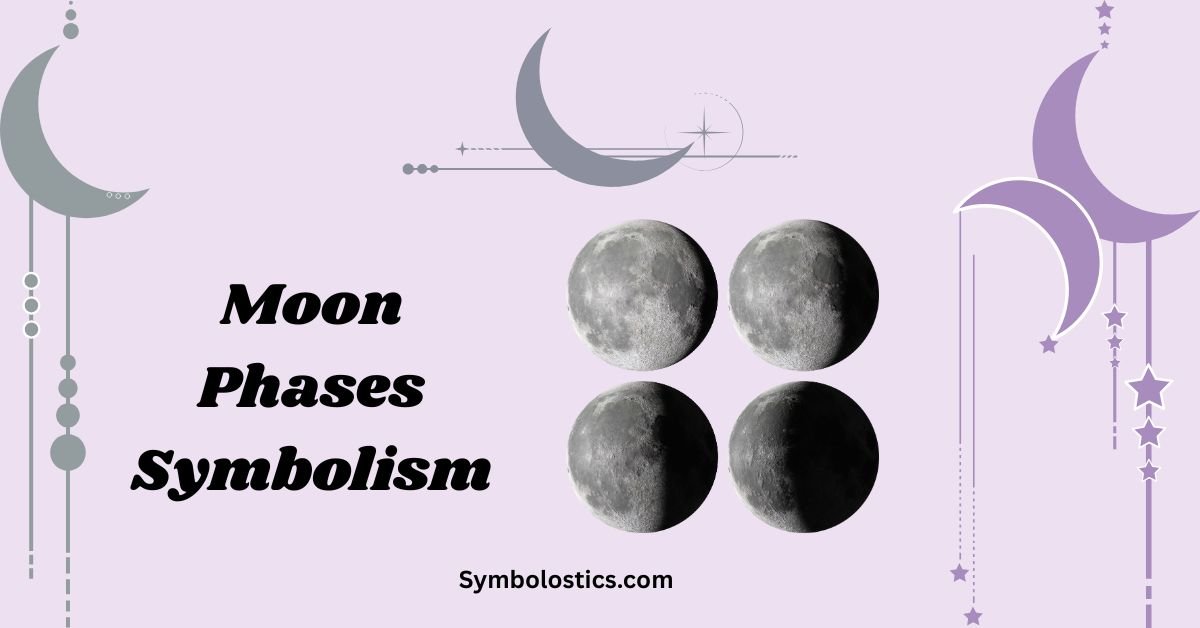
Moon Phases Symbolism: Spiritual Meanings & Astrology
Moon phases symbolism is one of the oldest and most universal forms of symbolism found across cultures, religions, and spiritual traditions. For thousands of years, people have looked to the moon as a guide for understanding change, growth, emotions, and the natural cycles of life.
Unlike the sun, which appears relatively constant, the moon changes its appearance throughout the month. These visible transformations have inspired countless interpretations, making the lunar cycle a powerful symbol of renewal, transformation, intuition, and personal evolution.
Today, moon phase symbolism appears everywhere—from tattoos and jewelry to astrology, spirituality, mindfulness practices, and relationship guidance. While interpretations vary, the core message remains the same: life unfolds in cycles, and every ending creates space for a new beginning.
What Do Moon Phases Symbolize?
At their core, moon phases symbolize the continuous cycle of life.
The lunar cycle reflects experiences that everyone encounters:
- New beginnings
- Growth and development
- Achievement and fulfillment
- Reflection and wisdom
- Letting go
- Renewal and rebirth
Because the moon repeatedly transitions from darkness to fullness and back again, it serves as a reminder that change is natural and necessary.
Many people view the moon as a symbol of resilience. No matter how dark the sky becomes during the new moon, the moon always returns to fullness. This recurring pattern has made it a powerful metaphor for hope, healing, and transformation.
Quick Meaning of Each Moon Phase
| Moon Phase | Symbolic Meaning | Life Theme |
|---|---|---|
| New Moon | New beginnings | Setting goals |
| Waxing Crescent | Hope and intention | Taking first steps |
| First Quarter | Action and commitment | Overcoming challenges |
| Waxing Gibbous | Refinement and preparation | Improving plans |
| Full Moon | Completion and clarity | Achievement |
| Waning Gibbous | Gratitude and wisdom | Reflection |
| Last Quarter | Release and forgiveness | Letting go |
| Waning Crescent | Rest and healing | Renewal |
History of Moon Phases Symbolism
Long before modern calendars existed, ancient civilizations tracked the moon to measure time.
Farmers relied on lunar cycles to determine planting and harvesting periods. Sailors used moonlight for navigation, while religious leaders organized ceremonies around lunar events.
Ancient cultures often viewed the moon as a bridge between heaven and earth. Because it followed a predictable pattern, it represented order within an ever-changing world.
Civilizations including the Egyptians, Greeks, Romans, Chinese, Celts, and Indigenous peoples developed unique interpretations of lunar symbolism. Despite cultural differences, many shared the belief that the moon reflected life’s cyclical nature.
Why Moon Cycles Are Symbolically Important
The moon’s symbolism resonates because it mirrors human experiences.
People naturally move through cycles such as:
- Childhood and adulthood
- Success and failure
- Love and heartbreak
- Growth and healing
- Beginnings and endings
The lunar cycle visually represents these recurring patterns.
Rather than viewing life as a straight path, moon symbolism teaches that progress often occurs through phases. Setbacks, pauses, and endings are not failures—they are part of the journey.
Symbolism of Each Moon Phase
New Moon Symbolism
The new moon represents a blank slate.
Since the moon is not visible during this phase, it symbolizes hidden potential, fresh opportunities, and new beginnings.
Common meanings include:
- Starting a new chapter
- Setting intentions
- Personal transformation
- Possibility and hope
Waxing Crescent Symbolism
As the moon begins to grow, it symbolizes optimism and progress.
This phase encourages movement toward goals and trusting the process.
Common meanings include:
- Growth
- Motivation
- Hope
- Confidence
First Quarter Symbolism
The first quarter moon symbolizes action and determination.
This phase often represents moments when important decisions must be made.
Common meanings include:
- Commitment
- Courage
- Effort
- Persistence
Waxing Gibbous Symbolism
This phase symbolizes refinement and preparation.
It represents improving, adjusting, and perfecting what has already begun.
Common meanings include:
- Patience
- Improvement
- Focus
- Self-discipline
Full Moon Symbolism
The full moon is the most powerful and recognizable lunar symbol.
It represents completion, achievement, awareness, and illumination.
Common meanings include:
- Success
- Celebration
- Clarity
- Fulfillment
Waning Gibbous Symbolism
After the full moon, attention shifts toward reflection and gratitude.
This phase symbolizes wisdom gained through experience.
Common meanings include:
- Appreciation
- Learning
- Reflection
- Sharing knowledge
Last Quarter Symbolism
The last quarter moon represents release and reassessment.
It encourages people to let go of what no longer serves them.
Common meanings include:
- Forgiveness
- Closure
- Transition
- Growth through release
Waning Crescent Symbolism
The final phase symbolizes rest, healing, and preparation.
It represents surrendering to life’s natural rhythms before a new cycle begins.
Common meanings include:
- Recovery
- Rest
- Acceptance
- Spiritual renewal
Moon Phases Symbolism Spiritual
One of the most common modern interpretations of moon phases symbolism is spiritual growth.
Many spiritual traditions view the lunar cycle as a reflection of the soul’s journey. Just as the moon transitions through darkness and light, individuals move through periods of learning, transformation, challenge, and awakening.
Spiritually, moon phases symbolize:
- Inner growth
- Self-discovery
- Healing
- Conscious evolution
- Alignment with nature
The lunar cycle encourages mindfulness and awareness of life’s natural rhythms rather than resistance to change.
Moon Phases Spiritual Meaning
The spiritual meaning of moon phases centers on transformation.
Each phase carries symbolic lessons:
- New Moon: Trust the unknown.
- Waxing Moon: Take inspired action.
- Full Moon: Recognize your achievements.
- Waning Moon: Release what no longer serves you.
Many people use moon phases as opportunities for meditation, reflection, journaling, and intention-setting.
Whether viewed through a religious, spiritual, or personal lens, the moon often symbolizes the ongoing process of becoming one’s highest self.
Moon Phase Meaning in Relationship
Moon phases are often used as metaphors for relationships.
Just as the moon changes over time, relationships evolve through different stages.
New Moon
Represents new connections and fresh romantic beginnings.
Waxing Moon
Symbolizes growing trust, commitment, and emotional intimacy.
Full Moon
Represents deep connection, fulfillment, and emotional openness.
Waning Moon
Symbolizes healing, forgiveness, reflection, or closure.
In relationships, moon symbolism reminds us that every partnership experiences periods of growth, challenge, and renewal. Healthy relationships evolve rather than remain static.
Moon Symbolism in Love
The moon has long been associated with romance and love.
Its gentle glow, mysterious nature, and cyclical transformations have inspired poets, artists, and lovers throughout history.
In love symbolism, the moon commonly represents:
- Emotional connection
- Intuition
- Devotion
- Vulnerability
- Deep affection
A full moon often symbolizes passionate love and emotional fulfillment, while a crescent moon may symbolize hope and the beginning of a romantic journey.
Because the moon constantly changes yet always returns, it can also symbolize enduring love that survives life’s challenges.
Moon Phases Symbolism in Astrology
In astrology, the moon represents emotions, instincts, intuition, and the subconscious mind.
The moon governs how people process feelings and respond emotionally to the world around them.
Astrologers often pay close attention to lunar phases because they are believed to symbolize different energetic themes.
Common astrological associations include:
| Moon Phase | Astrological Theme |
|---|---|
| New Moon | Manifestation and intention |
| Waxing Crescent | Growth and opportunity |
| First Quarter | Action and challenge |
| Waxing Gibbous | Refinement |
| Full Moon | Revelation and culmination |
| Waning Gibbous | Wisdom and sharing |
| Last Quarter | Release and transformation |
| Waning Crescent | Rest and preparation |
Moon Phases Meaning Astrology
Astrologically, moon phases are viewed as markers of energetic cycles.
Many astrologers use lunar phases to:
- Set intentions
- Evaluate progress
- Reflect on goals
- Release limiting beliefs
- Prepare for future growth
The moon’s symbolism in astrology focuses less on predicting events and more on understanding timing, emotional patterns, and personal development.
The recurring lunar cycle serves as a reminder that life naturally moves through stages of expansion and contraction.
Moon Phases and Feminine Symbolism
Historically, the moon has often been linked to feminine energy.
This association appears in numerous cultures and mythologies due to connections with fertility, creation, nurturing, and intuition.
Modern interpretations often associate lunar symbolism with:
- Creativity
- Emotional intelligence
- Adaptability
- Compassion
- Inner wisdom
Today, many people view these qualities as universal human traits rather than gender-specific characteristics.
Moon Phases in Modern Culture
Moon symbolism remains extremely popular in contemporary society.
You can find moon phase imagery in:
- Tattoos
- Jewelry
- Home décor
- Wellness brands
- Meditation practices
- Social media
- Art and fashion
The enduring popularity of moon symbolism comes from its flexibility. People can interpret it spiritually, psychologically, artistically, or simply as a reminder that change is a natural part of life.
Positive and Negative Meanings of Moon Phases
Positive Symbolism
- Growth
- Renewal
- Hope
- Wisdom
- Resilience
- Creativity
- Transformation
Challenging Symbolism
- Uncertainty
- Emotional fluctuations
- Endings
- Impermanence
- Letting go
Even the more difficult meanings ultimately support growth. The moon teaches that every ending creates space for a new beginning.
FAQs
What do the moon phases represent?
Moon phases represent the natural cycles of life, including beginnings, growth, achievement, reflection, release, and renewal. They symbolize the constant process of change and transformation.
What do moon phases mean spiritually?
Spiritually, moon phases symbolize personal evolution, self-discovery, healing, intuition, and alignment with nature’s rhythms. Many people use them as guides for reflection and spiritual growth.
Does the moon affect blood pressure?
Research on the moon’s direct effect on blood pressure has produced mixed results. Some studies have explored possible links between lunar cycles and physiological changes, but there is no strong scientific consensus that moon phases significantly affect blood pressure in most people.
Does the moon affect vertigo?
Current scientific evidence does not clearly establish a direct connection between moon phases and vertigo. While some individuals report noticing patterns, medical research has not confirmed a consistent lunar influence on vertigo symptoms.
What does a full moon symbolize?
A full moon symbolizes completion, clarity, success, fulfillment, illumination, and heightened awareness. It is often seen as the peak of the lunar cycle.
Why are moon phases associated with femininity?
Historically, many cultures linked the moon to fertility, motherhood, and creation due to similarities between lunar cycles and menstrual cycles. Modern interpretations often broaden this symbolism to include intuition and creativity.
What does a new moon symbolize?
A new moon symbolizes fresh starts, hidden potential, intention-setting, and the beginning of a new cycle.
Are moon phase tattoos spiritual?
They can be spiritual, but many people choose moon phase tattoos simply as symbols of growth, resilience, personal transformation, or life’s ongoing journey.
Do moon phases have different meanings in different cultures?
Yes. While many cultures associate moon phases with cycles and change, specific meanings vary based on religious beliefs, mythology, agricultural traditions, and local folklore.
Why are moon phases still popular today?
Moon phases remain popular because they provide a simple and powerful visual reminder that life is constantly changing. Their symbolism resonates with themes of growth, healing, resilience, and renewal.
Conclusion
Moon phases symbolism has fascinated humanity for thousands of years because it reflects a universal truth: life moves in cycles. From ancient calendars and agricultural traditions to modern spirituality, astrology, relationships, and personal growth, the moon continues to serve as a powerful symbol of transformation.
Whether viewed as a spiritual guide, an astrological marker, a romantic symbol, or a reminder of life’s natural rhythms, the moon teaches that change is not something to fear. Every phase has its purpose, and every ending carries the promise of a new beginning.