Hermetic Symbolism | Meaning, History & Spiritual Insights
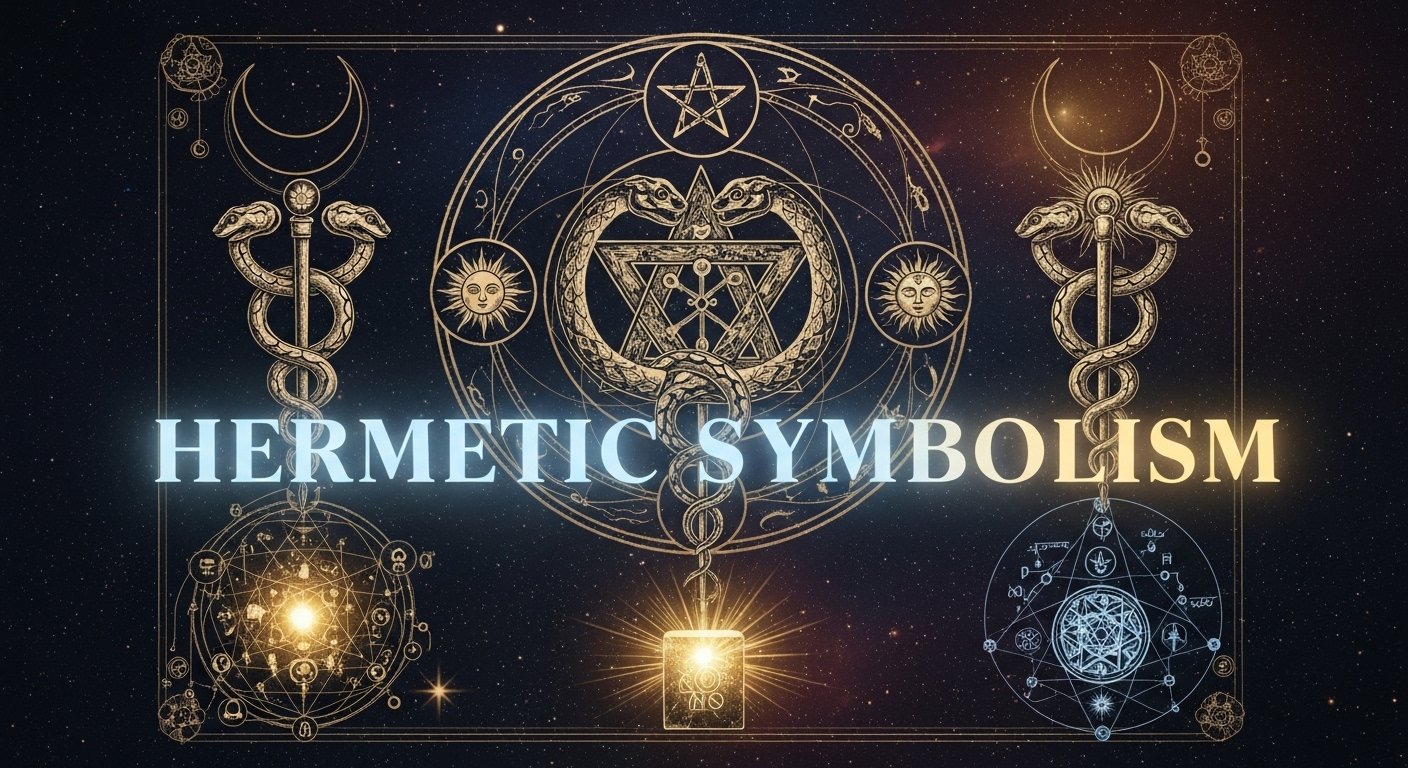
Hermetic symbolism refers to a system of spiritual and philosophical symbols connected to the ancient teachings of Hermes Trismegistus. These symbols communicate hidden knowledge about the universe, transformation, and the relationship between the physical and spiritual worlds. For centuries, philosophers, mystics, and alchemists have used Hermetic symbols to express deep metaphysical ideas that cannot easily be explained through ordinary language.
Rooted in ancient Egyptian and Greek traditions, Hermetic symbolism blends mythology, spirituality, science, and philosophy. Many symbols represent cosmic balance, enlightenment, and the transformation of the soul. Even today, these symbols appear in spiritual traditions, art, literature, and modern philosophical discussions about personal growth and universal wisdom.
History of Hermetic Symbolism
Hermetic symbolism traces its origins to the ancient teachings attributed to Hermes Trismegistus, a mystical figure believed to combine the wisdom of the Egyptian god Thoth and the Greek god Hermes. These teachings formed the basis of Hermetic philosophy, which focuses on understanding universal laws and spiritual enlightenment.
During the Renaissance, Hermetic writings gained popularity among scholars and mystics. Texts such as the Corpus Hermeticum influenced philosophers, alchemists, and spiritual thinkers across Europe. Symbols within these writings were used to express secret knowledge about creation, transformation, and the nature of reality.
Over time, Hermetic symbolism became closely associated with alchemy, mysticism, and esoteric traditions. These symbols acted as visual tools for communicating complex spiritual ideas and guiding seekers toward inner wisdom.
Core Principles of Hermeticism
Hermetic symbolism reflects several philosophical principles that describe how the universe operates. These ideas were later summarized in texts such as The Kybalion.
Some of the key principles include:
- Mentalism: The idea that the universe exists within a universal mind.
- Correspondence: Often expressed as “as above, so below,” meaning that patterns repeat throughout existence.
- Vibration: Everything in the universe is constantly moving and vibrating.
- Polarity: Opposites are actually two extremes of the same reality.
- Rhythm: Life moves in cycles and natural patterns.
- Cause and Effect: Every action produces a reaction.
- Gender: Creative energy exists in both masculine and feminine forms.
These principles help explain why Hermetic symbols often depict balance, transformation, and unity.
Common Hermetic Symbols and Their Meanings
Hermetic traditions use many symbols to express spiritual truths. Each symbol represents a deeper philosophical idea about life, the universe, and spiritual growth.
The Caduceus
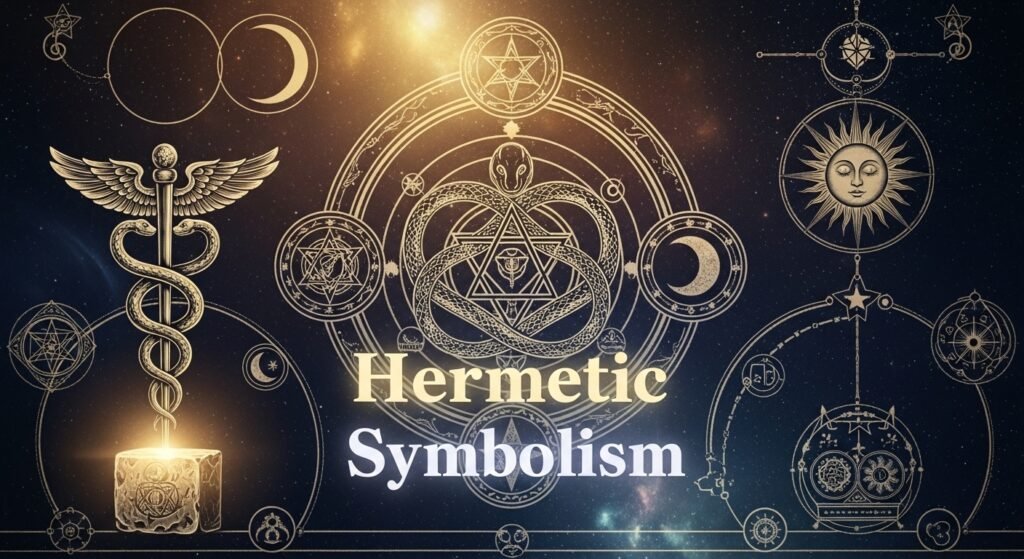
The Caduceus is one of the most recognizable Hermetic symbols. It features two intertwined serpents wrapped around a winged staff.
This symbol represents balance between opposing forces such as male and female energy, light and darkness, or spiritual and physical realms. It is also associated with healing, communication, and transformation.
The Ouroboros
The Ouroboros depicts a serpent forming a circle by eating its own tail.
This symbol represents eternity, cycles of life and death, and the continuous process of renewal. In Hermetic philosophy, it illustrates the idea that the universe constantly recreates itself.
The Eye of Horus / All-Seeing Eye
The Eye of Horus and the All-Seeing Eye represent protection, spiritual awareness, and higher perception.
In Hermetic symbolism, this eye represents insight and the ability to perceive hidden truths beyond the physical world.
The Philosopher’s Stone
The Philosopher’s Stone symbolizes ultimate transformation and enlightenment.
Alchemists believed the stone could transform base metals into gold. Spiritually, it represents the transformation of the human soul from ignorance to wisdom.
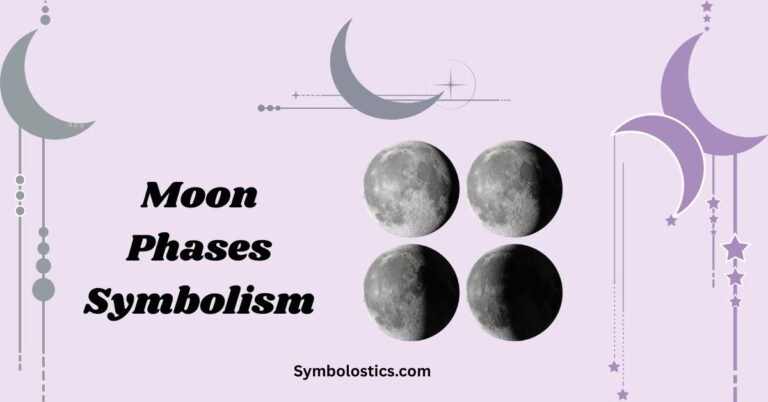
The Sun and Moon
The Sun and the Moon symbolize duality and cosmic balance.
Together they represent masculine and feminine energies, conscious and subconscious mind, and the harmony between opposites.
Triangles and Geometric Figures
Geometric shapes play an important role in Hermetic symbolism. Triangles, circles, and squares represent universal order and harmony.
These shapes often symbolize the elements, spiritual hierarchy, and the structure of reality. Many Hermetic diagrams use geometry to illustrate the relationship between matter, mind, and spirit.
Hermetic Symbolism in Alchemy
Hermetic symbolism is deeply connected to the tradition of Alchemy. Alchemists used symbols to hide their knowledge and protect spiritual teachings from misuse.
Alchemy was not only about transforming metals but also about transforming the human soul. Symbols such as the philosopher’s stone, sacred geometry, and elemental signs represented stages of spiritual purification and enlightenment.
Through these symbolic processes, Hermetic practitioners believed that individuals could achieve spiritual awakening and harmony with the universe.
Spiritual Symbolism of Hermetic Symbols
Hermetic symbols often represent the journey of spiritual awakening. They guide individuals toward understanding universal truths and discovering inner wisdom.
Many symbols emphasize unity between the material and spiritual worlds. They remind seekers that the universe operates through balance, transformation, and interconnectedness.
For spiritual practitioners, these symbols serve as meditation tools, helping them reflect on deeper meanings of life and existence.
Hermetic Symbolism in Dreams
Hermetic symbols sometimes appear in dreams as representations of transformation, knowledge, or hidden insight.
For example, seeing a serpent or circle in dreams may symbolize renewal and personal growth. Symbols such as the sun, moon, or eye can represent awareness, intuition, or spiritual awakening.
Dream interpretations often depend on personal experiences, but Hermetic symbolism suggests that such images may reflect deeper subconscious understanding.
Hermetic Symbolism in Art and Literature
Hermetic symbolism has inspired many artists, writers, and philosophers throughout history. Renaissance artists frequently included symbolic imagery connected to Hermetic teachings.
Literary works exploring mysticism and secret knowledge also draw inspiration from Hermetic traditions. Symbols such as sacred geometry, cosmic balance, and alchemical transformation often appear in philosophical literature and visual art.
These symbols continue to influence modern creative expression, linking ancient wisdom with contemporary culture.
Modern Applications of Hermetic Symbolism
Today, Hermetic symbolism appears in spiritual practices, philosophy, psychology, and popular culture.
Many people study Hermetic symbols to understand universal principles of balance, transformation, and consciousness. These symbols also appear in meditation, self-development practices, and symbolic art.
In modern discussions about spirituality and personal growth, Hermetic symbolism remains a powerful tool for exploring deeper meanings of life.
Hermetic Symbolism by Elements
Hermetic traditions often connect symbols with the four classical elements:
| Element | Symbolic Meaning | Spiritual Idea |
|---|---|---|
| Fire | Transformation and energy | Passion, creativity |
| Water | Emotion and intuition | Spiritual purification |
| Air | Knowledge and communication | Intellectual clarity |
| Earth | Stability and material reality | Grounding and growth |
These elemental symbols represent the building blocks of both nature and human
consciousness.
Life Lessons from Hermetic Symbolism
Hermetic symbolism teaches several timeless life lessons:
- Balance between opposites creates harmony in life.
- Personal transformation is a continuous process.
- Knowledge and wisdom lead to spiritual growth.
- Everything in the universe is interconnected.
- Inner awareness helps reveal deeper truths.
These lessons encourage individuals to seek understanding, harmony, and self-development.
FAQs on Hermetic Symbolism
What is Hermetic symbolism?
Hermetic symbolism refers to spiritual symbols connected with Hermetic philosophy that represent universal truths, transformation, and enlightenment.
Who is Hermes Trismegistus?
Hermes Trismegistus is a legendary figure believed to be the source of Hermetic teachings combining Greek and Egyptian wisdom traditions.
What does the Ouroboros symbolize?
The Ouroboros symbolizes eternity, cycles, and the continuous renewal of life.
How is Hermetic symbolism related to alchemy?
Alchemy uses Hermetic symbols to represent spiritual transformation and hidden knowledge.
Are Hermetic symbols still used today?
Yes, many spiritual practitioners, artists, and philosophers continue to study and use Hermetic symbols.
What does “as above, so below” mean?
This Hermetic phrase suggests that patterns in the universe repeat across different levels of existence.
Why were Hermetic symbols secretive?
Many symbols were intentionally mysterious to protect spiritual teachings from misuse.
What are Hermetic alchemy symbols?
Hermetic alchemy symbols are symbolic images used in Hermetic and alchemical traditions to represent transformation, spiritual growth, and universal laws.
Conclusion
Hermetic symbolism offers a fascinating glimpse into ancient wisdom traditions that explore the relationship between the universe, the human mind, and spiritual transformation. Rooted in the teachings associated with Hermes Trismegistus, these symbols communicate deep philosophical ideas through powerful imagery such as serpents, eyes, celestial bodies, and sacred geometry.
Across history, Hermetic symbols have influenced alchemy, mysticism, art, and literature. Even in modern times, they continue to inspire spiritual exploration and personal growth. By studying these symbols, individuals can gain insight into universal principles such as balance, transformation, and interconnectedness, helping them better understand both the world around them and their own inner journey.