American Traditional Tattoos: Symbols and Meanings
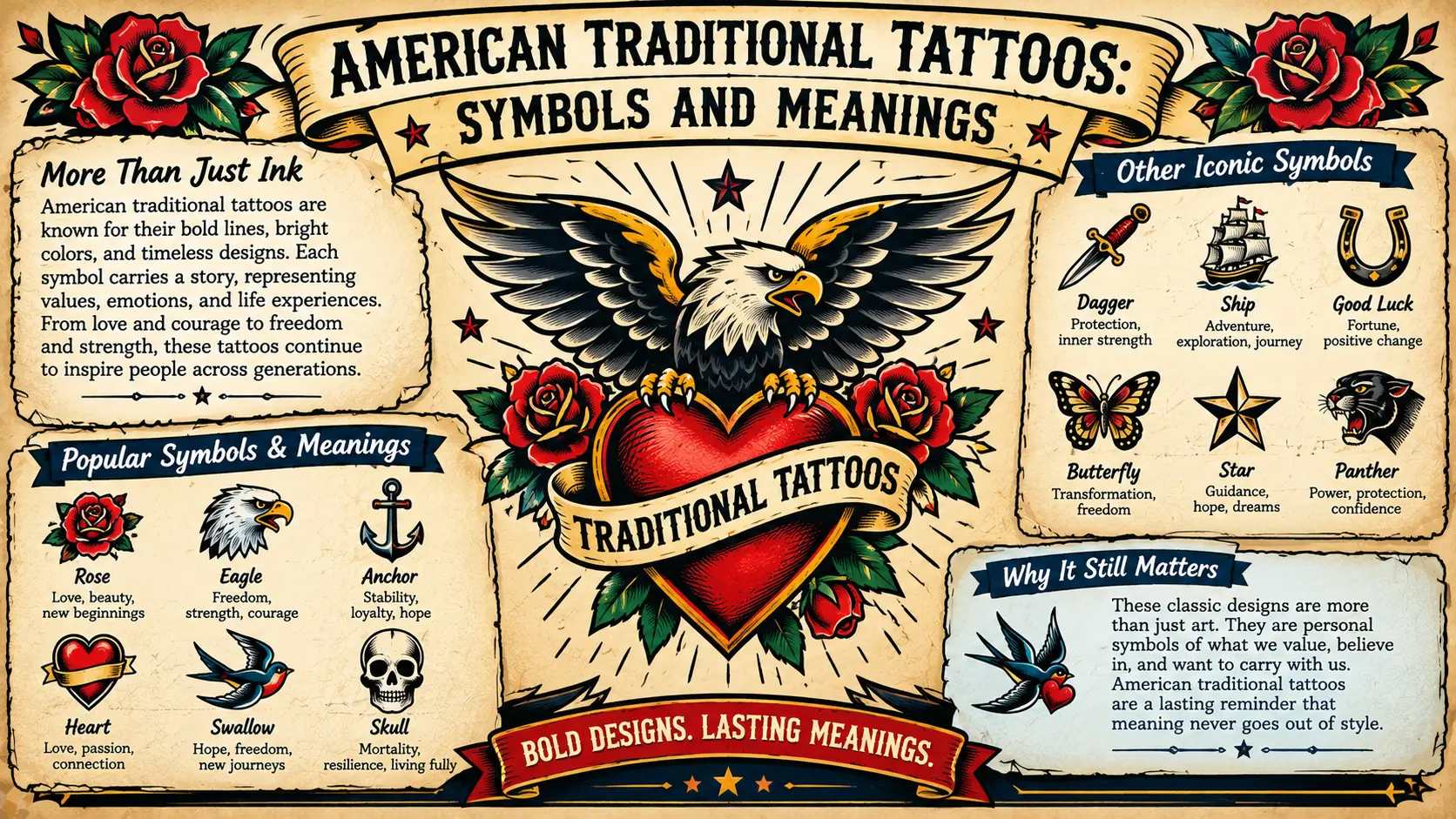
American traditional tattoo symbolism connects bold, timeless artwork with powerful ideas about love, courage, freedom, loyalty, and personal identity. Known for its thick black outlines, vibrant colors, and instantly recognizable designs, this classic style has remained popular for generations. Roses, eagles, anchors, hearts, and swallows are among its most iconic symbols, each carrying distinctive meanings and stories.
Rooted in maritime culture and early American tattooing, these designs often reflect personal experiences, important relationships, and life journeys. An anchor may represent stability, while a swallow can symbolize loyalty and the hope of returning home. Roses often express love and beauty, whereas eagles represent strength, freedom, and independence.
The lasting appeal of American traditional tattoos lies in their combination of artistic simplicity, cultural history, and personal meaning. Understanding their symbolism reveals why these classic designs continue to inspire people who want their tattoos to represent something meaningful.
What Is American Traditional Tattoo Symbolism?
American traditional tattoo symbolism refers to the meanings associated with classic tattoo designs featuring bold black outlines, solid colors, simplified shapes, and iconic imagery. Also known as Old School tattooing, this style emphasizes clear, recognizable designs that remain visually striking over time.
Common motifs include roses, eagles, anchors, hearts, daggers, snakes, and swallows. Each image carries traditional associations, such as love, courage, protection, transformation, or hope. However, these meanings are not fixed rules. A tattoo’s significance can change according to the wearer’s experiences, beliefs, and intentions.
History and Origins of American Traditional Tattoos
American traditional tattooing developed through maritime culture, military communities, traveling tattoo artists, and the growth of professional tattoo studios during the late 19th and early 20th centuries. Sailors frequently chose designs that reflected their journeys, relationships, occupations, and hopes for safe passage home.
One of the most influential figures in this style was Norman “Sailor Jerry” Collins, a 20th-century tattoo artist who helped shape its recognizable visual language. His work contributed to the popularity of bold outlines, strong colors, and memorable nautical imagery.
Over time, American traditional tattooing expanded beyond sailor culture. Its designs became a widely recognized form of self-expression, connecting historical influences with modern personal stories.
Today, the style remains popular because it honors tattooing’s history while allowing individuals to create meaningful designs of their own.
Common American Traditional Tattoo Symbols and Their Meanings
| Tattoo Symbol | Common Symbolic Meaning |
|---|---|
| Rose | Love, beauty, and passion |
| Eagle | Freedom, courage, and strength |
| Anchor | Stability, hope, and security |
| Swallow | Loyalty, safe journeys, and homecoming |
| Heart | Love, affection, and emotional connection |
| Dagger | Courage, sacrifice, and overcoming challenges |
| Snake | Transformation, wisdom, and renewal |
| Panther | Power, confidence, and independence |
These meanings provide a helpful starting point, but the story behind a tattoo is often just as important as its traditional symbolism.
Rose Tattoo Symbolism
The rose is one of the most recognizable designs in American traditional tattooing. Its layered petals, bold outlines, and vibrant colors make it a timeless symbol of love, beauty, passion, and devotion.
Rose colors can introduce additional meanings. Red roses are commonly associated with romantic love, while yellow roses may represent friendship and joy. White roses are often linked to purity, remembrance, or new beginnings. These associations can vary depending on cultural traditions and personal experiences.
Traditional rose tattoos frequently appear alongside hearts, daggers, swallows, or banners. A rose paired with a dagger may express the connection between love and pain, while a rose accompanied by a name can honor a loved one.
At its heart, a rose tattoo represents the emotions, relationships, and memories its wearer wishes to keep close.
Eagle Tattoo Symbolism
The eagle is a powerful American traditional tattoo symbol representing freedom, courage, strength, and independence. Its outstretched wings and commanding appearance create a bold design associated with confidence and determination.
Because the bald eagle is the national bird of the United States, an eagle tattoo may also express patriotism, national identity, or pride in American heritage. Historically, eagle imagery became popular in military and maritime tattooing, where it often appeared alongside flags, shields, and other traditional motifs.
For some people, an eagle represents the determination to overcome obstacles and remain independent during difficult times. Others choose it to commemorate achievements or express their personal values.
An eagle tattoo can serve as a lasting reminder to stand strong, protect what matters, and pursue freedom with confidence.
Anchor Tattoo Symbolism
The anchor is a classic tattoo symbol associated with stability, hope, security, and staying grounded. As an essential maritime tool, the anchor became a meaningful image for sailors who wanted to represent their profession, experiences at sea, and connection to maritime life.
Beyond its historical associations, an anchor can symbolize a person, belief, or relationship that provides strength during uncertain times. It may represent family support, emotional balance, faith, or commitment to important values.
Traditional anchor tattoos often feature ropes, roses, hearts, or banners. An anchor combined with a rose can connect stability with love, while a banner bearing a name may honor someone significant.
An anchor tattoo reminds its wearer to remain grounded, even when life becomes unpredictable.
Swallow Tattoo Symbolism
The swallow is a classic American traditional tattoo associated with loyalty, hope, freedom, and the journey home. Sailors historically chose swallow tattoos to commemorate maritime experiences and express hopes for safe travels. Because swallows return to familiar nesting places, they also became associated with homecoming and lasting connections.
Today, a swallow tattoo may represent devotion to family, enduring friendship, or the strength to return after a difficult chapter in life. Some people choose a pair of swallows to symbolize partnership, love, or meaningful connections.
Its graceful shape and historical significance make it a popular choice for people who value independence without losing their sense of belonging.
The swallow symbolizes the freedom to explore while remembering where you belong.
Dagger Tattoo Symbolism
The dagger is a bold American traditional tattoo design commonly associated with courage, sacrifice, protection, and overcoming adversity. Its sharp shape creates a striking visual statement, while its meaning depends on the imagery surrounding it and the wearer’s personal interpretation.
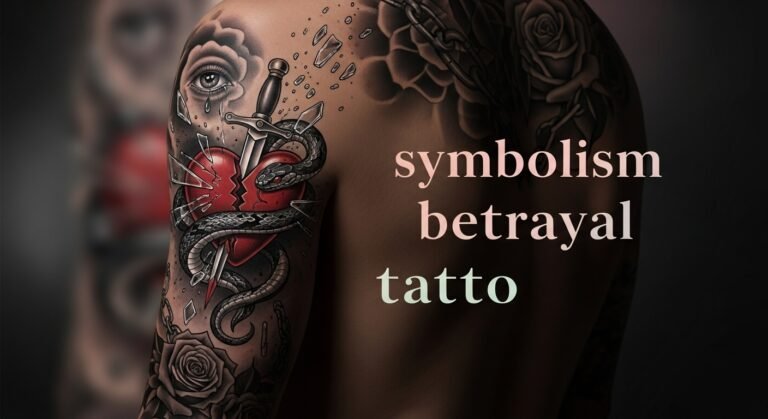
A dagger piercing a heart may symbolize heartbreak, emotional pain, or a difficult relationship. When paired with a rose, it can represent the complicated relationship between beauty and suffering, love and loss, or strength and vulnerability.
For some people, a dagger represents the courage to confront challenges and defend their personal boundaries. Others choose it to mark a difficult experience they have survived.
A dagger tattoo can represent resilience and the willingness to face life’s challenges with determination.
Snake Tattoo Symbolism
Snake tattoos in American traditional art are often associated with transformation, wisdom, protection, and renewal. Because snakes shed their skin, they can symbolize personal growth, leaving the past behind, and beginning a new chapter.
Their distinctive shapes and movement also make them visually effective in traditional tattoo designs. A coiled snake may suggest readiness or defense, while a snake paired with a dagger can represent conflict, courage, or opposing forces.
Although snakes are sometimes associated with danger or deception, their symbolism is not universally negative. Depending on the design and the wearer’s perspective, a snake may represent independence, adaptability, and hidden strength.
A snake tattoo can remind someone that growth often requires change and the courage to release old patterns.
Spiritual Meaning of American Traditional Tattoos
The spiritual meaning of American traditional tattoos depends on the symbols selected and the beliefs of the person wearing them. An anchor may represent faith and stability, an eagle may symbolize freedom and a broader perspective, and a rose may reflect love and appreciation for life’s beauty.
Some people choose traditional tattoos as personal reminders of important lessons, meaningful relationships, or periods of transformation. Others connect their designs with gratitude, resilience, or their own spiritual journey.
However, American traditional tattoos do not have one universal spiritual meaning. Interpretations differ according to personal beliefs, cultural backgrounds, and individual experiences.
The spiritual significance of a tattoo often comes from the intention behind it rather than from the image alone.
American Traditional Tattoos and Personal Identity
American traditional tattoos offer a distinctive way to express personal values, life experiences, relationships, and individuality. Their recognizable symbols allow people to communicate meaningful ideas through artwork rather than words.
Someone who values independence might choose an eagle, while a person who appreciates loyalty may select a swallow. A rose or heart can represent love, and an anchor may symbolize the people or principles that keep someone grounded.
Many people personalize traditional designs with names, dates, banners, or additional imagery. Others choose these tattoos because they admire their bold appearance and historical roots.
A meaningful tattoo does not need to follow a traditional interpretation perfectly. It can honor a personal milestone, commemorate someone important, or simply reflect the wearer’s artistic preferences.
Why American Traditional Tattoos Remain Popular Today
American traditional tattoos continue to attract people because they combine recognizable artwork with meaningful symbolism.
- Timeless design: Bold outlines and simplified shapes give these tattoos a distinctive, enduring appearance.
- Meaningful imagery: Roses, anchors, eagles, and hearts represent familiar emotions and values.
- Rich history: The style connects modern tattooing with maritime traditions and early American tattoo culture.
- Vibrant colors: Strong colors and clear contrasts make the designs visually striking.
- Personal expression: Traditional motifs can communicate memories, beliefs, relationships, and important experiences.
- Creative combinations: Artists can combine classic symbols to develop designs with individual significance.
- Versatility: The style works for both small standalone tattoos and larger compositions.
- Cultural influence: American traditional imagery continues to influence contemporary tattoo art, illustration, and popular culture.
Its enduring popularity comes from the balance between tradition and individuality. People can appreciate the historical meaning of a design while giving it a personal interpretation that reflects their own lives.
Conclusion
American traditional tattoo symbolism connects timeless artwork with powerful meanings of love, courage, freedom, loyalty, and personal growth. From roses and hearts to eagles, anchors, daggers, and swallows, each design carries associations shaped by history and individual experience. Although traditional interpretations offer valuable insight, the most meaningful tattoos often reflect the wearer’s own story. Whether chosen for their cultural roots, bold appearance, or emotional significance, American traditional tattoos remain a lasting expression of identity, resilience, and the values that matter most.
Frequently Asked Questions (FAQs)
What does American traditional tattoo symbolism mean?
American traditional tattoo symbolism refers to the meanings associated with classic tattoo designs. Common themes include love, courage, freedom, loyalty, protection, and hope.
What is an American traditional tattoo?
An American traditional tattoo is a classic tattoo style featuring bold black outlines, solid colors, and recognizable imagery. Popular designs include roses, eagles, anchors, hearts, and swallows.
What does a rose tattoo symbolize?
A rose tattoo commonly represents love, beauty, passion, and devotion. Its color and accompanying symbols can add further meaning.
What does an eagle tattoo mean?
An eagle tattoo often symbolizes freedom, courage, strength, and independence. It may also express patriotism or a connection to American heritage.
What does an anchor tattoo symbolize?
An anchor commonly represents stability, hope, and security. It may also symbolize a person, belief, or relationship that provides support.
What does a swallow tattoo represent?
A swallow tattoo traditionally represents loyalty, hope, safe journeys, and homecoming. It can also symbolize lasting relationships and a sense of belonging.
What does a heart tattoo mean in traditional tattoo art?
A heart tattoo usually symbolizes love, affection, and emotional connection. Names, banners, and flowers can make its meaning more personal.
What does a dagger tattoo symbolize?
A dagger tattoo can represent courage, sacrifice, protection, or overcoming challenges. Its interpretation often depends on the imagery surrounding it.
Do American traditional tattoos have spiritual meanings?
Yes, they can carry spiritual meanings based on personal beliefs and chosen symbols. However, no single spiritual interpretation applies to every American traditional tattoo.
Why are American traditional tattoos still popular?
They remain popular because of their bold designs, historical significance, recognizable symbols, and timeless appeal. Their versatility also allows people to express individual stories through classic imagery.