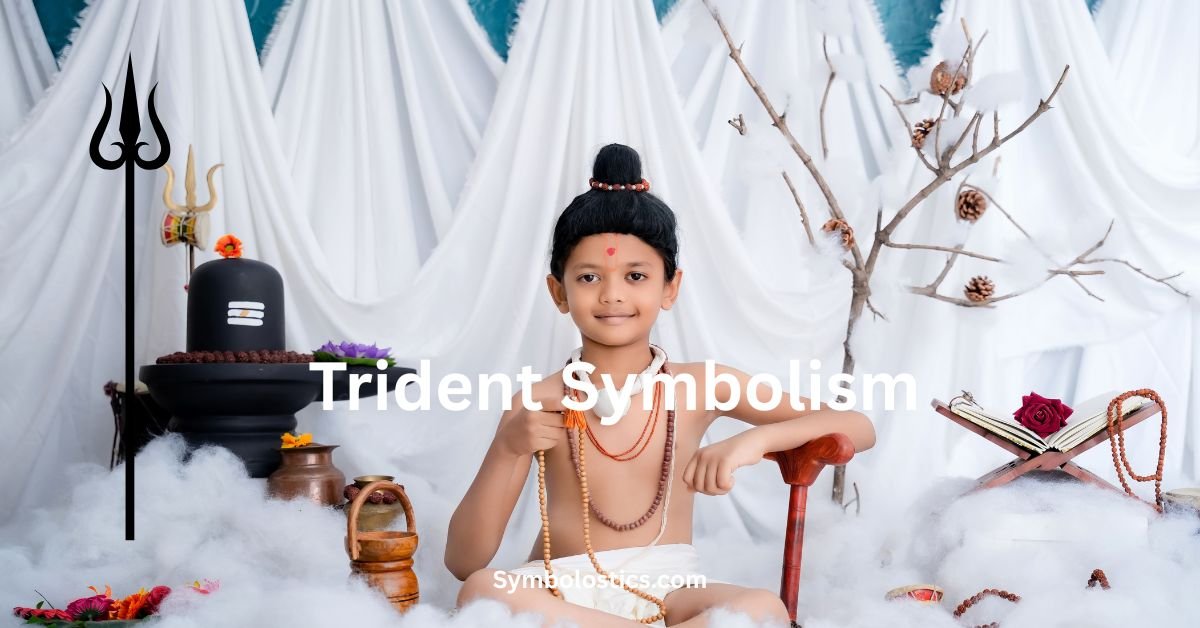
Trident Symbolism and Spiritual Meaning
The trident is one of the world’s oldest and most recognizable spiritual symbols. While many people associate it with the Greek sea god Poseidon or the Hindu god Shiva, its meaning extends far beyond mythology. Across different cultures and belief systems, the trident represents strength, divine authority, protection, wisdom, balance, and mastery over life’s forces.
Today, the trident appears in religious art, military insignia, tattoos, jewelry, national emblems, and even popular movies. Some people wear it as a symbol of courage, while others see it as a reminder to stay spiritually grounded and emotionally balanced. Whether viewed as a sacred object or a cultural icon, the trident continues to inspire people around the world.
In this guide, you’ll discover the history, symbolism, spiritual meanings, dream interpretations, religious significance, and modern uses of the trident. By the end, you’ll understand why this ancient three-pronged spear remains one of the most meaningful symbols across civilizations.
What Does a Trident Symbolize?
Quick Answer
Spiritually, the trident symbolizes power, protection, balance, wisdom, transformation, and divine authority. Its three prongs often represent different aspects of life, such as mind, body, and spirit, or creation, preservation, and destruction. Although its interpretation varies between cultures, the trident consistently represents the ability to overcome challenges while remaining connected to higher spiritual truths.
At a deeper level, the trident reminds us that real strength is not about controlling others but about mastering ourselves. It encourages courage during difficult times, emotional resilience, and trust in life’s natural cycles.
Some of the most common symbolic meanings include:
- Divine power
- Spiritual protection
- Leadership and authority
- Emotional balance
- Transformation and personal growth
- Connection with water and intuition
- Wisdom and higher consciousness
- Courage and resilience
Trident Symbolism at a Glance
| Symbol | Spiritual Meaning |
|---|---|
| Power | Inner strength and confidence |
| Protection | Divine guidance and safety |
| Authority | Leadership and responsibility |
| Water | Emotions, intuition, healing |
| Balance | Harmony between mind, body, and spirit |
| Transformation | Personal growth and change |
| Wisdom | Higher awareness and enlightenment |
| Courage | Facing challenges without fear |
| Divine Connection | Relationship with the sacred |
| Renewal | Beginning a new life chapter |
What Is a Trident?
A trident is a three-pronged spear that has been used for thousands of years as both a practical tool and a sacred symbol. Historically, fishermen used early versions to catch fish, while warriors carried stronger metal tridents during battle. Over time, religious traditions transformed this simple weapon into a powerful spiritual emblem.
Unlike ordinary spears with a single point, the trident’s three sharp prongs carry symbolic meaning. In many traditions, the number three represents completeness, harmony, and the balance between different aspects of existence.
Today, the trident is commonly seen in:
- Religious sculptures
- Ancient temples
- Tattoos
- Jewelry
- Flags and military insignia
- Logos
- Movies and comic books
- Decorative artwork
Although its appearance has remained similar for centuries, its meaning has continued to evolve with each generation.
Why Does the Trident Have Three Prongs?
One of the most fascinating aspects of the trident is its three-pronged design. Across cultures, the number three has long been considered sacred because it represents balance and completeness.
Depending on tradition, the three points symbolize:
- Mind, Body, and Spirit
- Past, Present, and Future
- Birth, Life, and Death
- Creation, Preservation, and Destruction
- Heaven, Earth, and the Underworld
Rather than representing conflict, these three forces work together to create harmony. This is one reason the trident is often viewed as a symbol of spiritual balance instead of simply a weapon.
History and Origin of the Trident
The story of the trident stretches back thousands of years. Long before it became a religious icon, it served practical purposes in fishing and hunting. As civilizations developed, rulers and spiritual leaders adopted the trident as a sign of authority, transforming it into one of history’s most enduring symbols.
Its journey across different cultures explains why the trident carries such rich and diverse meanings today.
Ancient Greece
Perhaps the most famous trident belongs to Poseidon, the Greek god of the sea. According to Greek mythology, Poseidon wielded a magical golden trident capable of controlling oceans, creating earthquakes, and summoning storms.
Ancient Greeks believed the sea was both generous and unpredictable. Because Poseidon controlled these powerful waters, his trident became a symbol of:
- Absolute authority
- Natural forces
- Protection of sailors
- Strength beyond human control
- Respect for nature
Many ancient Greek coins, temples, and sculptures prominently feature the trident, emphasizing its connection to divine rule over the seas.
Roman Civilization
When Roman culture absorbed Greek mythology, Poseidon became Neptune. Although the name changed, the symbolism remained largely the same.
For Romans, Neptune’s trident represented:
- Naval superiority
- Prosperity through trade
- Protection during voyages
- Military strength
- Control over water
As Rome expanded its maritime power, the trident also became associated with discipline, courage, and leadership.
Hindu Origins: The Sacred Trishula
Long before many Western civilizations flourished, India honored the Trishula, the sacred trident carried by Lord Shiva.
Unlike Greek mythology, where the trident primarily symbolized control over the sea, Shiva’s Trishula represents the balance of the universe itself.
The three points symbolize:
- Creation
- Preservation
- Destruction
These are not viewed as separate events but as continuous parts of the cosmic cycle. Everything begins, grows, changes, and eventually transforms into something new.
Spiritually, the Trishula also represents:
- Destruction of ego
- Removal of ignorance
- Freedom from fear
- Inner awakening
- Divine wisdom
Because of these meanings, many Hindu temples display the Trishula as a sacred object rather than a weapon.
Ancient Egypt
Although less commonly discussed, three-pronged staffs and spear-like symbols appeared in ancient Egyptian artwork. Priests and rulers often carried ceremonial staffs representing divine authority and communication with higher powers.
While these objects were not always identical to the trident seen today, historians believe they contributed to the broader symbolism of sacred authority shared across ancient civilizations.
Egyptian spiritual traditions emphasized:
- Order over chaos
- Divine kingship
- Protection of the kingdom
- Balance between earthly and spiritual life
These ideas closely mirror later interpretations of the trident in other cultures.
Medieval Europe
During the Middle Ages, the trident continued to evolve. It appeared in heraldry, royal crests, naval emblems, and artistic depictions of sea deities.
European kingdoms with strong maritime traditions used trident imagery to communicate:
- Naval dominance
- Exploration
- Protection of coastal territories
- Economic prosperity through trade
Artists also included tridents in paintings, sculptures, and manuscripts, reinforcing their association with power and divine authority.
Evolution of Trident Symbolism Through Time
Although its appearance has changed very little over thousands of years, the meaning of the trident has expanded significantly.
In ancient times, it primarily represented the power of gods and rulers. During medieval history, it became connected to kingdoms and naval strength. Today, people often view the trident as a symbol of personal empowerment, resilience, spiritual awakening, and emotional balance.
Modern interpretations combine ancient wisdom with contemporary values. Instead of focusing solely on authority over others, many people see the trident as a reminder to develop self-control, inner peace, and confidence while navigating life’s challenges.
Its enduring appeal lies in its ability to unite mythology, spirituality, history, and personal growth within a single timeless symbol.
Spiritual Meaning of the Trident
The trident has inspired people for centuries because its symbolism reaches beyond mythology and religion. Spiritually, it represents the ability to stay strong during life’s storms while remaining connected to higher wisdom. Many traditions view it as a reminder that true power comes from balance, self-control, and spiritual awareness rather than force alone.
Whether displayed in a temple, worn as jewelry, or seen in meditation, the trident encourages personal growth and inner transformation. Its three prongs symbolize harmony between different aspects of life, making it a powerful emblem for anyone seeking purpose and resilience.
Divine Power
One of the strongest meanings of the trident is divine power. Ancient gods such as Poseidon, Neptune, and Lord Shiva carried the trident as a symbol of authority granted by higher forces.
Spiritually, this doesn’t suggest domination over others. Instead, it represents the ability to guide, protect, and make wise decisions. Many people see the trident as a reminder that real leadership begins with mastering your own thoughts, emotions, and actions.
When the trident appears in spiritual practices, it often encourages you to trust your inner strength and move forward with confidence.
Spiritual Protection
Across many cultures, the trident is believed to offer protection against negative energy. It symbolizes the ability to stand firm in difficult situations while remaining spiritually grounded.
People who keep trident symbols in their homes or wear them as pendants often believe they help:
- Ward off negativity
- Strengthen spiritual awareness
- Encourage courage during hardships
- Create emotional stability
- Promote inner peace
Although beliefs differ between traditions, the central idea remains the same—the trident reminds us that spiritual strength begins within.
Balance and Harmony
The three points of the trident naturally symbolize balance. Life is filled with opposing forces such as joy and sorrow, success and failure, or action and rest. The trident teaches that these experiences are part of a greater whole.
Rather than resisting change, it encourages accepting life’s natural rhythm. Maintaining harmony between your physical health, emotional well-being, and spiritual life creates a stronger foundation for personal growth.
Many meditation practices use the trident as a visual reminder to restore this balance.
Personal Transformation
Growth often requires letting go of old habits, fears, and limiting beliefs. The trident represents this process of transformation.
Just as seasons change and oceans constantly move, life is always evolving. The trident encourages you to embrace change instead of fearing it.
Spiritually, it reminds us that:
- Every ending creates a new beginning.
- Challenges often lead to wisdom.
- Personal growth comes through experience.
- Transformation is a lifelong journey.
Wisdom and Higher Consciousness
Beyond physical strength, the trident symbolizes wisdom. It encourages people to look beyond appearances and seek deeper understanding.
Higher consciousness involves recognizing that every experience offers an opportunity to learn. The trident reminds us to remain curious, patient, and open-minded while pursuing spiritual truth.
Many spiritual teachers describe wisdom as the ability to respond thoughtfully instead of reacting emotionally—a lesson closely connected with trident symbolism.
Courage During Difficult Times
Storms have long symbolized life’s challenges, and the trident’s connection with the sea makes it an emblem of courage during uncertain times.
Instead of promising an easy path, the trident teaches resilience. It reminds us that obstacles can strengthen character and reveal inner abilities we never knew we possessed.
For many people, seeing or carrying a trident serves as a daily reminder to remain brave, even when circumstances feel overwhelming.
Connection With Water and Intuition
Water is often associated with emotions, healing, intuition, and the subconscious mind. Because the trident has deep ties to the sea, it naturally represents these qualities.
Spiritually, the trident encourages you to:
- Listen to your intuition.
- Accept your emotions without judgment.
- Trust your inner guidance.
- Allow healing to happen naturally.
- Adapt to change with flexibility.
Like water itself, emotional strength comes from movement rather than resistance.
What Do the Three Prongs of a Trident Represent?
One reason the trident has remained meaningful across civilizations is the symbolic power of the number three. Different cultures interpret the three prongs in unique ways, yet all emphasize unity, balance, and completeness.
Mind, Body, and Spirit
One of the most popular spiritual interpretations is that the three prongs represent the connection between mind, body, and spirit.
A healthy life requires balance among all three:
- A clear mind supports wise decisions.
- A healthy body provides strength and energy.
- A nourished spirit brings peace and purpose.
When these areas work together, people often experience greater harmony and fulfillment.
Past, Present, and Future
Another interpretation connects the trident with time itself.
The three points symbolize:
- Learning from the past
- Living fully in the present
- Moving confidently toward the future
This meaning reminds us not to become trapped by regrets or worries but to appreciate each stage of life’s journey.
Creation, Preservation, and Destruction
This symbolism is especially important in Hindu philosophy.
These three cosmic forces describe the natural cycle of existence:
- Creation brings new opportunities.
- Preservation supports growth and stability.
- Destruction clears the way for renewal.
Rather than viewing destruction negatively, spiritual teachings often describe it as necessary for fresh beginnings.
Heaven, Earth, and the Underworld
Ancient mythologies frequently divided existence into three realms.
The trident’s three points symbolize:
- Heaven—the divine world
- Earth—the physical world
- The underworld—the hidden or spiritual realm
Together, they represent the connection between all levels of existence and the balance that holds the universe together.
Birth, Life, and Death
Many spiritual traditions recognize life as a continuous cycle rather than a straight line.
The trident reminds us that:
- Birth represents new beginnings.
- Life brings growth and experience.
- Death leads to transformation and renewal.
This perspective encourages acceptance of change as a natural part of existence.
Trident Symbolism in Different Religions
Although the trident appears in many cultures, each religion gives it unique spiritual significance. Understanding these interpretations reveals why the symbol continues to inspire millions of people today.
Trident Symbolism in Hinduism
In Hinduism, the trident is known as the Trishula, one of the religion’s most sacred symbols. It is closely associated with Lord Shiva, one of the principal deities responsible for transformation and renewal.
The Trishula represents:
- Creation
- Preservation
- Destruction
These three universal forces maintain the balance of existence.
The Trishula also symbolizes overcoming the three obstacles that prevent spiritual growth:
- Ego
- Attachment
- Ignorance
For many Hindus, the Trishula is not simply a weapon but a sacred reminder of divine wisdom, protection, and liberation.
Lord Shiva’s Trishula
Every element of Shiva’s Trishula carries symbolic meaning.
It represents:
- Victory over fear
- Control of the senses
- Destruction of negative energy
- Balance between physical and spiritual life
- Divine authority guided by compassion
Visitors to Hindu temples often see the Trishula placed near shrines as a sign of protection and spiritual strength.
Trident Symbolism in Christianity
Unlike Hinduism or Greek mythology, the trident does not play a central role in Christian teachings.
The Bible does not describe the trident as an official Christian symbol. However, over time, artists and storytellers sometimes associated it with the devil because of medieval artwork and folklore.
This interpretation comes from later cultural traditions rather than biblical scripture.
Many Christian scholars encourage understanding the trident within its original historical and cultural context instead of relying on popular myths.
Is the Trident Mentioned in the Bible?
The word “trident” is not presented as a major spiritual symbol in the Bible.
However, some readers compare the number three with biblical themes such as:
- The Holy Trinity
- Faith, hope, and love
- Resurrection on the third day
These symbolic connections are interpretive rather than direct references to the trident itself.
Trident Symbolism in Buddhism
In some Buddhist traditions, three-pronged ceremonial objects symbolize spiritual awakening and wisdom.
The three points may represent:
- Wisdom
- Compassion
- Ethical conduct
Together, these qualities support the path toward enlightenment.
Rather than emphasizing physical power, Buddhist symbolism focuses on overcoming ignorance and cultivating inner peace.
Trident Symbolism in Greek Mythology
Greek mythology made the trident famous through Poseidon, the powerful god of the sea.
According to legend, Poseidon’s trident could:
- Calm or stir the oceans
- Create earthquakes
- Raise islands
- Summon storms
Because of these abilities, the trident became a universal symbol of authority, courage, and respect for nature’s immense power.
Trident Symbolism in Roman Mythology
The Romans adopted much of Greek mythology, identifying Neptune as their god of the sea.
Neptune’s trident represented:
- Maritime protection
- Naval success
- Prosperity through trade
- Leadership
- Strength
Roman artwork frequently portrays Neptune holding the trident as a sign of command over the oceans and the forces of nature.
Trident Symbolism in Native American Beliefs
Unlike Greek or Hindu traditions, there is no single, universal Native American interpretation of the trident. Indigenous nations across North America have diverse spiritual beliefs, symbols, and cultural practices. While the trident itself is not a traditional sacred symbol for most tribes, its core themes—water, strength, protection, and balance—closely align with values found in many Native traditions.
Water is often viewed as the source of life, healing, purification, and renewal. Because the trident is closely connected with water, some modern spiritual interpretations associate it with respect for nature, harmony with the environment, and the responsibility to protect the earth.
It is important to avoid assuming that all Native American cultures share the same beliefs. Each nation has its own history, teachings, and sacred symbols.
Trident Symbolism in the USA
In the United States, the trident has evolved into a symbol that combines mythology, military tradition, personal identity, and modern spirituality. While its ancient origins remain influential, Americans often interpret the trident through contemporary themes such as resilience, leadership, and self-confidence.
Today, the symbol appears in military emblems, sports logos, tattoos, jewelry, artwork, and popular entertainment. For many people, it represents courage, determination, and the ability to overcome life’s challenges.
Military Symbolism
One of the most recognizable uses of the trident in America is within the U.S. military.
The trident symbolizes:
- Excellence
- Courage
- Discipline
- Service
- Commitment
Its association with elite military units has strengthened its reputation as a symbol of honor and achievement.
Rather than representing aggression, it often reflects responsibility, sacrifice, and unwavering dedication.
Navy SEAL Trident Meaning
The Navy SEAL Trident, often called the “Budweiser” by service members, is one of the most respected military insignias in the United States.
It includes several symbolic elements:
- Eagle representing freedom
- Anchor representing naval heritage
- Pistol representing readiness
- Trident representing mastery of the sea
Receiving this insignia signifies the successful completion of one of the world’s most demanding military training programs. It represents exceptional skill, endurance, integrity, and service.
Coastal Culture
In many American coastal communities, the trident symbolizes a deep relationship with the ocean.
It appears on:
- Marina signs
- Fishing businesses
- Nautical decorations
- Harbor artwork
- Tourism branding
For people who live near the sea, the trident often represents both livelihood and respect for nature’s power.
Sports and Team Logos
Several American schools, athletic clubs, and sports organizations use trident imagery to communicate strength, competitiveness, and determination.
The three-pronged spear creates an instantly recognizable logo that suggests confidence and leadership.
Although each organization assigns its own meaning, the overall symbolism remains consistent with courage and resilience.
Modern American Spirituality
Many people in the United States use the trident as a personal spiritual symbol rather than a religious one.
It may represent:
- Inner strength
- Emotional healing
- Spiritual awakening
- Self-discipline
- Personal transformation
Meditation practitioners and individuals interested in symbolic spirituality often view the trident as a reminder to stay balanced while pursuing personal growth.
Trident Symbolism Around the World
Although interpretations vary, the trident consistently represents power, wisdom, and protection across different cultures.
Exploring these traditions reveals how one symbol can unite diverse civilizations through shared spiritual ideas.
India
In India, the Trishula remains one of Hinduism’s most sacred symbols.
It represents:
- Divine authority
- Cosmic balance
- Spiritual liberation
- Victory over ignorance
Millions of devotees recognize it as a symbol of Lord Shiva’s power to transform and protect.
Japan
Some Japanese Buddhist traditions include three-pronged ceremonial objects used in rituals.
These sacred implements symbolize:
- Wisdom
- Compassion
- Protection from negative influences
Rather than emphasizing physical strength, they encourage spiritual discipline and mindfulness.
Europe
Throughout Europe, the trident has long represented maritime history.
It appears in:
- Historic city emblems
- Royal coats of arms
- Sculptures
- Public fountains
- Naval monuments
Its connection with Neptune continues to influence European art and architecture.
Polynesian Cultures
Island communities across the Pacific have traditionally relied on the sea for survival.
Although symbolism differs between cultures, spear-like tools often represent:
- Respect for the ocean
- Skilled fishing
- Community
- Prosperity
- Survival
Modern artistic interpretations sometimes combine these traditions with trident imagery inspired by global mythology.
Modern Global Symbolism
Today, people around the world interpret the trident as a symbol of:
- Leadership
- Confidence
- Protection
- Independence
- Spiritual awakening
- Personal growth
Its universal themes continue to resonate regardless of cultural background.
Trident Dream Meaning
Dreaming about a trident often symbolizes personal power, emotional control, or an important life decision. Since dreams are deeply personal, the exact interpretation depends on the dream’s context and your own experiences.
Many dream analysts view the trident as a message encouraging confidence, balance, and spiritual awareness.
Holding a Trident
Holding a trident in a dream usually symbolizes gaining confidence or taking control of your life.
It may indicate:
- New responsibilities
- Leadership opportunities
- Personal empowerment
- Increased self-belief
The dream encourages trusting your abilities.
Receiving a Trident
Receiving a trident from another person or spiritual figure often represents guidance or recognition.
It may symbolize:
- A new chapter
- Spiritual growth
- Wisdom gained through experience
- Trust placed in you by others
This dream frequently appears during periods of positive transformation.
Finding a Trident
Finding a trident unexpectedly may suggest discovering hidden talents or inner strength.
It can represent:
- Self-discovery
- Renewed purpose
- Personal confidence
- Emotional healing
The dream reminds you that valuable resources often already exist within you.
Broken Trident
A broken trident may symbolize feeling disconnected from your confidence or struggling with important decisions.
However, it is not necessarily a negative sign.
Instead, it may encourage you to:
- Rebuild self-belief
- Heal emotional wounds
- Restore balance
- Let go of unhealthy habits
Golden Trident
A golden trident is generally considered a highly positive dream symbol.
Gold often represents:
- Success
- Wisdom
- Spiritual blessings
- Abundance
- Achievement
Combined with the trident, it suggests powerful opportunities for growth.
Trident Rising from the Ocean
Seeing a trident emerge from the sea often symbolizes hidden emotions coming into awareness.
This dream may encourage you to:
- Trust your intuition
- Express your feelings honestly
- Embrace personal transformation
- Accept important life changes
Trident Tattoo Meaning
Trident tattoos have become increasingly popular because they combine powerful mythology with personal symbolism.
Although designs vary, most people choose them to represent strength, independence, and resilience.
Strength and Courage
Many people see the trident as a reminder that they have overcome difficult experiences.
The tattoo becomes a symbol of:
- Perseverance
- Confidence
- Determination
- Mental toughness
Protection
Some individuals believe the trident serves as a protective symbol against negative energy.
While beliefs differ, many wear it as a reminder to remain spiritually grounded during life’s challenges.
Leadership
Because kings, gods, and military organizations have long used the trident, it naturally symbolizes leadership.
People who value responsibility, discipline, and integrity often choose this design to reflect those qualities.
Ocean Connection
Surfers, divers, sailors, and marine enthusiasts frequently select trident tattoos to celebrate their connection with the sea.
For them, the symbol represents:
- Adventure
- Freedom
- Respect for nature
- Love of the ocean
Spiritual Awakening
Many modern tattoo enthusiasts choose the trident to represent an inner spiritual journey.
The design may symbolize:
- Self-discovery
- Emotional healing
- Personal growth
- Higher consciousness
Rather than simply honoring mythology, it becomes a deeply personal reminder of transformation.
Trident Symbolism in Love
Although the trident is commonly associated with strength and authority, it also carries meaningful symbolism in relationships.
Spiritually, it reminds couples that healthy love requires balance, trust, and mutual respect.
The three prongs are often interpreted as representing:
- Love
- Trust
- Commitment
When these qualities remain balanced, relationships become stronger and more fulfilling.
Relationships
In romantic relationships, the trident encourages partners to communicate honestly while supporting one another through life’s challenges.
It reminds us that lasting love is built on patience, understanding, and shared growth rather than control.
Twin Flames
Some spiritual communities associate the trident with twin flame journeys because its three points symbolize unity through growth and transformation.
In this interpretation, the trident represents:
- Spiritual connection
- Personal evolution
- Divine timing
Rather than guaranteeing reunion, it encourages both individuals to continue growing independently.
Soulmates
For soulmate relationships, the trident symbolizes harmony between two people while honoring each person’s individuality.
Its balanced design reminds us that healthy partnerships allow both people to grow together without losing their unique identities.
The trident encourages compassion, loyalty, and emotional resilience—qualities that help relationships thrive over time.
Trident Meaning in Personal Growth
Beyond mythology and religion, the trident has become a meaningful symbol of personal development. Many people see it as a reminder that growth requires courage, balance, and a willingness to embrace change. Just as the three prongs work together, lasting success often comes from aligning your thoughts, actions, and values.
The trident encourages you to become the strongest version of yourself—not by controlling others, but by developing discipline, wisdom, and emotional resilience.
Confidence
Confidence is one of the trident’s most recognized meanings.
Like a firmly planted spear, it reminds you to stand tall even when life feels uncertain. Confidence doesn’t mean never feeling afraid; it means moving forward despite fear.
The trident inspires you to:
- Believe in your abilities
- Trust your decisions
- Speak with honesty
- Face challenges with courage
Self-Discipline
Success in any area of life requires discipline.
The trident symbolizes the importance of staying focused on your goals while resisting distractions. It encourages consistency, patience, and personal responsibility.
Small daily actions often create the biggest long-term results.
Overcoming Fear
Every person experiences fear at some point. Spiritually, the trident reminds us that fear can become a teacher rather than an obstacle.
It encourages you to:
- Accept uncertainty
- Learn from setbacks
- Keep moving forward
- Develop emotional resilience
Growth begins when you step outside your comfort zone.
Emotional Balance
Life constantly changes, bringing both joyful and difficult experiences.
The trident symbolizes staying emotionally balanced regardless of external circumstances. Rather than reacting impulsively, it encourages thoughtful responses guided by wisdom and self-awareness.
Psychological Meaning of the Trident
Psychologically, the trident represents inner strength, self-mastery, and personal identity. Many modern therapists and symbolic thinkers view ancient symbols as reflections of the human mind rather than supernatural objects.
The trident reminds us that lasting change begins from within.
Carl Jung’s Perspective
Swiss psychologist Carl Jung believed that universal symbols, known as archetypes, appear across cultures because they reflect shared patterns within the human psyche.
Although Jung did not specifically focus on the trident as one of his primary archetypes, its symbolism aligns with several Jungian ideas:
- Personal transformation
- Integration of opposing forces
- Individual growth
- The journey toward wholeness
From this perspective, the trident can represent the process of becoming a more complete and authentic person.
The Inner Warrior
Many people interpret the trident as representing the inner warrior.
This doesn’t refer to physical fighting. Instead, it symbolizes the courage to:
- Face fears
- Defend your values
- Remain resilient
- Stay true to yourself
The greatest battles are often internal rather than external.
Personal Identity
Choosing the trident as a personal symbol often reflects qualities such as:
- Independence
- Confidence
- Leadership
- Determination
- Emotional strength
For many individuals, it becomes a visual reminder of the person they aspire to become.
Shadow Work
In modern spirituality, shadow work involves recognizing hidden emotions, fears, and limiting beliefs.
The trident symbolizes the courage to explore these hidden parts of yourself with honesty rather than judgment.
Through self-awareness, people often experience greater emotional healing and personal freedom.
Trident Energy and Chakras
Some spiritual practitioners associate the trident with the body’s energy centers, or chakras. While these connections vary between traditions, several chakras are commonly linked with the trident’s symbolism.
Root Chakra
The Root Chakra represents:
- Stability
- Security
- Survival
- Grounding
The trident’s strong foundation reflects the importance of feeling secure before pursuing higher spiritual goals.
Solar Plexus Chakra
This chakra governs:
- Confidence
- Personal power
- Motivation
- Self-esteem
Because the trident symbolizes strength and leadership, it is often connected with developing healthy self-confidence.
Third Eye Chakra
The Third Eye Chakra represents:
- Intuition
- Wisdom
- Spiritual insight
- Inner awareness
Meditating on trident symbolism may encourage mindfulness and clearer decision-making.
Positive Meanings of the Trident
Across cultures, the trident is associated with many uplifting qualities.
Positive Symbolism
- Strength
- Protection
- Courage
- Leadership
- Spiritual growth
- Emotional balance
- Wisdom
- Transformation
- Resilience
- Confidence
- Divine guidance
- Personal empowerment
These meanings explain why the trident remains popular in art, jewelry, and spiritual practices around the world.
Negative Meanings of the Trident
Like many ancient symbols, the trident can also carry challenging interpretations depending on context.
These meanings usually serve as warnings rather than fixed definitions.
Aggression
Because it originated as a weapon, the trident can symbolize conflict when used irresponsibly.
This interpretation reminds us that power should always be guided by wisdom and compassion.
Ego
Power without humility may lead to arrogance.
Spiritually, the trident encourages self-control rather than dominance over others.
Misuse of Authority
Throughout history, powerful symbols have occasionally been misused for political or personal gain.
The trident reminds leaders that authority should be exercised with integrity and fairness.
Spiritual Imbalance
Focusing only on power while neglecting compassion or wisdom creates imbalance.
The trident’s three prongs symbolize harmony, suggesting that true strength comes from balancing all aspects of life.
Trident in Modern Culture
Although thousands of years old, the trident remains highly recognizable today.
It appears across entertainment, fashion, sports, and digital media, giving ancient symbolism a modern identity.
Movies and Television
Characters carrying tridents often represent extraordinary power.
Popular examples include:
- Poseidon in mythological films
- Neptune in historical adaptations
- Aquaman in superhero stories
These portrayals reinforce themes of leadership, courage, and mastery over the sea.
Video Games
Many fantasy and adventure games include magical tridents as legendary weapons.
Players often associate them with:
- Strength
- Rare abilities
- Ocean kingdoms
- Elemental magic
- Heroic quests
Fashion and Jewelry
Necklaces, rings, bracelets, and pendants featuring trident designs have become popular worldwide.
People choose them for both their appearance and symbolic meaning, often viewing them as reminders of resilience and confidence.
Home Décor
The trident frequently appears in:
- Coastal artwork
- Nautical decorations
- Sculptures
- Wall art
- Beach homes
Its timeless design adds both historical character and symbolic depth to interior spaces.
Common Misconceptions About Trident Symbolism
Several misunderstandings surround the trident today.
Myth 1: The trident is only a weapon.
Reality: While it began as a practical tool and weapon, it later became a symbol of spirituality, protection, wisdom, and leadership.
Myth 2: It belongs to only one religion.
Reality: The trident appears in many cultures, including Greek mythology, Roman traditions, Hinduism, Buddhism, and modern spiritual practices.
Myth 3: It always represents evil.
Reality: This belief largely comes from later artistic depictions. Historically, the trident has been associated far more often with protection, divine authority, and balance.
Myth 4: Every culture interprets it the same way.
Reality: Meanings vary across civilizations, although themes such as strength, wisdom, and protection appear consistently.
Is Seeing a Trident a Spiritual Sign?
Many people wonder whether repeatedly noticing trident symbols carries spiritual significance.
There is no universal answer, but many spiritual traditions encourage viewing recurring symbols as invitations for self-reflection rather than predictions.
Seeing a trident may remind you to:
- Trust your inner wisdom.
- Stay emotionally balanced.
- Lead with integrity.
- Face challenges confidently.
- Continue growing spiritually.
Ultimately, the meaning depends on your beliefs, experiences, and the circumstances in which the symbol appears.
How to Use Trident Energy in Daily Life
You don’t need to own a ceremonial trident to appreciate its symbolism.
Here are practical ways people incorporate its meaning into everyday life.
Meditation
Visualize the trident while focusing on balance, confidence, and emotional clarity.
Journaling
Reflect on questions such as:
- Where do I need greater balance?
- What fears should I overcome?
- How can I become a stronger leader?
Jewelry
Many people wear trident pendants or bracelets as reminders of resilience and personal growth.
Home Decoration
Displaying tasteful trident-inspired artwork may symbolize strength, protection, or a love of the ocean.
Mindfulness
Whenever you notice a trident symbol, use it as a reminder to pause, breathe, and respond thoughtfully instead of reacting impulsively.
Trident Symbolism by Color
Different colors can add additional layers of symbolic meaning.
| Color | Symbolic Meaning |
|---|---|
| Gold | Wisdom, abundance, divine success |
| Silver | Clarity, intuition, protection |
| Black | Strength, mystery, resilience |
| Blue | Healing, peace, emotional balance |
| Red | Courage, passion, determination |
| White | Purity, spiritual guidance, new beginnings |
| Green | Growth, renewal, harmony with nature |
Interesting Facts About the Trident
- The trident has been used for more than 2,500 years in mythology, religion, and art.
- The word trident comes from the Latin tridens, meaning “three teeth.”
- Lord Shiva’s Trishula is one of Hinduism’s most sacred symbols.
- Poseidon and Neptune are almost always depicted carrying a trident.
- The U.S. Navy SEAL insignia includes a trident as a symbol of naval excellence.
- Modern tattoo designs often combine tridents with waves, anchors, or crowns.
- The number three has long been associated with harmony and completeness across many cultures.
Trident Symbolism Comparison Table
| Culture | Main Meaning | Associated Figure | Key Symbolism |
|---|---|---|---|
| Greek | Sea power | Poseidon | Authority and strength |
| Roman | Naval leadership | Neptune | Protection and prosperity |
| Hindu | Cosmic balance | Lord Shiva | Creation, preservation, destruction |
| Buddhist | Spiritual wisdom | Various traditions | Enlightenment and compassion |
| Modern USA | Leadership | Navy SEALs | Courage and resilience |
| Contemporary Spirituality | Personal growth | Individual practice | Balance and transformation |
Frequently Asked Questions
What does a trident symbolize spiritually?
Spiritually, the trident symbolizes divine power, protection, wisdom, balance, and personal transformation.
Is the trident a good luck symbol?
Many people consider it a positive symbol of strength and guidance, though its meaning depends on personal and cultural beliefs.
What does the trident mean in Christianity?
The trident is not an official Christian symbol and has no central biblical meaning, though later traditions gave it various artistic interpretations.
Why does Lord Shiva carry a trident?
Shiva’s Trishula represents creation, preservation, and destruction while symbolizing the removal of ignorance and ego.
What does a trident tattoo represent?
It commonly symbolizes courage, resilience, leadership, protection, and a strong connection with the sea or spirituality.
What does dreaming about a trident mean?
A trident dream often represents confidence, transformation, leadership, or the need to restore balance in your life.
Is the trident a symbol of protection?
Yes. Many traditions associate it with spiritual protection, inner strength, and resilience against negativity.
Why does Poseidon carry a trident?
In Greek mythology, the trident symbolizes Poseidon’s authority over the sea, storms, and earthquakes.
Can anyone wear a trident symbol?
Yes. Many people wear it as a cultural, artistic, or personal symbol of strength and balance, while respecting its religious significance.
What is the deeper meaning of the three prongs?
They commonly represent harmony between three interconnected forces, such as mind, body, and spirit or creation, preservation, and destruction.
Final Thoughts
The trident is far more than an ancient three-pronged spear. Across mythology, religion, psychology, and modern culture, it has become a lasting symbol of strength, wisdom, protection, balance, and transformation. Although each tradition interprets it differently, the core message remains remarkably consistent: true power comes from self-mastery, responsibility, and harmony.
Whether you admire the trident for its historical roots, spiritual depth, artistic beauty, or personal symbolism, it continues to remind us that life’s greatest achievements are built on courage, resilience, and continuous growth. Its enduring presence across civilizations shows how meaningful symbols can connect people, inspire reflection, and remain relevant for generations.