Symbolism of a Rose: Love, Beauty, and Spiritual Meaning
The rose has long symbolized love, representing deep affection and romantic devotion across cultures. Its delicate petals and captivating fragrance evoke beauty, grace, and admiration, making it a timeless emblem of aesthetic perfection.
Beyond romance, the rose carries spiritual significance, symbolizing the soul’s journey, purity, and enlightenment in various religious traditions. Its layers suggest unfolding wisdom and inner growth, encouraging reflection and self-discovery.
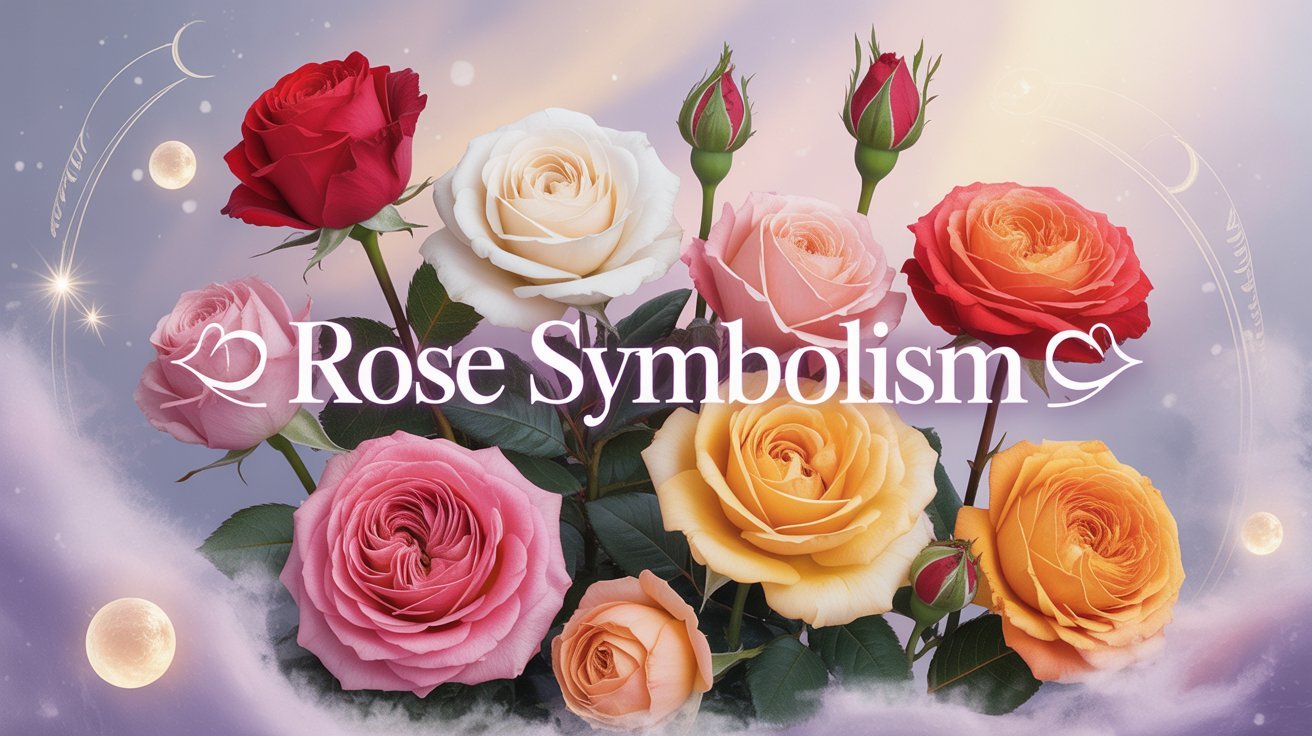
Different rose colors hold distinct meanings: red for passion, white for purity, yellow for friendship, and pink for gratitude and joy. These variations allow the rose to communicate complex emotions without words, transcending language barriers.
In art and literature, the rose often appears as a metaphor for life’s fragility and resilience, illustrating both beauty and the inevitability of change. Its enduring symbolism continues to inspire love, creativity, and spiritual contemplation worldwide.
General Symbolism of Roses
Roses are universally recognized as symbols of love, beauty, and passion, often representing deep emotions and admiration. Their layered petals suggest complexity, elegance, and the unfolding of life’s experiences.
Beyond romance, roses carry spiritual symbolism, signifying purity, balance, and enlightenment in many cultures. They are often seen as a reflection of the soul’s journey and personal growth.
Different rose colors convey varied messages: red for love, white for innocence, yellow for friendship, and pink for gratitude. This versatility makes roses a powerful symbol in both personal and artistic expression.
Roses in Love and Romance
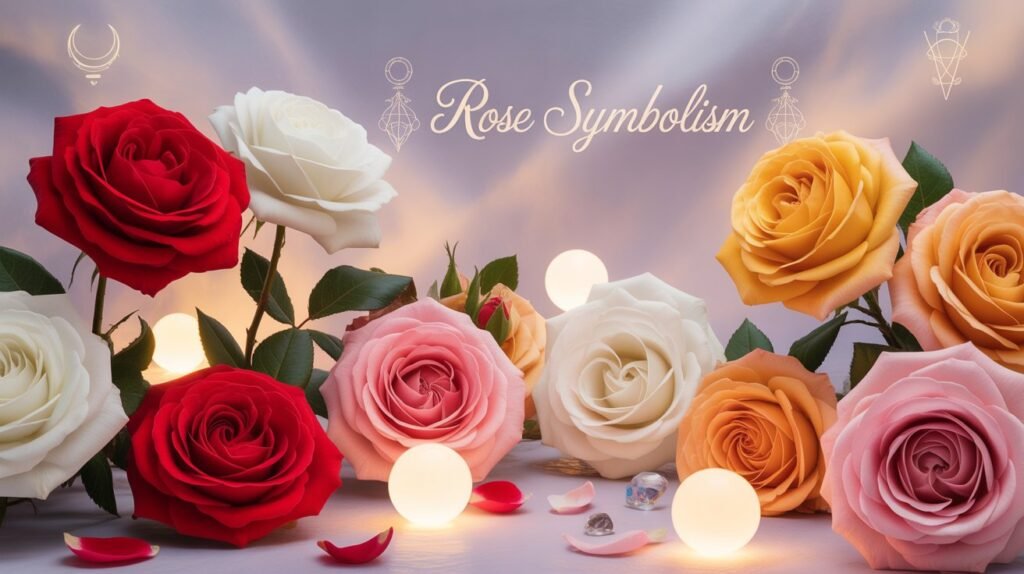
Roses have long been the ultimate symbol of love and romance, conveying passion, desire, and heartfelt emotions. Gifting roses is a timeless way to express affection without words.
Red roses, in particular, signify deep romantic love, while pink roses reflect admiration and sweetness. Their beauty and fragrance enhance intimate connections and emotional bonds.
Even in literature and art, roses often appear as metaphors for romantic devotion and longing. They capture the intensity and tenderness of love across cultures and generations.
Symbolism by Rose Color
Red roses: symbolize deep love, passion, and desire, making them the classic choice for romantic expressions. Their rich hue conveys strong emotions and heartfelt devotion.
White roses: represent purity, innocence, and spiritual love, often used in weddings and sacred ceremonies. They reflect new beginnings and reverence.
Yellow roses: signify friendship, joy, and warmth, spreading happiness and positivity without romantic intent. They are perfect for celebrating bonds and cheerfulness.
Pink roses: convey gratitude, admiration, and gentle affection, blending elegance with tenderness. They express appreciation and sweet emotions gracefully.
Orange and multicolored roses: symbolize enthusiasm, excitement, and energy, capturing vibrant feelings and passion. They celebrate life’s joyful and dynamic moments.
Roses in Literature and Art
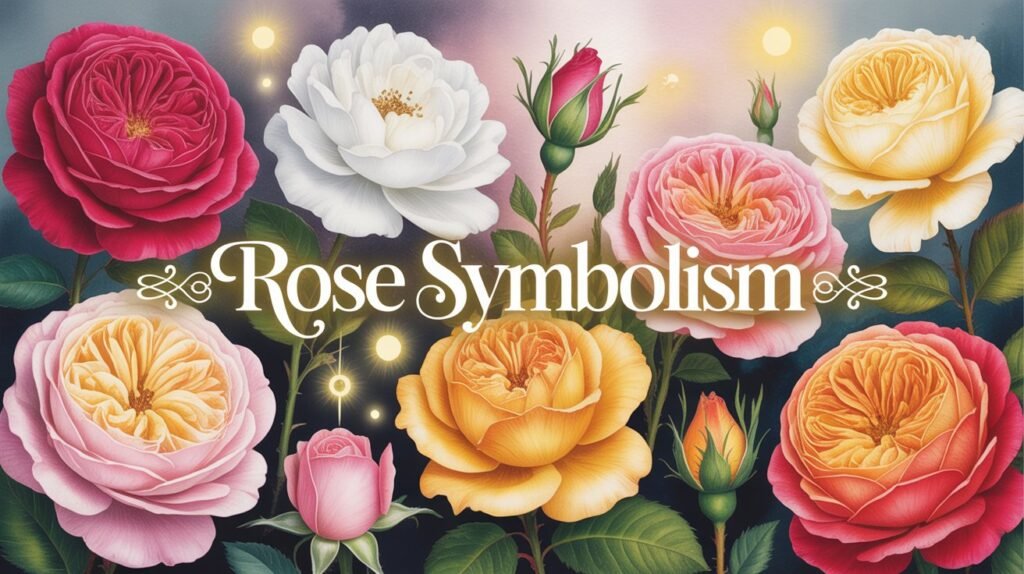
Roses frequently appear in literature and art as symbols of beauty, love, and fleeting life. Poets and writers use them to evoke emotion and deepen meaning.
In paintings, roses often represent elegance, purity, or passion, enhancing visual storytelling. Their intricate form inspires artists across cultures and eras.
From Shakespeare to modern novels, roses serve as metaphors for desire, loss, and devotion. Their presence bridges human experience with creativity and symbolism.
Roses in Christianity and Religion
In Christianity, roses often symbolize the Virgin Mary, purity, and divine love, representing spiritual grace and devotion. They appear in religious art, prayers, and hymns as sacred emblems.
The rose is also associated with martyrdom and resurrection, reflecting sacrifice and eternal life. Red roses, in particular, symbolize Christ’s love and the blood of martyrs.
In broader religious contexts, roses represent the soul’s journey, enlightenment, and the unfolding of spiritual wisdom. They serve as reminders of faith, devotion, and inner beauty.
Roses in Mythology
| Mythology | Rose Symbolism | Notable Deity/Figure | Key Meaning | Context/Use |
|---|---|---|---|---|
| Greek | Love and beauty | Aphrodite | Passion, desire | Sacred gardens, myths |
| Roman | Secrecy and confidentiality | Venus | Hidden messages, love | Festivals, art |
| Norse | Fertility and life cycles | Freyja | Growth, abundance | Rituals, nature symbolism |
| Egyptian | Rebirth and immortality | Isis | Eternal life, renewal | Tombs, religious art |
| Persian | Divine love and spiritual beauty | Simurgh (mythical bird) | Spiritual awakening | Poetry, literature |
Roses in Spirituality and Symbolic Healing
In spirituality, roses symbolize the heart, divine love, and the unfolding of the soul. Their petals reflect layers of consciousness and spiritual growth.
Rose essence and color therapy are used for emotional healing, promoting peace, compassion, and emotional balance. They help release stress and open the heart chakra.
Meditation with roses or rose scents encourages mindfulness, forgiveness, and self-love. They are powerful tools for connecting with inner wisdom and spiritual clarity.
Roses in Dreams
Dreaming of roses often reflects emotions, love, and personal growth, revealing what lies in the subconscious. The color, number, and condition of the roses can carry specific messages.
Red roses in dreams may signify passion or romantic desire, while white roses suggest purity, peace, or spiritual insight. Wilted roses could indicate loss, regret, or the need for healing.
Seeing roses bloom can symbolize new beginnings, joy, and personal transformation. Dreaming of giving or receiving roses often mirrors real-life relationships and emotional connections.
Roses in Gifting and Occasions
Roses are a timeless gift, symbolizing love, appreciation, and celebration across cultures. They are popular for birthdays, anniversaries, and romantic gestures.
Red roses express deep love, while yellow roses convey friendship and joy. Pink and white roses are often chosen for gratitude, admiration, and purity.
Special occasions like weddings, Valentine’s Day, and graduations often feature roses, highlighting emotions and marking memorable moments. They make any event more meaningful and heartfelt.
FAQ on Rose Symbolism
What do red roses symbolize?
Red roses represent deep love, passion, and romantic devotion, making them the classic symbol of romance.
What does a white rose mean?
White roses signify purity, innocence, and spiritual love, often used in weddings and religious ceremonies.
Can roses symbolize friendship?
Yes, yellow roses are traditionally associated with friendship, joy, and positive energy.
What do pink roses represent?
Pink roses convey gratitude, admiration, and gentle affection, blending elegance with heartfelt emotions.
Are roses spiritually significant?
Roses symbolize the soul’s journey, enlightenment, and divine love in many spiritual and religious traditions.
What does it mean to dream of roses?
Dreaming of roses reflects emotions, personal growth, and relationships, with color and condition offering deeper insight.
Why are roses used in mythology?
In mythology, roses often represent love, beauty, fertility, and divine connection, appearing in Greek, Roman, Norse, and Persian tales.
How are roses used in healing?
Rose essence, aroma, and color therapy are used for emotional balance, heart healing, and promoting mindfulness.
Can rose colors change meanings?
Yes, different rose colors convey distinct messages, from romantic love to friendship, gratitude, or spiritual insight.
Why are roses popular in gifting?
Roses are universal symbols of love, appreciation, and celebration, making them perfect for anniversaries, weddings, and special occasions.
Conclusion
The rose is more than just a flower; it embodies love, beauty, and spiritual depth. Its symbolism transcends cultures, religions, and generations, offering lessons in emotion and life.
Through color, fragrance, and presence, roses communicate feelings words often cannot express. They serve as reminders of passion, purity, friendship, and devotion.
In dreams, mythology, and spiritual practice, roses guide reflection, healing, and enlightenment. They teach resilience, grace, and the unfolding of inner wisdom.
Ultimately, the rose stands as a timeless emblem of human emotion, divine connection, and the enduring beauty of life itself.