Banyan Tree Symbolism | Spiritual, Cultural & Eternal Meanings
The Banyan tree has fascinated people for centuries because of its massive canopy, aerial roots, and incredible lifespan. Across many cultures, it is more than just a tree—it is a powerful spiritual symbol. People often associate it with wisdom, endurance, and sacred protection.
In spiritual traditions, the Banyan tree symbolism represents immortality and eternal life. Because the tree continually grows new roots that become trunks, it reflects the idea of endless renewal and the cycle of life.
Culturally, the Banyan tree is deeply respected in South Asian traditions, especially in India and surrounding regions. It is often seen near temples and village centers, symbolizing unity, shelter, and community gathering.
From a philosophical perspective, the Banyan tree symbolism also represents knowledge and enlightenment. Its vast branches and deep roots reflect the balance between spiritual growth and strong foundations.
Many spiritual seekers view the Banyan tree as a symbol of protection and stability. Sitting beneath its shade has long been associated with meditation, reflection, and inner peace.
Overall, the Banyan tree symbolism carries timeless meanings of wisdom, longevity, connection, and spiritual strength that continue to inspire people around the world.
The Natural Traits of the Banyan Tree
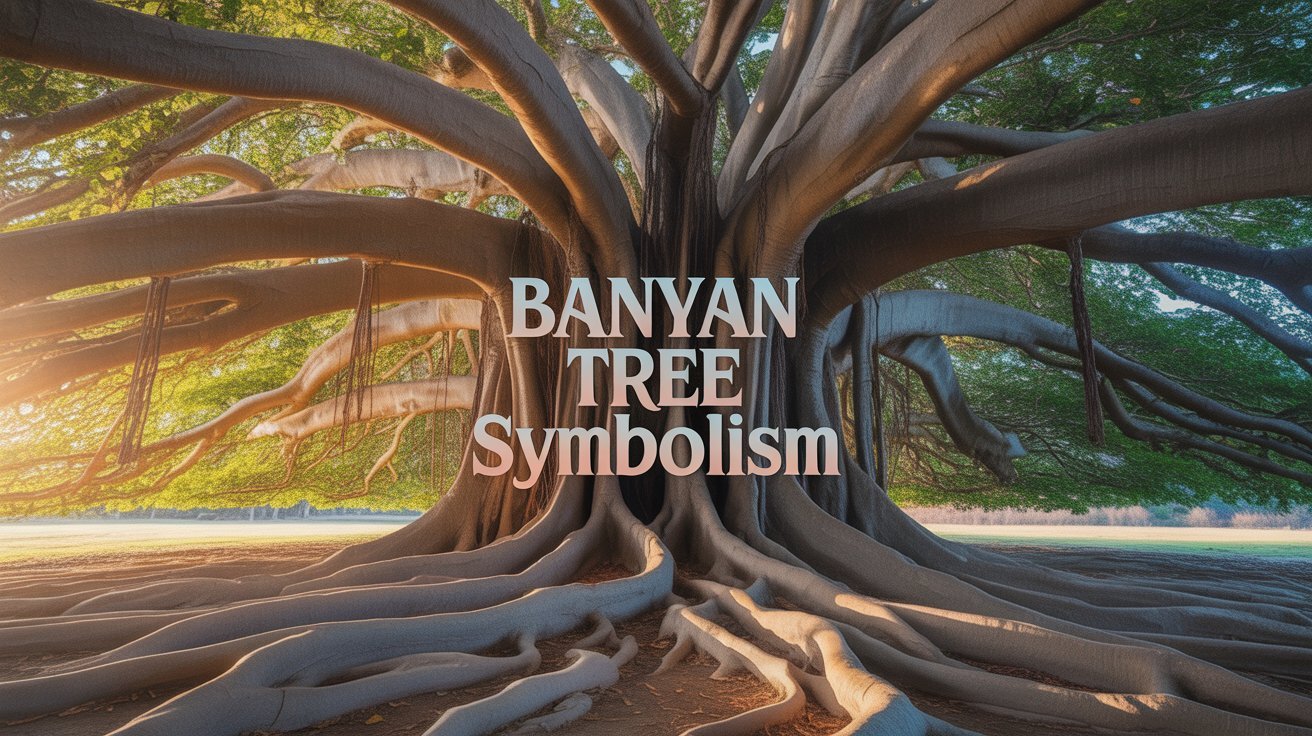
The banyan tree is known for its extraordinary growth pattern and vast canopy. Unlike most trees, it produces aerial roots that descend from its branches and eventually become new trunks. This unique trait allows the tree to expand outward and cover large areas over time.
Another remarkable feature of the banyan tree is its incredible lifespan. Some banyan trees live for hundreds of years, continuously growing and spreading through their root system. This long life contributes to its reputation as a symbol of endurance and permanence.
The dense shade created by the banyan tree makes it an important natural shelter for both people and wildlife. Birds, insects, and small animals often build their homes within its branches and roots. In many regions, villagers gather beneath its wide canopy to rest and socialize.
Additionally, the banyan tree has strong, deeply anchored roots that provide exceptional stability. These roots help the tree survive harsh weather and environmental changes. Its resilience in nature reflects why it is often linked with strength, grounding, and protection.
Banyan Tree in Hinduism
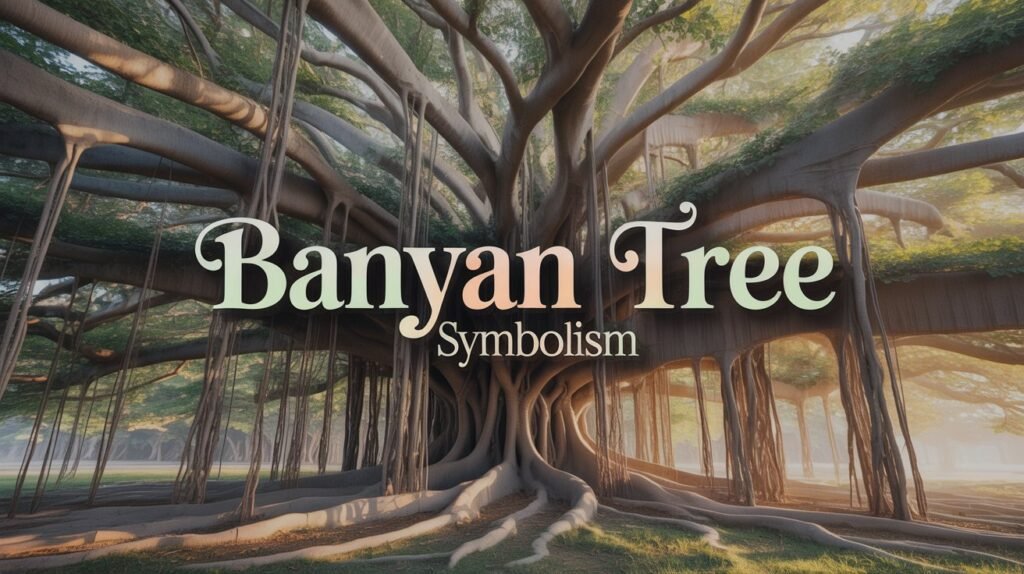
In Hinduism, the Banyan tree is considered one of the most sacred trees and is deeply connected with spiritual wisdom and divine presence. It symbolizes eternal life because it continues expanding through its aerial roots. Many Hindus believe the tree represents the endless cycle of creation and rebirth.
The Banyan tree is also associated with the sacred Trimurti—Brahma, Vishnu, and Shiva. According to traditional belief, Brahma resides in the roots, Vishnu in the trunk, and Shiva in the branches. This connection makes the tree a powerful symbol of divine unity and cosmic balance.
Many Hindu rituals and prayers are performed around the Banyan tree, especially by married women. During the festival of Vat Savitri, women tie threads around the tree and pray for the long life of their husbands. The ritual reflects the tree’s symbolism of longevity, devotion, and protection.
Spiritually, the Banyan tree is often seen as a place for meditation and learning. Ancient sages were believed to sit beneath its wide canopy to gain wisdom and spiritual insight. Because of this, the tree represents knowledge, stability, and the path toward enlightenment.
Banyan Tree in Buddhism
In Buddhism, the Banyan tree is closely linked with spiritual awakening and enlightenment. Its calm presence and wide shade symbolize peace, wisdom, and deep contemplation.
The tree is often associated with sacred spaces where monks meditate and reflect. The quiet atmosphere beneath a Banyan tree encourages mindfulness and inner awareness.
Because of its long life and expanding roots, the Banyan tree also represents continuity and spiritual growth. It reflects the Buddhist idea that wisdom develops gradually over time.
Many Buddhists see the Banyan tree as a symbol of shelter and compassion. Just as the tree offers shade to all beings, it reflects the teaching of kindness toward every living creature.
Banyan Symbolism in Christianity
In Christian symbolism, the Banyan tree is often associated with faith, stability, and spiritual shelter. Its strong roots and wide branches reflect the idea of being deeply grounded in belief.
The spreading canopy of the Banyan tree can symbolize God’s protection and care. Just as the tree provides shade, it represents divine refuge and comfort for believers.
Because the Banyan tree grows continuously with new roots and trunks, it can also represent spiritual growth. This mirrors the Christian idea of growing stronger in faith over time.
Many people interpret the Banyan tree as a reminder of community and support. Its interconnected roots reflect unity, much like the Christian belief in a supportive and loving fellowship.
Banyan Tree in Other Cultures
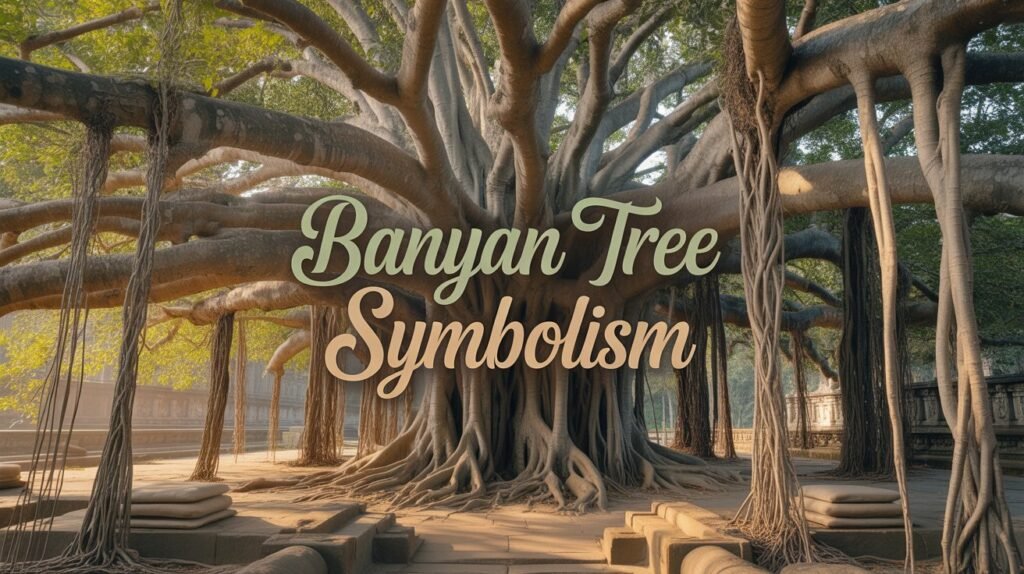
Across different cultures, the Banyan tree is admired for its strength, longevity, and spiritual presence. Many traditions see it as a symbol of protection, wisdom, and the connection between nature and the spiritual world.
Native American Views
- The Banyan tree is sometimes interpreted symbolically as a representation of interconnected life, similar to sacred trees that reflect balance between nature and spirit.
- Its spreading roots can represent ancestral wisdom and the idea that all living beings are deeply connected.
Southeast Asia
- In several Southeast Asian traditions, the Banyan tree is believed to be home to protective spirits or guardians.
- Many villages treat the tree with respect and avoid cutting it, seeing it as a sacred part of the natural landscape.
Polynesian Mythology
- The Banyan tree is sometimes linked with stories of creation and the relationship between humans and the natural world.
- Its vast branches symbolize protection, guidance, and the shelter provided by nature.
Spiritual Symbolism of Banyan Tree
The Banyan tree is widely seen as a symbol of eternal life and spiritual continuity. Its expanding roots and branches reflect the endless cycle of growth, renewal, and transformation.
Spiritually, the Banyan tree represents wisdom and deep knowledge. Its strong roots symbolize a stable foundation, while its wide canopy reflects the expansion of understanding and awareness.
The Banyan tree is also connected with protection and spiritual shelter. Just as it provides shade to those beneath it, it symbolizes divine guidance and comfort.
Many people view the Banyan tree as a reminder of inner strength and resilience. Its ability to grow and thrive for centuries reflects patience, endurance, and spiritual balance.
Symbolism of Banyan Tree by Traits
The Banyan tree carries deep symbolic meaning through its physical features. Each part of the tree—from its roots to its canopy—represents important spiritual and life lessons about growth, strength, and connection.
Roots
- The roots of the Banyan tree symbolize strong foundations, stability, and deep spiritual grounding.
- They also represent ancestry and the connection between past generations and the present.
Trunk
- The trunk represents strength, endurance, and the support that holds life together.
- It symbolizes personal resilience and the ability to remain firm during life’s challenges.
Leaves
- The leaves of the Banyan tree symbolize renewal, vitality, and continuous growth.
- They also reflect the idea of nourishment and the flow of life energy.
Canopy
- The wide canopy symbolizes protection, shelter, and spiritual comfort.
- It also represents community, unity, and the gathering of people under shared wisdom.
Banyan Tree in Art and Architecture
The Banyan tree has inspired artists and architects for centuries due to its grandeur and symbolic significance. In paintings, sculptures, and traditional art, it often represents wisdom, immortality, and spiritual shelter, becoming a central motif in both religious and cultural depictions.
In architecture, the sprawling branches and aerial roots of the Banyan tree have influenced the design of courtyards, temple grounds, and public spaces in South Asia. Its presence symbolizes harmony between nature and human spaces, providing shade, tranquility, and a spiritual focal point in built environments.
Banyan Tree in Meditation and Mindfulness
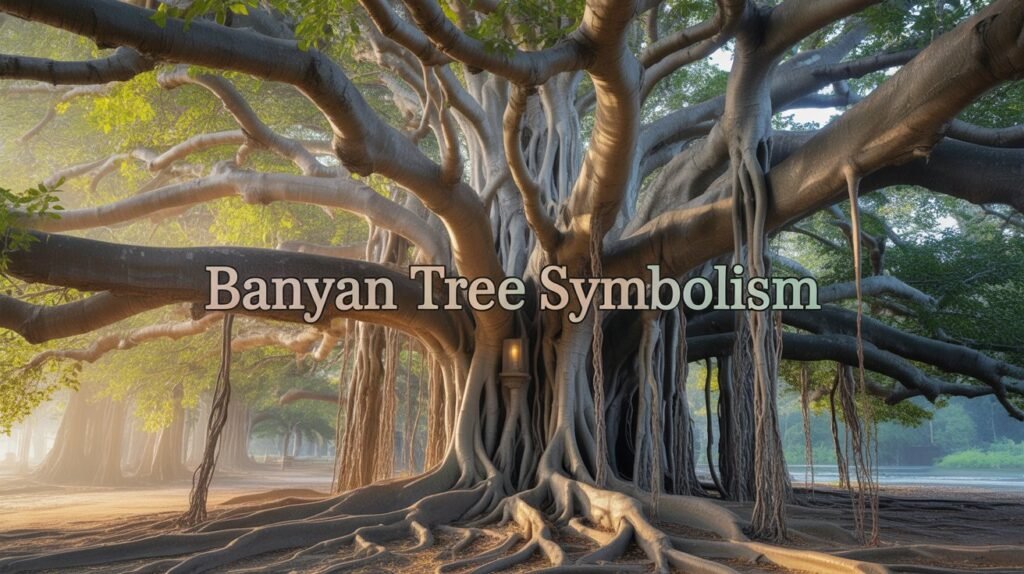
The Banyan tree is a powerful symbol in meditation and mindfulness practices. Its expansive branches and deep roots create a serene environment, encouraging stillness, reflection, and connection with the present moment.
Meditators often sit beneath the Banyan tree to cultivate inner peace, clarity, and spiritual grounding. Its symbolism of stability, growth, and shelter reinforces mindfulness, helping practitioners deepen their awareness and sense of harmony with nature.
Banyan Tree in Literature and Poetry
The Banyan tree has long held a place in literature and poetry as a symbol of wisdom, endurance, and shelter. Writers often use it to evoke a sense of timelessness, spiritual depth, and the interconnectedness of life.
In poetry, the Banyan tree represents reflection, growth, and the passage of time. Its vast roots and branches inspire imagery of strength, protection, and the quiet beauty of nature’s enduring presence.
Banyan Tree Symbolism in Dreams
| Dream Scenario | Symbolic Meaning | Short Insight |
|---|---|---|
| Sitting under a banyan tree | Peace and protection | Feeling safe and grounded |
| Seeing a huge banyan tree | Wisdom and spiritual growth | Learning and personal development |
| Walking among banyan roots | Stability and connection | Rootedness in life or relationships |
| Climbing the banyan branches | Ambition and growth | Striving for higher understanding |
| Tree with falling leaves | Change and renewal | Letting go of old habits or thoughts |
| Banyan tree in bloom or green | Vitality and renewal | Positive energy and new beginnings |
Banyan Tree Tattoos and Modern Symbolism
Banyan tree tattoos have become popular for their rich spiritual and cultural symbolism. People choose this design to represent strength, resilience, and longevity, reflecting the tree’s ability to grow and thrive across centuries.
Modern interpretations of the Banyan tree tattoo also emphasize personal growth, connection, and protection. Its intricate roots and expansive branches symbolize stability, wisdom, and the wearer’s journey toward inner balance and enlightenment.
Modern Applications of Banyan Symbolism
The Banyan tree symbolism extends into modern life, inspiring design, wellness, and environmental awareness. Its representation of stability, growth, and protection influences everything from eco-friendly architecture to urban landscaping, creating spaces that encourage harmony with nature.
In personal development and mindfulness, the Banyan tree is used as a metaphor for resilience, patience, and interconnectedness. People apply its lessons in leadership, education, and community building, emphasizing strong roots, expansive growth, and support for others.
Life Lessons and Philosophy from the Banyan Tree
The Banyan tree offers profound life lessons through its growth and resilience. Its deep roots remind us to stay grounded, while its sprawling branches encourage expansion, adaptability, and embracing new opportunities.
Philosophically, the Banyan tree teaches patience, endurance, and the value of interconnectedness. Just as it supports countless life forms beneath its canopy, it inspires us to nurture relationships, share wisdom, and contribute positively to our communities.
FAQ on Banyan Tree Symbolism
What does a Banyan tree symbolize spiritually?
It symbolizes wisdom, eternal life, protection, and spiritual growth.
Why is the Banyan tree important in Hinduism?
It represents immortality, the Trimurti, and is central to rituals like Vat Savitri.
Can the Banyan tree appear in dreams?
Yes, it often signifies stability, personal growth, protection, and renewal.
What do Banyan tree tattoos mean?
They represent resilience, wisdom, personal growth, and spiritual grounding.
How is the Banyan tree used in modern symbolism?
It inspires architecture, mindfulness practices, community, and eco-conscious design.
What is the significance of its roots and canopy?
Roots symbolize grounding and ancestry; the canopy represents protection, unity, and spiritual shelter.
How is the Banyan tree viewed in other cultures?
Many cultures see it as sacred, a home for spirits, or a symbol of interconnected life.
Why is the Banyan tree linked to meditation?
Its serene environment encourages mindfulness, reflection, and spiritual awareness.
Conclusion: The Eternal Wisdom of the Banyan Tree
The Banyan tree embodies timeless wisdom, spiritual growth, and endurance. Its presence inspires strength and patience in life.
Its roots teach us grounding, while its expansive branches encourage growth and expansion. The tree symbolizes balance between stability and exploration.
Across cultures, the Banyan tree represents protection, community, and divine connection. It unites spiritual, cultural, and philosophical meanings.
In literature, art, and meditation, it serves as a metaphor for knowledge, reflection, and inner peace. Its lessons guide personal and collective growth.
Ultimately, the Banyan tree reminds us to remain resilient, nurture connections, and embrace the cycles of life with wisdom and grace.