Evil Symbolism: Spiritual, Cultural & Literary Meaning
Evil symbolism appears in many cultures, religions, and stories as a way to represent darkness, danger, or moral conflict. From ancient myths to modern literature, symbols help people understand the concept of evil in a deeper way. These symbols often reflect humanity’s fears, struggles, and the constant battle between good and evil.
Throughout history, societies have used symbolic images, creatures, and objects to represent negative forces or destructive behavior. These symbols can vary across cultures but often carry similar meanings of corruption, temptation, or chaos. Understanding evil symbolism helps reveal how different traditions interpret morality and human nature.
In literature, spirituality, and art, evil symbols serve as powerful tools to communicate hidden messages and emotional depth. Writers and artists use them to create tension, warn against wrongdoing, or highlight ethical dilemmas. By studying these symbols, we gain insight into cultural beliefs and the timeless narratives surrounding evil.
General Symbolism of Evil
Evil symbolism generally represents darkness, destruction, and the negative forces that oppose goodness. Across many cultures, symbols of evil reflect fear, chaos, and the harmful side of human nature. They often remind people of the consequences of immoral actions and spiritual imbalance.
In spiritual traditions, evil symbols are frequently linked with temptation, corruption, and the loss of moral direction. These symbols can appear as dark figures, mysterious signs, or threatening creatures that embody negative energy. Their presence in myths and beliefs warns individuals about the dangers of unethical choices.
Beyond religion, evil symbolism also appears in art, literature, and folklore as a representation of inner conflict. It highlights the struggle between right and wrong that exists within every person. Through these symbols, storytellers express deep truths about human weakness, power, and redemption.
Spiritual and Religious Meaning
In many spiritual traditions, evil symbolizes the presence of negative energy that distances individuals from truth, purity, and divine guidance. It is often viewed as a force that tests human faith and moral strength. Spiritual teachings frequently use evil symbols to remind believers to stay on the path of righteousness.
Religious texts and beliefs often portray evil as temptation, deception, or rebellion against sacred laws. Symbols connected with evil may represent spiritual darkness or the influence of harmful forces. These symbols serve as warnings, encouraging people to remain spiritually aware and morally disciplined.
At a deeper level, spiritual interpretations suggest that evil symbolism reflects the inner struggle between higher values and destructive desires. Many belief systems teach that recognizing these symbols helps individuals overcome negativity. Through awareness and faith, people can transform darkness into spiritual growth and wisdom.
Cultural and Mythological Symbolism
Across different cultures, evil symbolism often appears in myths, legends, and traditional stories that explain the presence of darkness in the world. Many societies created symbolic figures, creatures, or signs to represent destructive forces or moral corruption. These symbols helped communities understand the balance between harmony and chaos.
In mythology, evil is frequently portrayed through powerful antagonists, monsters, or trickster figures that challenge heroes and disrupt order. Such symbols represent fear, danger, and the unknown aspects of life. They also reflect cultural beliefs about morality, justice, and the consequences of harmful actions.
Cultural symbols of evil often serve as moral lessons passed down through generations. Stories and legends use these symbols to teach values, warn against wrongdoing, and highlight the importance of courage and wisdom. Through mythological symbolism, cultures preserve their understanding of good, evil, and the eternal struggle between them.
Symbolism in Literature and Art
- Dark Colors and Shadows: Black tones, deep shadows, and darkness often symbolize mystery, fear, and hidden evil in many literary and artistic works.
- Monsters and Villains: Creatures, demons, or antagonists are commonly used to represent evil forces or the darker side of human nature.
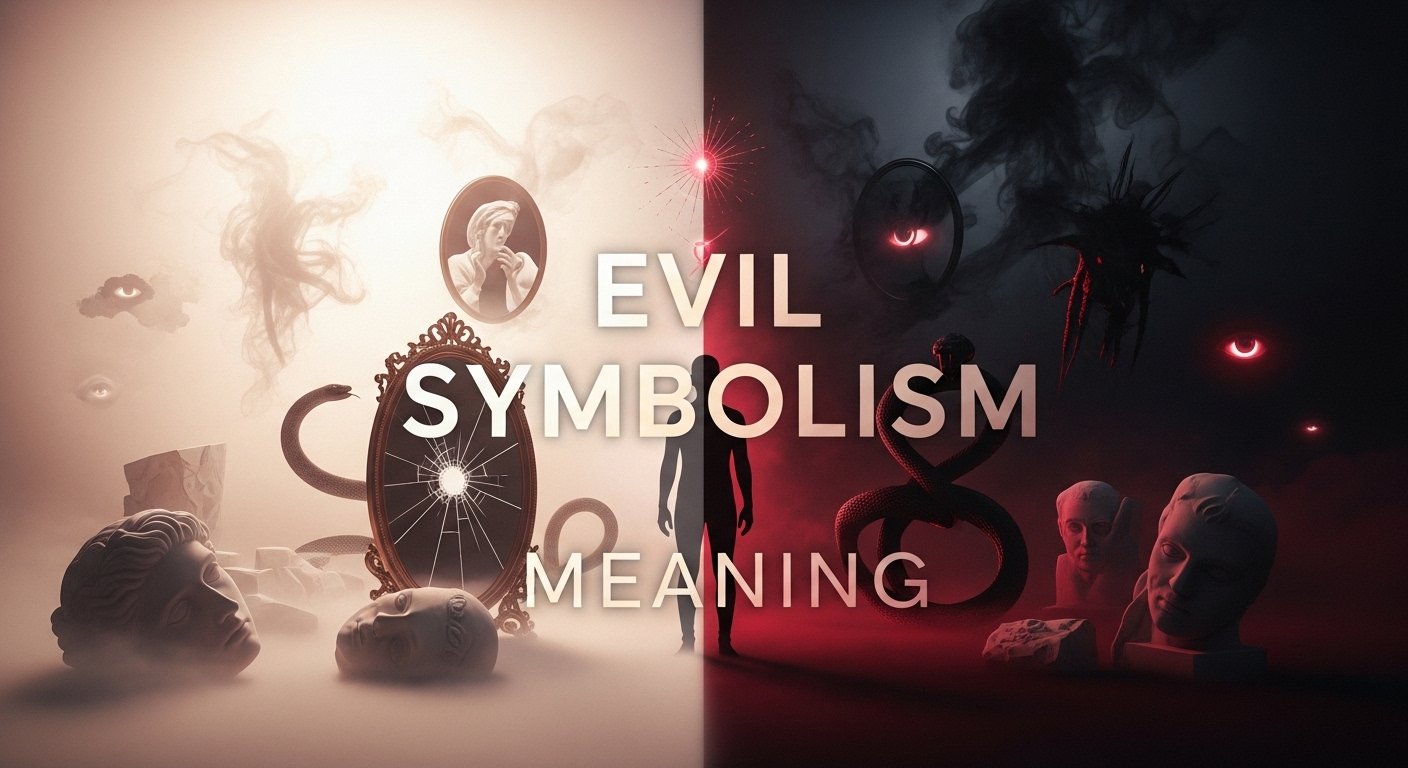
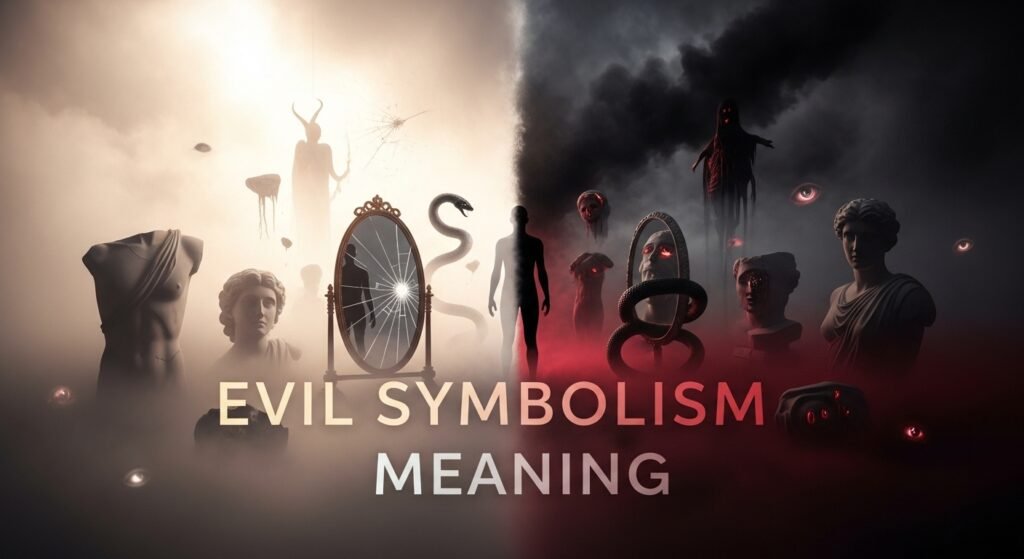
- Broken Objects: Cracked mirrors, shattered statues, or ruined places can symbolize moral decay, corruption, or the destruction caused by evil.
- Serpents and Dark Animals: Snakes, ravens, bats, and wolves are sometimes used as symbols of danger, temptation, or sinister intentions.
- Storms and Chaotic Nature: Thunder, storms, and violent natural scenes often represent conflict, turmoil, and the presence of evil forces.
- Masks and Hidden Faces: Masks or disguised identities in art and literature can symbolize deception, secrecy, and hidden evil motives.
Common Symbols of Evil
Across many cultures, certain symbols have become widely associated with evil and dark forces. Images like skulls, serpents, dark shadows, and horns often represent danger, temptation, or destructive power. These symbols appear in myths, religions, and folklore to illustrate the presence of harmful or negative influences.
In art and storytelling, these symbols help audiences quickly recognize themes of conflict and moral struggle. Dark animals, cursed objects, and mysterious signs are often used to portray corruption or fear. Through these powerful images, creators communicate warnings and explore the darker aspects of human nature.
Modern Symbolism and Psychological Interpretation
In modern interpretations, evil symbolism is often connected to human psychology and inner struggles. Rather than representing only supernatural forces, it can symbolize negative emotions such as anger, greed, jealousy, or fear. These symbols help people understand the darker aspects of the human mind.
Psychologists and writers sometimes view evil symbols as reflections of unconscious thoughts or suppressed desires. In stories, films, and art, these symbols reveal internal conflicts and moral dilemmas within characters. They show how personal choices and emotions can shape behavior.
Today, evil symbolism is also used to explore themes of morality, power, and personal responsibility. Instead of simply representing darkness, it encourages deeper reflection on human nature. Through psychological interpretation, these symbols highlight the ongoing struggle between positive and negative traits within individuals.
FAQ on Evil Symbolism
What does evil symbolism represent?
Evil symbolism generally represents darkness, corruption, temptation, and destructive forces. These symbols are used in religion, literature, and culture to illustrate the struggle between good and evil.
Why do different cultures have symbols of evil?
Different cultures developed symbols of evil to explain negative forces, dangers, or moral wrongdoing. These symbols often reflect a society’s beliefs, fears, and spiritual teachings.
Are evil symbols always negative?
Not always. In some contexts, symbols associated with evil can also represent transformation, warning, or the need for moral awareness. Their meaning often depends on cultural or spiritual interpretation.
How is evil symbolism used in literature?
Writers use evil symbolism to create tension, highlight moral conflicts, and develop complex characters. Dark imagery, villains, and mysterious objects often represent evil influences in stories.
Can evil symbolism have psychological meaning?
Yes. Modern interpretations often connect evil symbols with inner struggles, negative emotions, or hidden fears within the human mind.
What are some common symbols of evil?
Common symbols include skulls, serpents, dark shadows, demons, horns, and cursed objects. These images often represent danger, temptation, or destructive power.
Why do artists use evil symbolism?
Artists use evil symbolism to express deep emotions, social issues, or moral conflicts. These symbols help audiences understand complex themes in art and storytelling.
Does evil symbolism appear in modern media?
Yes. Movies, books, video games, and digital art frequently use evil symbols to portray villains, dark themes, and psychological struggles.
Are evil symbols the same in every culture?
No. While some symbols are widely recognized, many cultures have unique symbols based on their traditions, myths, and religious beliefs.
Can understanding evil symbolism be helpful?
Understanding these symbols helps people interpret literature, art, and cultural traditions more deeply while recognizing the moral lessons they often convey.
Conclusion
Evil symbolism has played an important role in human culture, spirituality, and storytelling for centuries. From ancient myths to modern art and literature, symbols associated with evil help explain the darker aspects of human experience. They reflect fears, moral conflicts, and the struggle between destructive and positive forces within individuals and societies. By studying these symbols, people can gain deeper insight into cultural traditions, psychological interpretations, and spiritual teachings. Rather than simply representing darkness, evil symbolism often serves as a reminder of the importance of awareness, morality, and balance in life. Understanding these symbols allows us to appreciate their meaning and the lessons they carry.