Synonyms for Symbolism: Words and Examples
Symbolism is the use of symbols, objects, colors, animals, or natural elements to represent deeper ideas, emotions, and messages. It allows writers and artists to communicate meanings beyond the literal, making their work more expressive and memorable. For example, a dove often symbolizes peace, while a butterfly may represent transformation and new beginnings.
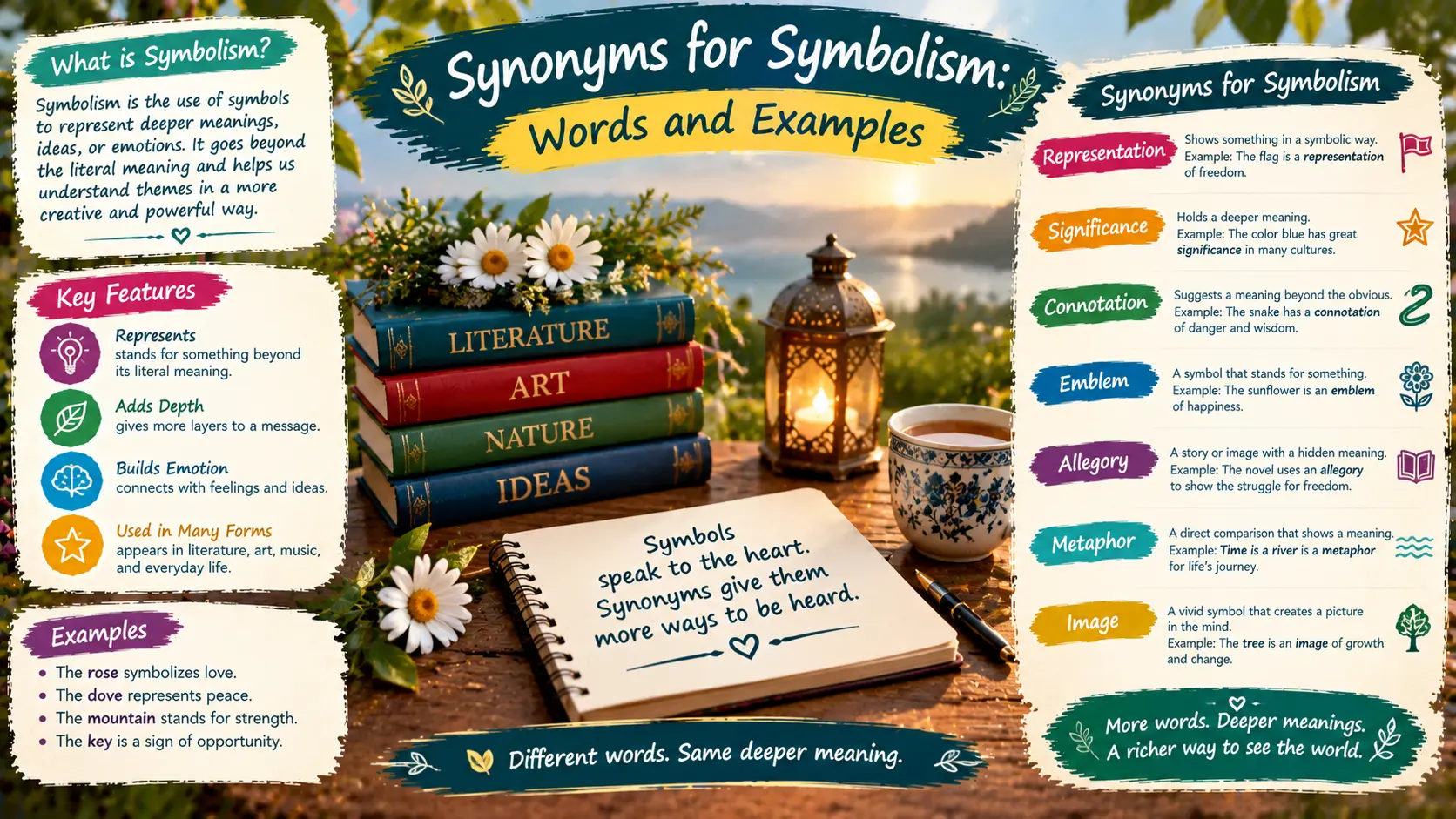
Common synonyms and related terms include representation, significance, meaning, metaphor, imagery, emblem, expression, and embodiment. Although these words share connections with symbolism, each has a slightly different meaning and purpose.
Understanding symbolism synonyms helps you choose more precise words when writing about literature, poetry, dreams, nature, animals, or spiritual meanings. The right word can make your writing clearer, more engaging, and easier for readers to understand.
What Are Symbolism Synonyms?
Symbolism synonyms are words that express ideas related to the use of symbols or the meanings they communicate. Depending on the context, these alternatives can describe how something represents an idea, expresses an emotion, or carries deeper significance.
For example, a red rose may symbolize love, a national flag represents a country, and a broken mirror might suggest a sense of loss in a particular story.
Not every related word is an exact synonym. Representation describes how something stands for another thing, while imagery creates mental pictures through descriptive language. Understanding these differences helps you select the most appropriate word for your sentence.
Common Synonyms for Symbolism
Here are eight useful symbolism synonyms and related terms:
- Representation: Something that stands for another person, object, idea, or concept.
- Significance: The importance or deeper meaning of something.
- Metaphor: A figure of speech that describes one thing in terms of another.
- Imagery: Descriptive language that creates mental pictures or sensory experiences.
- Emblem: An image or object that represents a particular idea, group, or quality.
- Expression: A way of communicating thoughts, feelings, or ideas.
- Embodiment: A person or thing that represents a particular quality.
- Interpretation: An explanation of the meaning or message behind something.
Example: A dove can be a symbol of peace, an emblem of harmony, or a representation of hope, depending on the context.
Best Words to Use Instead of Symbolism
The best alternative depends on what you want to communicate.
- Use representation when something stands for another idea.
- Use significance when discussing the importance of an object or event.
- Use metaphor when explaining a figurative comparison.
- Use imagery when discussing descriptive language in poetry or literature.
- Use emblem when an image represents a specific idea or organization.
- Use symbolic meaning when explaining the message associated with a particular symbol.
- Use embodiment when a person or object expresses a particular quality.
For articles about animals, flowers, dreams, or spirituality, phrases such as symbolic meaning, deeper meaning, and spiritual significance may sound more natural. In literary analysis, metaphor, imagery, and allegory may be more suitable.
Choosing a synonym that matches the context improves accuracy and prevents unnecessary repetition.
Symbolism Synonyms in Literature
Writers use various literary techniques to communicate deeper meanings. Although these techniques are related to symbolism, they serve different purposes.
- Metaphor: Compares two things figuratively to express an idea.
- Allegory: Uses characters, events, or a narrative to communicate a broader message.
- Imagery: Uses descriptive language to create sensory experiences.
- Motif: Repeats an image, idea, or element to develop a theme.
- Emblem: Uses an image or object to represent a particular concept.
- Allusion: Refers indirectly to a familiar person, event, or literary work.
- Personification: Gives human qualities to animals, objects, or abstract ideas.
- Analogy: Explains an idea by showing similarities between two things.
- Significance: Describes the importance or deeper meaning of an object, action, or event.
Important distinction: These terms are related to symbolism, but they are not interchangeable. For example, a recurring image of darkness may function as a motif, while darkness itself may symbolize fear or uncertainty.
Symbolism vs. Symbolic Meaning
Symbolism and symbolic meaning are closely related, but they describe different things.
| Term | Meaning | Example |
|---|---|---|
| Symbolism | The use of symbols to communicate deeper ideas | A writer uses a dove to represent peace. |
| Symbolic meaning | The idea represented by a symbol | The dove symbolizes peace. |
| Representation | Something standing for another idea | A flag represents a country. |
| Significance | The importance or deeper meaning of something | A wedding ring holds personal significance. |
| Metaphor | A figurative comparison between two things | “Time is a thief.” |
| Imagery | Descriptive language that appeals to the senses | A poem describes golden sunlight across a field. |
The key difference is that symbolism is the technique, while symbolic meaning is the idea communicated through a symbol.
Examples of Symbolism Synonyms in Sentences
These examples show how related words can be used naturally in everyday writing.
- Representation: The white dove is a representation of peace and harmony.
- Significance: The old photograph holds great significance for the family.
- Metaphor: The author uses a broken bridge as a metaphor for a damaged relationship.
- Imagery: The poem uses vivid imagery to capture the beauty of spring.
- Emblem: The olive branch serves as an emblem of peace.
- Embodiment: Her determination made her the embodiment of courage.
- Symbolic meaning: The rising sun carries a symbolic meaning of hope and renewal.
- Interpretation: Her interpretation of the painting focuses on freedom and personal growth.
These examples demonstrate how the right word can communicate a specific meaning without relying on the word symbolism repeatedly.
Types of Symbolism and Their Meanings
Symbolism appears in literature, art, culture, nature, and everyday life. Different symbols can communicate different ideas depending on their context.
- Color symbolism: Colors may represent emotions or ideas. White, for example, can symbolize purity or peace in some contexts.
- Animal symbolism: Animals may represent particular qualities. A lion often symbolizes courage and strength.
- Nature symbolism: Natural elements can represent change, growth, or renewal. A sunrise often symbolizes a new beginning.
- Flower symbolism: Flowers can communicate emotions and relationships. Roses are commonly associated with love.
- Object symbolism: Everyday objects may carry personal or cultural meanings. A key can represent opportunity or access.
- Spiritual symbolism: Symbols may express faith, hope, protection, or inner peace within particular belief systems.
- Dream symbolism: Images in dreams may be interpreted as reflections of emotions, experiences, or personal concerns, although interpretations are subjective.
Symbolic meanings are not universal. Culture, personal experience, and the situation in which a symbol appears can influence its interpretation.
Symbolism Synonyms in Everyday Language
Words related to symbolism are useful in conversations, personal writing, social media posts, and descriptions of meaningful experiences.
For example, a family photograph may represent togetherness, while a friendship bracelet may symbolize a lasting connection. A gift from a loved one might hold sentimental significance, and a sunrise may serve as an expression of hope.
These words help explain why an object or experience matters without requiring a lengthy explanation.
When describing a meaningful object, consider whether you are explaining what it represents, what it means, or why it is important. This simple distinction can help you select the most accurate synonym.
Why Is Symbolism Important in Writing?
Symbolism allows writers to communicate complex emotions and ideas through familiar objects, images, and actions. Instead of directly describing every feeling, an author might use a storm to suggest conflict or a sunrise to represent hope.
This technique encourages readers to look beyond literal descriptions and discover additional layers of meaning. It can also make poems, stories, novels, and essays more memorable.
Using appropriate symbolism synonyms improves writing variety and precision. Words such as representation, metaphor, imagery, and significance help explain different literary concepts without repeating the same terms.
Effective writing uses these words according to their meanings rather than treating them as interchangeable alternatives.
Final Thoughts
Symbolism synonyms help describe the deeper meanings behind objects, colors, animals, actions, and literary elements. Common alternatives and related terms include representation, significance, metaphor, imagery, emblem, and symbolic meaning.
Although these words overlap, each serves a different purpose. Representation explains what something stands for, significance highlights its importance, and metaphor communicates an idea through figurative comparison.
Whether you are analyzing literature, writing an article, or exploring the meaning of a symbol, choosing the right word makes your explanation clearer, more accurate, and more engaging.
Frequently Asked Questions (FAQs)
What is the closest synonym for symbolism?
Representation is one of the closest alternatives when symbolism refers to something standing for another idea. However, symbolic meaning may be more appropriate when explaining what a particular symbol represents.
What are five synonyms for symbolism?
Five useful related terms are representation, significance, metaphor, imagery, and emblem. Each describes a different aspect of communicating or interpreting meaning.
Is representation the same as symbolism?
No. Representation means standing for something else, while symbolism is the use of symbols to communicate deeper ideas. Representation can be one part of symbolism.
What is another word for symbolic meaning?
Depending on the context, you can use underlying meaning, deeper meaning, symbolic significance, or interpretation. The best choice depends on the sentence.
What is a synonym for symbolism in literature?
Metaphor, imagery, allegory, and emblem are related literary terms. However, they describe different techniques or concepts rather than serving as exact synonyms.
What is the difference between symbolism and metaphor?
Symbolism uses symbols to represent deeper ideas, while a metaphor makes a figurative comparison between two things. Both techniques can communicate abstract concepts in creative ways.
What is the opposite of symbolism?
There is no single exact opposite of symbolism. Depending on the context, literal meaning may contrast with symbolic meaning because it refers to the direct meaning rather than an implied idea.
What are some common examples of symbolism?
A dove may symbolize peace, a butterfly may represent transformation, and a sunrise may suggest hope or renewal. These meanings can vary depending on cultural and personal context.
Why do writers use symbolism?
Writers use symbolism to communicate emotions, develop themes, and add depth to their work. It also encourages readers to think beyond the literal meaning of words and events.
How can I use symbolism synonyms in an article?
Choose words that match the meaning you want to express. Use representation when something stands for an idea, significance when discussing importance, and metaphor when explaining a figurative comparison.