Turquoise Symbolism: Meaning and Spiritual Significance
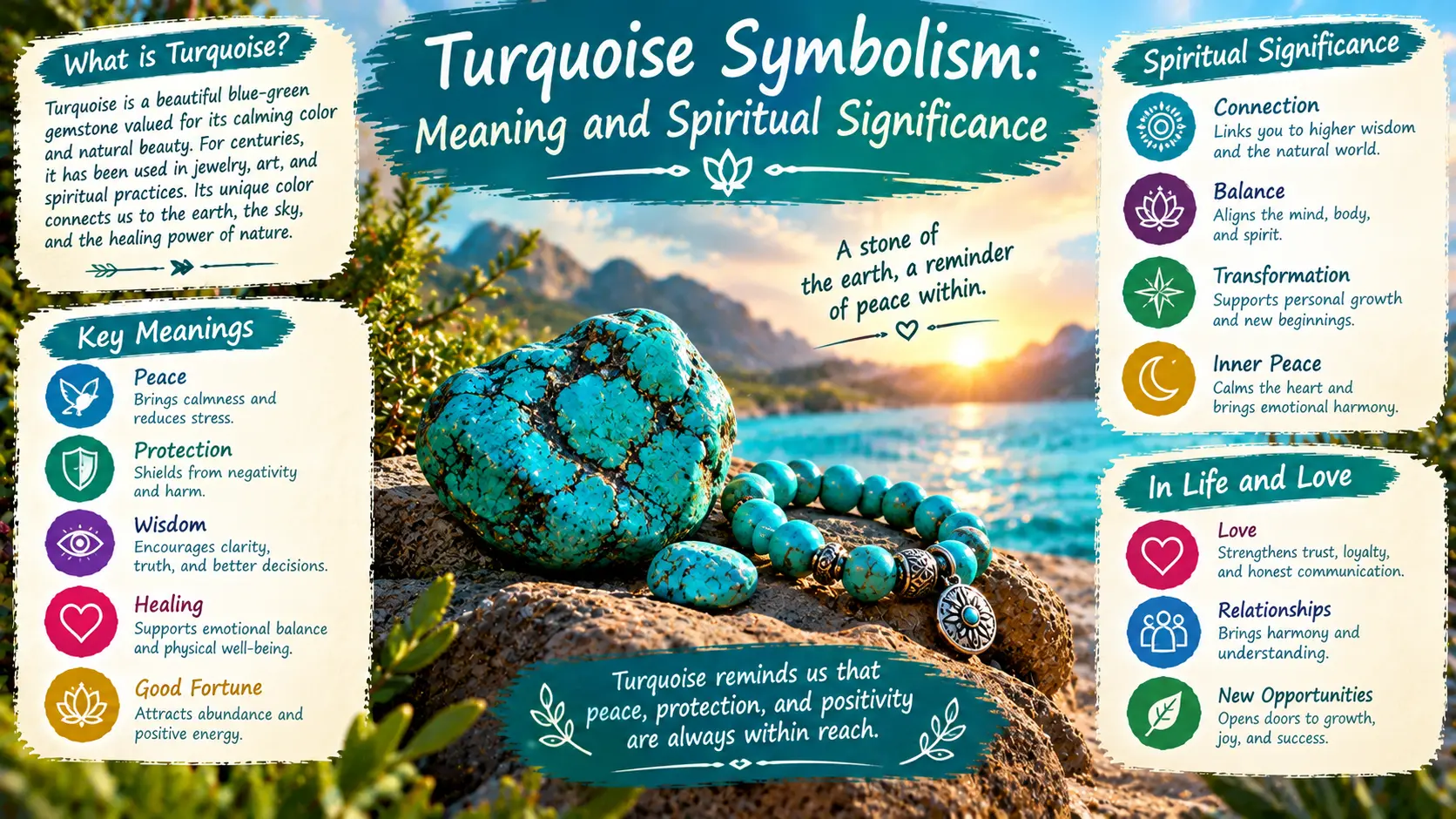
Turquoise is a beautiful blue-green gemstone admired for centuries for its calming color, natural beauty, and cultural significance. Turquoise symbolism is commonly associated with peace, protection, wisdom, hope, and emotional balance. Its refreshing color evokes clear skies and tranquil waters, making it a meaningful symbol of harmony and renewal.
The spiritual meaning of turquoise extends beyond its appearance. Across different cultures and traditions, this gemstone has been associated with good fortune, honest communication, spiritual awareness, and personal growth. For many people, turquoise serves as a reminder to trust themselves, embrace new opportunities, and remain balanced during challenging times.
What Does Turquoise Symbolize?
Turquoise symbolizes peace, protection, wisdom, hope, and emotional balance. Its distinctive blue-green color represents the calming beauty of nature and the refreshing qualities of water and sky. Throughout history, different cultures have treasured turquoise for its beauty and associations with good fortune, harmony, and spiritual significance.
On a personal level, turquoise can represent confidence, honest communication, and new beginnings. Many people appreciate it as a reminder to make thoughtful decisions, maintain emotional balance, and approach life’s challenges with optimism. Although its meaning varies across cultures and personal beliefs, turquoise remains a powerful symbol of hope and inner peace.
Turquoise Spiritual Meaning
The spiritual meaning of turquoise is often connected with inner peace, spiritual awareness, and personal transformation. Some traditions view this gemstone as a reminder to stay connected with personal values and approach life with an open heart.
Turquoise may also symbolize spiritual protection and positive energy. Its calming color can encourage reflection, mindfulness, and a more peaceful outlook. For those who appreciate its spiritual significance, turquoise represents the importance of finding balance between thoughts, emotions, and actions.
These spiritual associations come from cultural traditions and personal beliefs rather than scientifically established effects.
Turquoise Symbolism in Different Cultures
Turquoise has played an important role in jewelry, decorative arts, and cultural traditions around the world. However, its symbolism differs among cultures and communities, making it important to understand its historical context.
- Ancient Egyptian Culture: Turquoise appeared in jewelry, amulets, and ceremonial objects. It was valued for its beauty and connections with sacred traditions and protection.
- Persian Culture: Turquoise was highly prized in Persia and used in jewelry, architecture, and decorative designs. Traditional beliefs associated it with protection and good fortune.
- Indigenous Cultures of the Americas: Various Indigenous peoples have incorporated turquoise into jewelry and cultural objects. Its meanings and significance differ among individual nations and communities.
- Tibetan Culture: Turquoise has been valued in traditional jewelry and cultural practices, with associations that may include well-being, good fortune, and spiritual significance.
- Chinese Culture: Turquoise has appeared in jewelry and decorative arts, where its distinctive color contributes to its artistic and cultural appeal.
- Mesoamerican Cultures: Ancient civilizations, including the Aztecs, used turquoise in mosaics, ornaments, and ceremonial objects, demonstrating its cultural and religious importance.
- Ancient Mesopotamia: Turquoise was used in jewelry and decorative arts, reflecting the historical appreciation of colorful and precious materials.
- Indian Traditions: Turquoise has been used in jewelry and ornamental designs. Some people associate it with prosperity, confidence, and personal well-being.
- Turkish Traditions: Turquoise became known in Europe through trade routes associated with Turkish-speaking regions. The gemstone has also appeared in decorative arts and jewelry.
- Modern Western Culture: Today, turquoise often symbolizes calmness, individuality, protection, and natural beauty. It remains popular in fashion, accessories, and meaningful gifts.
Important: Turquoise does not have one universal symbolic meaning. Its significance depends on the historical period, cultural community, and personal beliefs associated with it.
Turquoise Symbolism in Love and Relationships
Turquoise symbolizes trust, loyalty, understanding, and honest communication in love. Its peaceful blue-green color can represent a relationship built on mutual respect, emotional openness, and a willingness to understand one another.
The gemstone may also symbolize emotional balance and patience. In relationships, these qualities serve as reminders to listen carefully, express feelings honestly, and resolve disagreements respectfully.
Some people choose turquoise jewelry as a meaningful gift for a partner. It can express a wish for lasting love, emotional harmony, and a relationship strengthened by trust and kindness.
Turquoise Symbolism and Twin Flames
In modern spiritual beliefs, turquoise is sometimes associated with personal growth, emotional awareness, and meaningful connections. Within twin-flame traditions, it may symbolize honest communication, self-discovery, and the lessons people learn through relationships.
Turquoise can serve as a reminder to maintain your individuality while developing a meaningful connection with another person. Its symbolism encourages patience, self-reflection, and emotional balance rather than losing yourself in a relationship.
However, turquoise cannot confirm a twin-flame connection or predict the future of a relationship. Its significance is personal and depends on individual spiritual beliefs.
Turquoise Symbolism in Dreams
Dreaming about turquoise may symbolize hope, peace, emotional clarity, and personal growth. Its blue-green color may evoke calm waters and open skies, reflecting a desire for greater balance, reassurance, or a fresh start.
The details of the dream can influence its personal interpretation. For example:
- Finding turquoise: May represent discovering confidence or recognizing a new opportunity.
- Receiving turquoise jewelry: Could symbolize trust, appreciation, or a meaningful relationship.
- Losing turquoise: Might reflect concerns about security, confidence, or emotional balance.
- Seeing a bright turquoise stone: May represent hope, clarity, or renewed motivation.
Dream interpretations are subjective rather than definite predictions. Consider your feelings, recent experiences, and current circumstances when exploring what the gemstone might mean in your dream.
Turquoise Symbolism in Spirituality
Turquoise is often associated with spiritual awareness, inner peace, and personal growth. In various spiritual traditions, it represents harmony between thoughts, emotions, and inner values.
Some people use turquoise as a personal reminder to practice mindfulness, remain open to learning, and approach difficult situations with patience. Its calming color may encourage reflection and help people focus on what matters most to them.
For those who value spiritual symbolism, turquoise represents the journey toward greater self-understanding and a more balanced outlook. These associations are rooted in spiritual traditions and personal interpretations rather than proven supernatural properties.
Turquoise Symbolism in Protection and Good Luck
Throughout history, turquoise has been worn as a protective stone in various cultural traditions. It is traditionally associated with safety, courage, good fortune, and positive opportunities. People have incorporated it into jewelry and amulets as a meaningful expression of hope and reassurance.
Today, turquoise may symbolize a wish for happiness, security, and success. Giving turquoise jewelry to someone beginning a new chapter can express encouragement and goodwill.
Although turquoise cannot guarantee protection or good luck, its symbolic meaning can serve as a personal reminder to remain hopeful, confident, and prepared for new opportunities.
Turquoise Symbolism in Art and Jewelry
Turquoise has inspired jewelry makers, artists, and designers for centuries. Its distinctive blue-green color adds character to necklaces, bracelets, rings, earrings, and decorative objects. Depending on the design and cultural context, turquoise jewelry can represent tradition, individuality, elegance, or a connection with nature.
In modern fashion, turquoise is often associated with creativity, freshness, and self-expression. Some people appreciate its vibrant appearance, while others value its cultural history or personal meaning.
Whether worn as a statement necklace or a simple ring, turquoise can carry significance beyond its appearance, representing cherished memories, personal milestones, or meaningful relationships.
Turquoise Symbolism in Everyday Life
In everyday life, turquoise can represent peace, hope, confidence, and emotional balance. Its calming color may remind people to slow down, appreciate the present moment, and approach everyday challenges with patience.
Turquoise can also symbolize honest communication and a willingness to embrace change. Wearing turquoise jewelry, displaying it at home, or choosing it as a personal accessory can serve as a reminder to maintain a positive outlook and appreciate meaningful experiences.
For many people, the gemstone’s greatest significance comes from the feelings and memories attached to it. Turquoise can become a personal symbol of resilience, reassurance, and the courage to move forward.
Turquoise Symbolism in Friendship
Turquoise is often associated with the qualities that help friendships remain strong, including trust, loyalty, kindness, and understanding.
| Symbolic Meaning | Meaning in Friendship |
|---|---|
| Trust | Building a friendship through honesty and reliability. |
| Loyalty | Supporting one another during good times and challenges. |
| Understanding | Respecting different perspectives and emotions. |
| Harmony | Resolving disagreements with patience and respect. |
| Communication | Sharing thoughts and feelings openly. |
| Support | Encouraging friends to pursue their goals. |
| Appreciation | Expressing gratitude for a meaningful connection. |
| Lasting Bonds | Valuing a friendship that grows over time. |
| Kindness | Treating one another with care and compassion. |
| Happiness | Celebrating joyful moments and shared experiences. |
As a friendship symbol, turquoise represents the importance of trust, mutual respect, and emotional connection. It can make a thoughtful gift for someone whose friendship brings comfort and positivity into your life.
Turquoise Symbolism in Personal Growth and New Beginnings
Turquoise is often associated with personal growth, renewal, hope, and fresh beginnings. Its symbolism makes it meaningful for people starting a new job, entering a different stage of life, or working toward personal goals.
The gemstone can represent the courage to embrace change and the confidence to explore unfamiliar opportunities. It may also remind people that setbacks are part of learning and that progress does not always happen immediately.
Whether you wear turquoise jewelry or simply appreciate its color, you can use its symbolism to reflect on your goals, recognize your achievements, and remain open to new experiences. Its central message is that growth takes time, and every new beginning offers an opportunity to move forward with greater confidence.
Conclusion
Turquoise symbolism represents peace, protection, wisdom, hope, and emotional balance. Across different cultures and traditions, this beautiful gemstone has held significance in jewelry, spiritual practices, and decorative arts. Its associations with love, friendship, good fortune, and personal growth make it a meaningful symbol of connection and renewal. Although turquoise cannot guarantee protection or positive outcomes, it can serve as a personal reminder to communicate honestly, embrace change, and approach challenges with confidence. Whether worn as jewelry or appreciated for its natural beauty, turquoise continues to symbolize hope, harmony, and inner peace.
Frequently Asked Questions About Turquoise Symbolism
1. What does turquoise symbolize?
Turquoise symbolizes peace, protection, wisdom, hope, and emotional balance. It is also associated with harmony, confidence, and positive change.
2. What is the spiritual meaning of turquoise?
Spiritually, turquoise represents inner peace, awareness, and personal growth. Some traditions also associate it with protection and good fortune.
3. What does turquoise symbolize in love?
Turquoise symbolizes trust, loyalty, honest communication, and understanding in relationships. It can represent a desire for a peaceful and lasting connection.
4. What does turquoise symbolize in dreams?
Turquoise in dreams may represent hope, emotional clarity, or personal growth. Its possible meaning depends on the dream’s details and your personal experiences.
5. Why is turquoise considered a protective stone?
Several cultural traditions associate turquoise with protection and safety. Historically, people have worn it as jewelry or an amulet for symbolic reassurance.
6. What does turquoise symbolize in friendship?
Turquoise represents trust, loyalty, kindness, and mutual understanding in friendship. It can serve as a reminder to value supportive and meaningful relationships.
7. What does turquoise symbolize in different cultures?
Different cultures have valued turquoise for its beauty and historical significance. Its symbolic associations include protection, good fortune, spirituality, and prosperity, although meanings vary by community.
8. Does turquoise symbolize good luck?
Yes, turquoise is traditionally associated with good luck and positive opportunities in some cultures. However, it cannot guarantee success or a particular outcome.
9. What does turquoise symbolize in jewelry?
Turquoise jewelry can symbolize beauty, individuality, protection, and confidence. It may also represent love or friendship when given as a meaningful gift.
10. What does turquoise symbolize in everyday life?
In everyday life, turquoise can represent calmness, hope, balance, and new beginnings. Its symbolism may remind people to communicate honestly and approach challenges with patience.