Symbolism Ideas | Meaning, Inspiration & Modern Applications
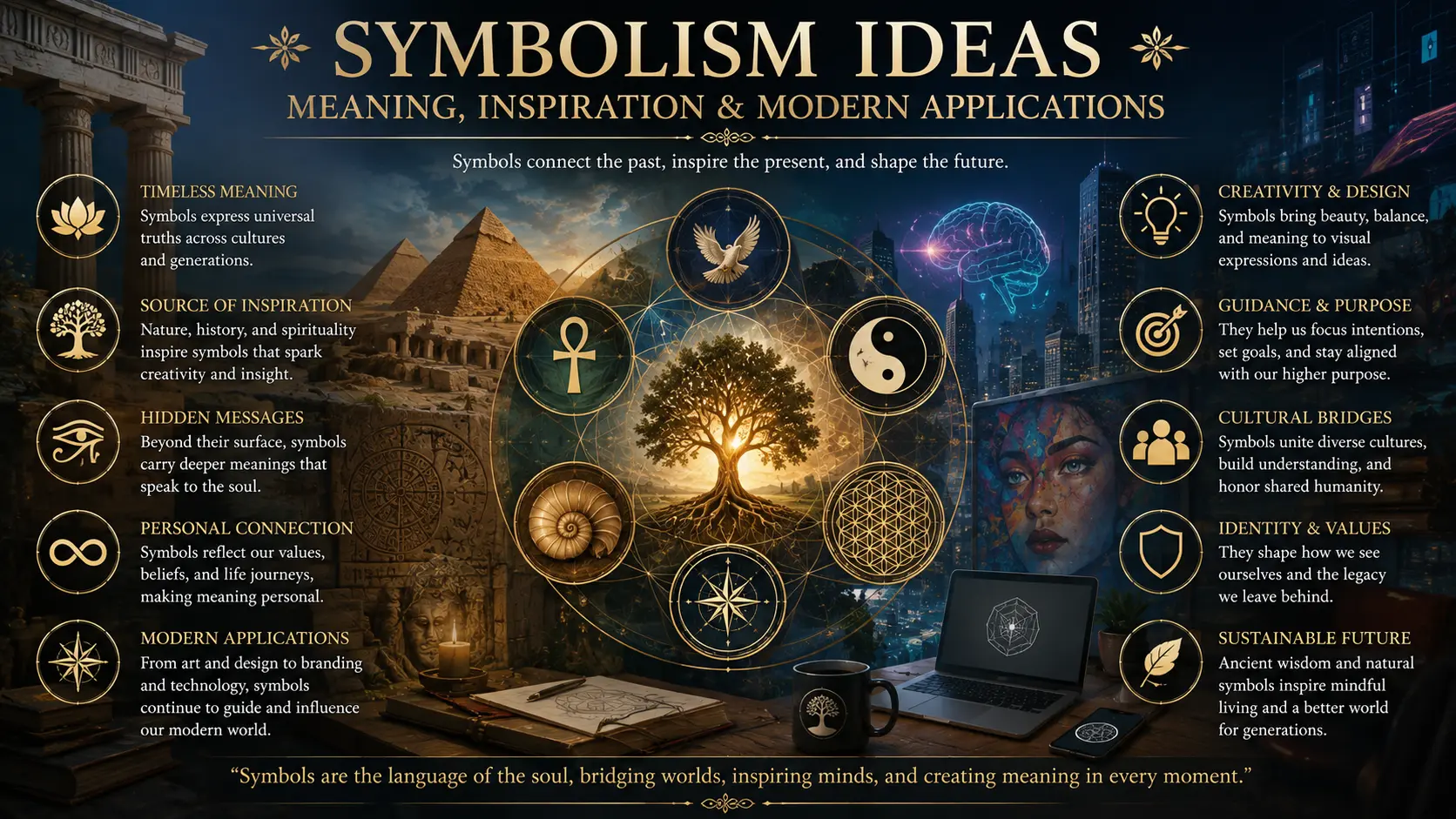
Symbolism is one of the most powerful ways people communicate ideas that go beyond literal words, objects, images, colors, and actions. A simple flower, bird, color, key, moon, or doorway can represent emotions, beliefs, memories, transformation, or spiritual ideas.
Throughout history, symbols have helped cultures explain difficult concepts, express identity, preserve traditions, and communicate feelings that are difficult to describe directly. Today, symbolism remains just as relevant in art, literature, dreams, design, relationships, spirituality, branding, and everyday life.
The meaning of a symbol is rarely fixed. Context, culture, personal experience, and intention can all influence interpretation. Understanding these factors makes symbolism more meaningful and prevents a single interpretation from being treated as universal.
What Is Symbolism and Why Does It Matter?
How Symbols Communicate Meaning
Symbolism occurs when something represents an idea beyond its literal identity. A key, for example, can literally open a lock, but symbolically it may represent opportunity, access, freedom, discovery, or a solution.
Writers, artists, designers, and cultures use symbols because they allow complex ideas to be communicated quickly. Instead of explaining an emotion through many sentences, a single image can create an immediate association.
A symbol can also operate on several levels at once. A rose may represent love in one situation, beauty in another, and mortality when paired with a fading or damaged flower.
Why People Connect With Symbols
Humans naturally look for patterns and meaning. Symbols give abstract ideas a recognizable form, making concepts such as hope, loss, courage, wisdom, and transformation easier to understand.
Personal experience also makes symbols powerful. Someone may associate rain with sadness, while another person may see rain as cleansing, renewal, or relief. Neither response has to be universally correct because symbolism can be deeply personal.
Symbolism vs. Literal Meaning
Literal meaning describes what something physically or directly is. Symbolic meaning describes what that thing may represent.
For example, a door is a physical entrance, but it can symbolize opportunity, transition, uncertainty, or a new stage of life. Understanding the difference between literal and symbolic meaning helps readers interpret art, dreams, stories, and cultural traditions more thoughtfully.
Historical and Cultural Symbolism
Symbolism in Ancient Civilizations
Ancient civilizations relied heavily on symbols to communicate religious beliefs, social roles, natural forces, and ideas about life and death. Egyptian hieroglyphs, for example, combined visual forms with language and religious imagery.
Animals, celestial bodies, plants, geometric shapes, and objects frequently carried meanings beyond their physical appearance. The scarab became associated with renewal and regeneration in ancient Egyptian culture, while the sun was connected with power, life, and divine forces in many civilizations.
Eastern Cultural Symbolism
Across various Asian traditions, symbolism has often been closely connected with nature, philosophy, spirituality, and balance. Lotus flowers, for example, can represent purity, growth, and spiritual development because the flower rises from muddy water.
Dragons, cranes, bamboo, mountains, water, and particular colors have also carried different meanings across East and South Asian cultures. However, interpretations vary between countries, religions, historical periods, and communities.
Indigenous and Tribal Symbolism
Indigenous cultures around the world have developed rich symbolic systems connected with land, animals, ancestors, community, seasons, and spiritual beliefs.
Animal imagery may communicate qualities such as courage, wisdom, protection, or connection with nature. It is important to recognize that Indigenous traditions are not one unified symbolic system. Meanings differ significantly between nations and cultural communities.
Medieval and Religious Symbolism
Medieval European art frequently used symbolism to communicate religious narratives to audiences who might not have been able to read. Objects, colors, gestures, animals, and plants could carry theological meanings.
Religious symbolism continues to influence architecture, paintings, ceremonies, jewelry, literature, and popular culture. The meaning of a symbol should always be considered within the particular religious and historical tradition where it appears.
Spiritual Symbolism Ideas
Spiritual symbolism explores ideas related to consciousness, faith, personal growth, inner transformation, and connection with something greater than oneself.
Common spiritual symbols include light, stars, wings, circles, trees, water, mountains, and the moon. These symbols can represent guidance, eternity, growth, renewal, or spiritual awareness.
Symbolic interpretations are best treated as reflective rather than guaranteed supernatural messages. A symbol can inspire personal thought without having one objectively fixed spiritual meaning.
Symbols of Protection and Guidance
Many traditions use symbols to represent protection and guidance. Shields, circles, guardian animals, protective amulets, stars, and light imagery are common examples.
The meaning often comes from cultural history. A protective symbol may also gain personal significance when someone associates it with safety, family, faith, or a meaningful life experience.
Symbols of Faith and Inner Peace
Light, doves, candles, water, prayer beads, sacred geometry, and peaceful natural landscapes can symbolize faith or inner peace.
These symbols often work because they create emotional associations. A candle, for instance, may represent hope during darkness or the continuation of faith during difficult circumstances.
Symbols of Spiritual Awakening
Butterflies, rising suns, open eyes, blooming flowers, mountains, and upward-moving imagery are often interpreted as symbols of awakening or personal transformation.
Such symbolism can be especially meaningful when someone is reflecting on a period of change. The interpretation ultimately depends on the person’s beliefs and circumstances.
Color Symbolism Ideas
Color is one of the fastest ways to communicate mood and meaning. However, color symbolism changes dramatically across cultures and contexts.
Red, Orange, and Yellow
Red commonly suggests passion, energy, love, danger, or power. Its meaning can shift depending on the setting.
Orange often suggests enthusiasm, warmth, creativity, and movement. Yellow may symbolize happiness, optimism, attention, or caution.
Because colors have different cultural associations, designers should consider their audience before assigning a specific meaning.
Blue, Green, and Purple
Blue is frequently associated with calmness, trust, stability, and depth. Green can suggest nature, growth, renewal, prosperity, or balance.
Purple has historically been associated with royalty and prestige in some cultures, while modern contexts may connect it with creativity, mystery, imagination, or spirituality.
Black, White, and Gray
Black may represent elegance, authority, mystery, mourning, or the unknown. White can suggest purity, simplicity, peace, innocence, or new beginnings.
Gray often occupies a middle position between extremes and can symbolize neutrality, uncertainty, maturity, or balance.
Animal and Nature Symbolism
Nature provides some of the most recognizable symbols because people have observed animal behavior, weather, plants, and celestial objects for thousands of years.
Bird Symbolism
Birds are commonly associated with freedom, perspective, communication, transition, and the spirit. Different birds add different symbolic associations.
An eagle may suggest strength and vision, a dove peace, an owl wisdom, and a sparrow simplicity or resilience. These meanings are cultural rather than universal rules.
Insect and Butterfly Symbolism
Butterflies are among the most recognizable symbols of transformation because they undergo a dramatic life-cycle change.
Bees can represent cooperation and productivity, while dragonflies may symbolize adaptability and change in some symbolic traditions. Again, the interpretation depends on cultural context and personal associations.
Flower and Plant Symbolism
Flowers frequently symbolize emotions and stages of life. Roses are strongly associated with love, lilies may represent purity or remembrance, and sunflowers often evoke optimism and vitality.
Trees can symbolize growth, stability, ancestry, resilience, and connection because of their roots, trunks, branches, and long lifespans.
Sun, Moon, Water, and Other Natural Symbols
The sun commonly represents life, energy, clarity, or renewal. The moon may suggest mystery, cycles, intuition, or change.
Water is especially versatile. It can symbolize cleansing, emotional depth, adaptability, life, or transformation. Mountains often suggest strength, endurance, challenge, or achievement.
Object Symbolism Ideas
Ordinary objects can become powerful symbols when placed within the right context.
Jewelry and Personal Objects
Rings can symbolize commitment, continuity, or connection. Necklaces may represent identity, memory, protection, or emotional attachment.
Personal objects become particularly meaningful when they are connected to important people or events. Their symbolic value may therefore be stronger for one person than for another.
Keys, Doors, and Windows
A key commonly symbolizes access, opportunity, knowledge, or solutions. A door can represent a boundary between one stage and another.
Windows often symbolize perspective, possibility, observation, or communication between the inner and outer worlds.
Mirrors, Clocks, and Books
Mirrors can symbolize self-reflection, identity, truth, or perception. Clocks can represent time, mortality, urgency, or change.
Books frequently symbolize knowledge, memory, imagination, history, or hidden information.
Everyday Objects With Deeper Meanings
Almost any object can become symbolic. A photograph may represent memory, a gift may represent affection, and an empty chair may represent absence.
The important factor is context. An object becomes symbolic when viewers connect it with an idea beyond its practical function.
Symbolism in Literature and Poetry
Symbolic Characters and Objects
Authors often use characters and objects to represent larger ideas. A journey may represent personal growth, while a particular object can represent a character’s past.
Symbolic objects become especially effective when they appear repeatedly. Repetition encourages readers to connect the object with a particular theme.
Nature and Setting as Symbols
Weather, landscapes, seasons, and natural environments frequently mirror emotional or thematic conditions.
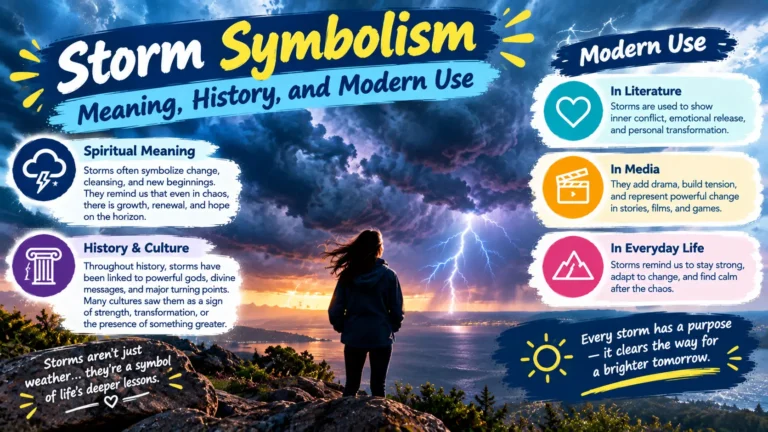
A storm may accompany conflict, spring may represent renewal, and winter may suggest isolation or decline. These associations are common literary techniques rather than universal meanings.
Common Literary Symbolism
Common literary symbols include journeys, roads, doors, darkness, light, water, mirrors, gardens, birds, and seasons.
The strongest interpretations consider the entire work rather than assigning a meaning to one object in isolation. Authors can intentionally challenge traditional symbolism and give familiar symbols unexpected meanings.
Symbolism in Art and Design
Symbolism in Paintings and Visual Art
Artists can use color, composition, objects, gestures, animals, and positioning to communicate ideas.
A painting of a broken object might suggest loss, while a rising figure may communicate hope or liberation. Visual symbolism allows viewers to interpret multiple layers of meaning without relying entirely on written explanation.
Symbols in Graphic and Interior Design
Modern designers use symbolism to influence perception. Shapes, colors, typography, patterns, and imagery can suggest qualities such as reliability, luxury, energy, simplicity, or naturalness.
Circles often feel continuous and harmonious, while sharp geometric forms can create impressions of strength or precision. These are tendencies, not strict rules.
Religious and Cultural Art Symbols
Religious and cultural artwork often contains highly developed symbolic languages. Objects, colors, gestures, architectural features, and patterns can communicate beliefs or historical narratives.
Correct interpretation requires cultural awareness. A symbol should not be removed from the tradition that gave it meaning.
Symbolism in Everyday Life
Symbols in Clothing and Accessories
Clothing can communicate identity, belonging, status, profession, personality, or values.
A wedding ring, graduation gown, uniform, family heirloom, or meaningful necklace can carry symbolic significance far beyond its physical appearance.
Symbols in Celebrations and Traditions
Birthdays, weddings, funerals, graduations, and holidays contain symbolic actions and objects.
Candles, flowers, gifts, special clothing, food, colors, and ceremonies often represent transitions, remembrance, celebration, or connection.
Gestures, Signs, and Personal Rituals
Gestures can become symbolic forms of communication. A handshake may suggest agreement, while a raised hand can signal greeting or attention.
Personal rituals can also become symbolic. Someone may keep a photograph nearby as a reminder of a loved one or follow a particular routine to mark an important milestone.
Symbolism in Dreams and Personal Experiences
Why Symbols Appear in Dreams
Dreams frequently contain unusual combinations of people, places, objects, animals, and events. People naturally try to understand these elements symbolically.
There is no universal dictionary that can reliably determine what every dream symbol means. Personal memories, emotions, expectations, and experiences can influence dream content.
Common Dream Symbols and Interpretations
Water is sometimes interpreted as representing emotions, while roads may suggest journeys or decisions. Flying can be associated with freedom or possibility, while falling may reflect vulnerability or loss of control.
These interpretations are possibilities, not predictions. The dreamer’s emotional response and personal circumstances are usually more useful than a generic interpretation.
Personal Meaning vs. Universal Symbolism
A symbol can have a traditional meaning while carrying an entirely different personal meaning.
For example, a dog might commonly symbolize loyalty, but someone who grew up with a beloved dog may associate the animal primarily with family, comfort, or childhood memories.
Modern Symbolism and Popular Culture
Symbols in Social Media and Digital Culture
Digital communication has created an entirely new symbolic vocabulary. Emojis, reaction icons, memes, profile images, and abbreviations can communicate emotions almost instantly.
A simple emoji can replace an entire sentence, but its interpretation can change depending on age group, platform, culture, and context.
Logos, Emojis, and Modern Visual Language
Brands use logos as symbols of identity and recognition. A carefully designed shape or mark can communicate a company’s personality without using many words.
Emojis function similarly in everyday communication. Their meaning often depends on the surrounding message rather than the image alone.
Symbols in Movies, Music, and Entertainment
Modern entertainment frequently uses recurring visual motifs. A particular color, object, song, costume, or location may appear repeatedly to reinforce a character’s development or a story’s central theme.
Viewers may also create interpretations that go beyond the creator’s original intention, demonstrating how symbolism can evolve through audience interaction.
Symbolism Ideas by Theme
Love, Romance, and Relationships
Common symbols of love include hearts, roses, rings, paired birds, intertwined branches, and locked or connected objects.
These symbols communicate affection, commitment, intimacy, loyalty, or emotional connection. Their meaning becomes stronger when supported by the surrounding context.
Strength, Courage, and Resilience
Lions, mountains, oak trees, shields, fire, and strong architectural forms can symbolize courage and resilience.
These symbols often communicate the idea of continuing forward despite difficulty. They can be useful in artwork, storytelling, personal reminders, and motivational design.
Spiritual Growth and Enlightenment
Lotus flowers, light, rising suns, stairways, mountains, open skies, and growing trees can represent spiritual development.
Their shared idea is movement from one state toward another—whether that means greater awareness, understanding, peace, or personal maturity.
Transformation, Change, and New Beginnings
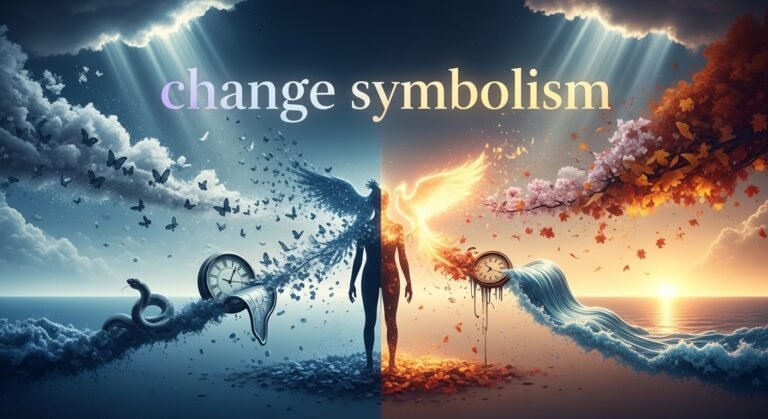
Butterflies, doors, bridges, dawn, seeds, changing seasons, and flowing rivers are common symbols of transformation.
They emphasize movement rather than permanence. A bridge connects two places, dawn marks the beginning of a new day, and a seed represents potential growth.
Wisdom, Knowledge, and Learning
Owls, books, lamps, keys, libraries, stars, and open eyes can symbolize knowledge or wisdom.
A lamp is particularly effective as a metaphor because it transforms darkness into visibility, much like knowledge can transform uncertainty into understanding.
Freedom, Hope, and Success
Birds, open skies, horizons, wings, sunrise, paths, and unlocked doors can represent freedom, hope, opportunity, and achievement.
These symbols often communicate movement toward something rather than simply possessing it.
Protection, Peace, and Healing
Doves, shields, circles, trees, water, white light, and gentle natural imagery are frequently associated with protection or peace.
Healing symbolism often focuses on restoration, balance, renewal, and returning to wholeness rather than promising a specific outcome.
How to Find Meaning in Symbols
Consider the Cultural Context
Start by asking where the symbol comes from. A symbol may have completely different meanings across religions, countries, historical periods, and communities.
Cultural context prevents oversimplification and makes interpretation more respectful and accurate.
Pay Attention to Personal Associations
Ask what the symbol means to you. Personal memories can be more influential than general symbolic dictionaries.
A particular song, flower, place, or object may trigger memories that give it unique emotional significance.
Look at the Symbol’s Color and Setting
A symbol rarely exists alone. Its color, position, surrounding objects, environment, and timing can change its meaning.
A white bird in a peaceful scene may create a very different impression from the same bird appearing during a dramatic or frightening scene.
Avoid Treating One Interpretation as Universal
One of the biggest mistakes in symbolism is assuming that every symbol has one fixed definition.
A better approach is to consider several possible meanings and then determine which interpretation best fits the cultural, artistic, literary, or personal context.
Life Lessons We Can Learn From Symbolism
Finding Meaning in Change
Symbols such as butterflies, seasons, bridges, and dawn remind us that change is a natural part of life.
They can encourage people to view transitions not only as endings but also as opportunities for development and new experiences.
Understanding Personal Growth
Trees, mountains, journeys, and stairways can represent gradual progress.
Their symbolic power comes from the idea that growth does not always happen instantly. Progress can involve patience, setbacks, effort, and continued movement.
Recognizing Hope and Resilience
Symbols of light, sunrise, flowers, and renewal can remind us that difficult periods do not necessarily define an entire life.
Symbolism can therefore become a tool for reflection. A meaningful image can serve as a reminder of resilience without claiming to predict the future.
Using Symbols for Reflection and Inspiration
People can intentionally choose symbols that represent personal values or goals.
A journal, artwork, piece of jewelry, photograph, or meaningful object can become a visual reminder of courage, family, growth, creativity, or hope.
FAQs About Symbolism Ideas
What Are Some Common Examples of Symbolism?
Common examples include a heart for love, a dove for peace, a butterfly for transformation, a key for opportunity, and a tree for growth. Their exact meanings depend on context.
How Do I Create My Own Symbolism?
Choose an object, image, color, or natural element and connect it intentionally with an idea. Repetition and context can strengthen that association over time.
Can the Same Symbol Have Different Meanings?
Yes. Symbolic meanings can change according to culture, historical period, situation, and personal experience. There is rarely one interpretation that applies everywhere.
What Is the Most Powerful Symbol of Change?
There is no single universally accepted symbol of change. Butterflies, bridges, doors, seasons, rivers, and sunrise are among the most recognizable because they naturally suggest movement or transformation.
Why Is Symbolism Important in Art and Literature?
Symbolism allows creators to communicate complex ideas indirectly. It adds depth, encourages interpretation, and can make stories and artwork more emotionally memorable.
Conclusion: Finding Meaning Through Symbolism
Symbolism gives ordinary things extraordinary depth. A flower can become a reminder of growth, a key can represent opportunity, a bird can suggest freedom, and a sunrise can symbolize a new beginning.
Yet symbolism is most meaningful when context is respected. Cultural traditions, personal experiences, artistic intentions, and surrounding details can all influence interpretation.
Rather than searching for one fixed meaning, approach symbols with curiosity. Ask what they represent, where their meaning comes from, and why they create a particular emotional response. In doing so, symbolism becomes more than a collection of definitions—it becomes a way to understand art, culture, stories, experiences, and the meanings people create in everyday life.