Shoe Symbolism: Spiritual Meaning, History, and Cultural Significance
Shoes are among the most ordinary objects in everyday life, yet they carry remarkable symbolic meaning. They protect our feet, help us move through the world, and often reveal something about our identity before we even speak. Across cultures, religions, literature, and personal experiences, shoes have become symbols of life’s journey, personal growth, status, protection, and transformation.
From ancient sandals worn by rulers to modern sneakers that reflect style and self-expression, footwear has always been more than a practical necessity. Shoes appear in sacred texts, fairy tales, dreams, wedding traditions, and even memorials, proving that they hold a deeper meaning than most people realize.
Understanding shoe symbolism helps us appreciate how a simple object can represent our path through life, our beliefs, and the experiences that shape who we become.
Quick Answer
Shoes commonly symbolize life’s journey, identity, protection, direction, and personal transformation. Spiritually, they represent grounding, readiness, and the path a person is walking. Across cultures and traditions, shoes can also symbolize authority, humility, status, freedom, and new beginnings.
What Do Shoes Symbolize?
At their core, shoes symbolize movement and progress. Because they carry us from one place to another, they naturally represent the journey of life and the choices we make along the way.
Common symbolic meanings of shoes include:
- Personal growth and life direction
- Protection and security
- Identity and self-expression
- Status and social standing
- Freedom and independence
- New beginnings and opportunities
- Responsibility and life roles
The symbolism often changes depending on the type, condition, and context of the shoe.
Shoe or Shoes Meaning
The word “shoe” generally refers to an individual object that protects the foot. Symbolically, a single shoe may represent incompleteness, individuality, or a missing connection.
“Shoes,” on the other hand, usually symbolize balance, partnership, progress, and the ability to move forward. In symbolism, a complete pair often represents readiness for a journey or a new chapter in life.
Because shoes accompany us wherever we go, they become powerful metaphors for our experiences and personal development.
Historical Origins of Shoe Symbolism
The earliest shoes were created purely for survival. Ancient people used sandals and simple footwear to protect themselves from rough terrain, extreme temperatures, and dangerous environments.
Over time, footwear evolved into a symbol of social rank and identity. Kings, nobles, military leaders, and religious figures often wore distinctive shoes that separated them from ordinary people.
Throughout history, shoes have symbolized:
- Authority and leadership
- Wealth and privilege
- Occupation and social role
- Protection and preparedness
- Cultural identity
As societies developed, footwear became both functional and symbolic.
What Do Shoes Represent Spiritually?
Spiritually, shoes often symbolize the path a person walks in life. They represent readiness to move forward, protection during life’s challenges, and connection between the physical and spiritual worlds.
Many spiritual traditions view shoes as symbols of:
- Grounding and stability
- Personal purpose
- Protection from negative influences
- Spiritual growth
- Readiness for transformation
Because shoes connect the body to the earth, they are often associated with staying balanced while pursuing personal and spiritual development.
What Is the Spiritual Meaning of Shoes in a Dream?
Dreams involving shoes frequently relate to personal direction, identity, and life changes.
Common Shoe Dream Meanings
New shoes
Often symbolize new opportunities, growth, or a fresh beginning.
Old shoes
May represent experience, wisdom, or attachment to the past.
Lost shoes
Can indicate uncertainty, insecurity, or feeling unprepared.
Torn shoes
Often suggest exhaustion, obstacles, or emotional strain.
Walking barefoot
May symbolize vulnerability, humility, authenticity, or spiritual awakening.
Receiving shoes
Can represent support, guidance, or preparation for a new journey.
The exact interpretation depends on the dreamer’s circumstances and emotions.
What Do Shoes Symbolize in the Bible?
Shoes hold important symbolic meaning throughout the Bible. They often represent authority, covenant, humility, and divine purpose.
One of the most famous examples occurs when Moses encounters the burning bush. God instructs him to remove his sandals because he is standing on holy ground. This act symbolizes reverence, humility, and respect for the sacred.
Biblical shoe symbolism includes:
- Readiness to follow God’s path
- Spiritual preparation
- Divine protection
- Authority and inheritance
- Humility before God
The Bible also uses footwear as a symbol of legal agreements and the transfer of responsibility.
Shoe Symbolism Across Cultures
Different cultures have developed unique meanings for footwear.
Ancient Egypt
Sandals were often associated with status and power.
Japan
Removing shoes symbolizes respect, cleanliness, and the separation of public and private spaces.
Middle Eastern Traditions
Showing the sole of a shoe may be considered disrespectful because it touches the ground.
Native American Cultures
Moccasins often symbolize connection to the land, ancestry, and survival.
Western Culture
Shoes frequently represent individuality, success, and personal achievement.
Symbolism by Shoe Type
Boot Symbolism
Boots often represent:
- Strength
- Hard work
- Resilience
- Adventure
- Protection
Sneaker Symbolism
Sneakers symbolize:
- Youth
- Freedom
- Energy
- Self-expression
- Athletic achievement
High Heel Symbolism
High heels may represent:
- Confidence
- Power
- Elegance
- Femininity
- Social status
Sandal Symbolism
Sandals commonly symbolize:
- Simplicity
- Freedom
- Spiritual openness
- Relaxation
Slipper Symbolism
Slippers often represent:
- Comfort
- Home
- Security
- Emotional warmth
Symbolism by Shoe Color
| Shoe Color | Symbolic Meaning |
| Black | Authority, professionalism, sophistication |
| White | Purity, new beginnings, innocence |
| Red | Passion, courage, visibility |
| Blue | Trust, calmness, stability |
| Brown | Reliability, practicality, grounding |
| Gold | Success, achievement, abundance |
| Silver | Intuition, transformation, wisdom |
Shoe Symbolism in Literature
Shoes have long served as powerful literary symbols because they naturally represent journeys, identity, and transformation.
In fairy tales such as Cinderella, a slipper becomes the key to recognition and personal transformation. Dorothy’s ruby slippers in The Wizard of Oz symbolize the longing for home and the realization that personal power already exists within.
Writers often use shoes to symbolize:
- Character growth
- Social mobility
- Identity
- Freedom
- Destiny
- Personal transformation
A character’s footwear can reveal their social class, personality, ambitions, and emotional state.
Shoe Symbolism in Life
Throughout life, shoes accompany every major milestone.
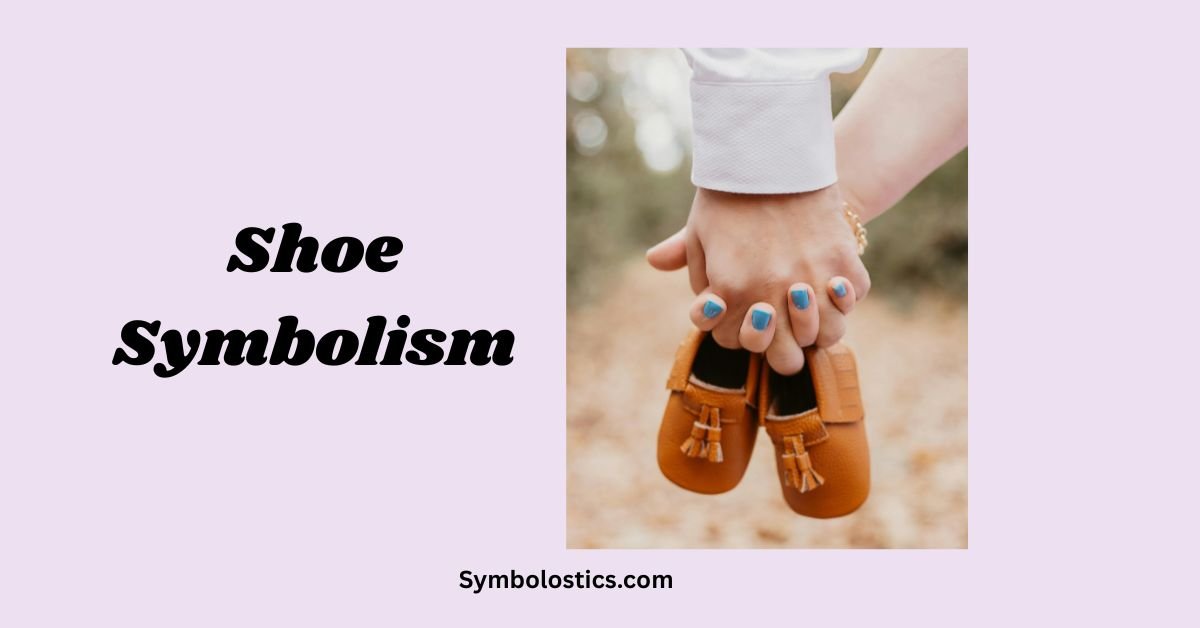
Baby Shoes
Represent innocence, beginnings, and family love.
School Shoes
Symbolize learning and personal development.
Work Shoes
Reflect responsibility, dedication, and achievement.
Wedding Shoes
Represent commitment and the start of a new chapter.
Walking Shoes
Suggest wisdom gained through experience.
Empty Shoes
Often symbolize remembrance, loss, and legacy.
Because shoes travel with us through every stage of life, they become powerful symbols of our personal story.
Symbolism of Shoes as a Gift
Giving shoes as a gift can have different meanings depending on culture and intention.
Positive meanings include:
- Support for someone’s journey
- Encouragement and motivation
- Wishing success and progress
- Celebrating a new chapter
In some cultures, there is a superstition that gifting shoes may cause someone to “walk away.” However, many people view shoe gifts as symbols of care, protection, and good wishes.
The meaning often depends on the relationship between the giver and recipient.
Psychological Meaning of Shoes
Psychologically, shoes reveal how people wish to present themselves to the world.
Footwear can communicate:
- Confidence
- Social identity
- Lifestyle choices
- Professional goals
- Group belonging
Researchers have found that people often form first impressions based on shoes because footwear provides visible clues about habits, preferences, and personality.
Shoe Meaning Slang
In modern slang, the word “shoe” can have different meanings depending on context.
Common slang expressions include:
- Big shoes to fill – Taking over an important role.
- Walking in someone’s shoes – Understanding another person’s experience.
- If the shoe fits – Accepting a truth about oneself.
- Deadstock shoes – Brand-new sneakers that have never been worn.
- Sneakerhead culture – Enthusiasts who collect and trade sneakers.
These expressions show how deeply shoe symbolism is embedded in everyday language.
Shoes in Fashion and Modern Culture
Today, shoes are among the strongest symbols of personal identity.
Modern footwear can communicate:
- Fashion preferences
- Economic status
- Athletic interests
- Cultural affiliations
- Professional roles
Sneaker culture, luxury brands, and social media have transformed shoes into powerful symbols of self-expression.
Shoe Tattoos and Their Meanings
Shoe tattoos often represent personal journeys and important life experiences.
Popular meanings include:
- Baby shoes — family and parenthood
- Running shoes — perseverance and achievement
- Ballet shoes — discipline and artistry
- Combat boots — resilience and military service
- High heels — confidence and individuality
The symbolism often reflects a significant part of the wearer’s life story.
Life Lessons Inspired by Shoe Symbolism
Shoes offer valuable lessons about life:
- Every journey begins with a single step.
- Progress requires movement.
- Protection helps us face challenges.
- Experience leaves meaningful marks.
- Different paths require different tools.
- Growth happens when we move forward.
Just as shoes carry us physically, our experiences carry us emotionally and spiritually.
Frequently Asked Questions
What do shoes symbolize?
Shoes commonly symbolize life’s journey, identity, protection, progress, freedom, and personal transformation.
What does shoe signify?
A shoe often signifies movement, preparedness, self-expression, and the path a person is taking through life.
What is the spiritual meaning of shoes?
Spiritually, shoes represent grounding, protection, readiness, purpose, and the journey of the soul.
What do shoes symbolize in literature?
In literature, shoes often symbolize transformation, destiny, social mobility, identity, and personal growth.
Why do shoes appear in dreams?
Shoes in dreams typically relate to direction, confidence, personal identity, and upcoming life changes.
What do old shoes symbolize?
Old shoes often symbolize wisdom, experience, memories, and lessons learned through life’s journey.
What do new shoes symbolize spiritually?
New shoes usually symbolize fresh beginnings, new opportunities, spiritual growth, and readiness for change.
Why are shoes important symbols?
Shoes connect people to movement, identity, and life experiences, making them powerful symbols across cultures and traditions.
Conclusion
Shoe symbolism goes far beyond fashion or practicality. Across history, religion, literature, dreams, and modern culture, shoes have represented movement, identity, protection, status, and transformation. They tell stories about where people have been, where they are now, and where they hope to go.
Whether appearing in a sacred text, a fairy tale, a dream, or a cherished family memory, shoes remind us that every journey begins with a step. The footwear we wear may seem ordinary, but symbolically it reflects the path we walk, the challenges we overcome, and the person we are becoming.