Color Symbolism in The Great Gatsby with Quotes Explained
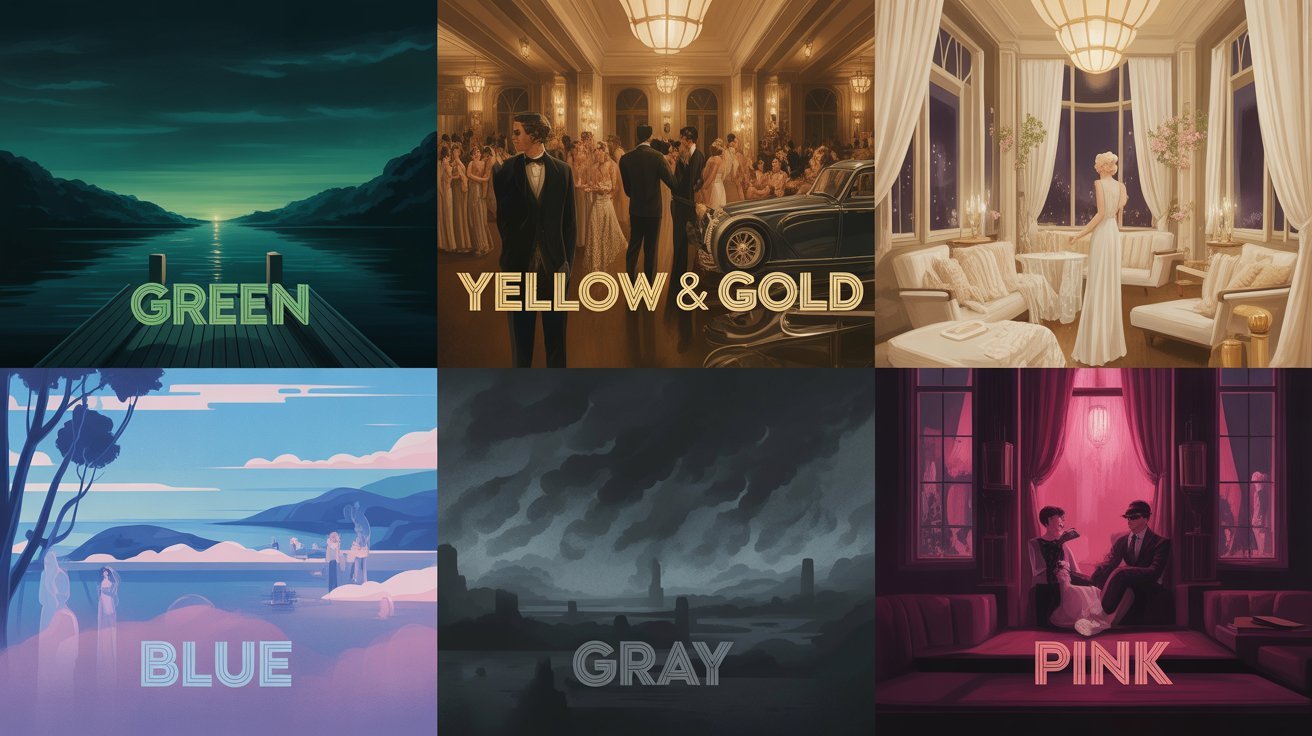
In The Great Gatsby, F. Scott Fitzgerald transforms color into a language of desire, illusion, and decay. Every shade that appears in the novel carries emotional weight and symbolic depth. Through carefully chosen imagery, Fitzgerald paints a portrait of the Jazz Age that is as dazzling as it is disillusioned.
Colors in the novel are never accidental; they reveal character psychology and social truth. The famous green light, for instance, glows with hope while quietly exposing unattainable dreams. When Fitzgerald writes of something being “white” or “gold,” he often hints at purity, wealth, or the corruption hiding beneath glamour.
The green light at the end of Daisy’s dock symbolizes Gatsby’s longing and the endless pursuit of the American Dream. White dresses suggest innocence, yet Daisy’s “white girlhood” masks moral emptiness. Gold and yellow shimmer with wealth, but they also foreshadow decay and artificiality.
By decoding these colors, readers uncover the novel’s deeper critique of wealth, love, and ambition. Fitzgerald’s palette reflects both the beauty and the moral emptiness of the 1920s. Understanding color symbolism in the novel allows us to see beyond the glittering surface into the fragile heart of the American Dream.
The Color Green: Dreams and the Illusion of Hope
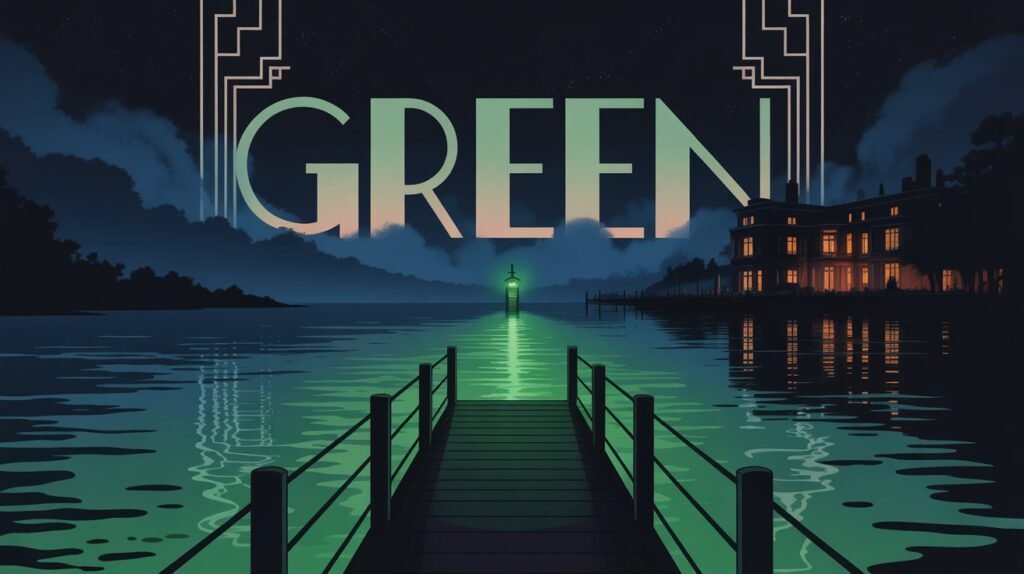
In The Great Gatsby, green shimmers with possibility, but it also trembles with illusion. The most powerful symbol is the green light at the end of Daisy’s dock—small, distant, and forever just out of reach. When Gatsby stretches his arms toward it, Fitzgerald captures a universal human longing: the belief that happiness is always one step ahead.
In The Great Gatsby, F. Scott Fitzgerald uses green to represent Gatsby’s dream of love, success, and reinvention. The narrator describes the light as something Gatsby believed in, “the orgastic future that year by year recedes before us.” This line reveals that green is not just hope—it is hope that keeps moving farther away.
Green also echoes the larger promise of the American Dream. It symbolizes growth, wealth, and fresh beginnings, yet Fitzgerald subtly exposes how that dream can become a mirage. Gatsby’s dream appears alive and vibrant, but it is rooted in fantasy rather than reality.
Ultimately, the color green reflects the tension between aspiration and illusion. It glows with optimism, yet it warns us that not all dreams are meant to be possessed. In Gatsby’s world, hope is beautiful—but it is also heartbreakingly unattainable.
Key Quotes:
“He stretched out his arms toward the dark water… and distinguished nothing except a single green light.”
→ Highlights Gatsby’s longing and distant hope.
“Gatsby believed in the green light, the orgastic future that year by year recedes before us.”
→ Shows how dreams always seem just out of reach.
“It eluded us then, but that’s no matter—tomorrow we will run faster, stretch out our arms farther.”
→ Reflects endless pursuit despite repeated disappointment.
“Tomorrow we will run faster, stretch out our arms farther….”
→ Emphasizes the illusion that effort alone can capture the dream.
Analysis:
The green light symbolizes a dream built on distance. It shines brightly, but only because it cannot be touched.
Gatsby’s hope is powerful, yet it depends on illusion rather than reality. The more he reaches for it, the farther it seems to drift.
Through green, Fitzgerald suggests that ambition can inspire greatness—but when rooted in fantasy, it ultimately leads to heartbreak.
The Color Yellow (and Gold): Wealth and Decay
Yellow and gold dominate the novel’s imagery, symbolizing wealth, luxury, and social status. While gold suggests old money and elegance, yellow often feels flashy and artificial. These colors highlight both the allure and the moral emptiness of the Jazz Age.
Through yellow and gold, Fitzgerald exposes the corrupting influence of wealth. The shimmer of gold masks decay, and the characters’ obsession with materialism leads to moral and emotional downfall. These colors remind readers that glitter often hides rot beneath the surface.
Key Quotes:
- “The windows were ajar and gleaming white against the fresh grass outside.”
→ The brightness suggests luxury, but it feels artificial and fragile. - “The only completely stationary object in the room was an enormous couch on which two young women were buoyed up as though upon an anchored balloon.”
→ The golden atmosphere hints at elegance layered over emptiness. - “Her voice is full of money.”
→ Links Daisy directly to wealth and material allure. - “The yellow car.”
→ Gatsby’s flashy vehicle symbolizes wealth that ultimately leads to destruction.
Analysis:
Yellow and gold represent two sides of wealth in the novel—glamour and decay. Gold suggests old money, status, and polished elegance, while yellow often feels loud, excessive, and artificial.
Through these shades, Fitzgerald exposes how wealth in Gatsby’s world sparkles on the surface but rots underneath. The brightness attracts desire, yet it also foreshadows moral corruption and tragic consequences.
The Color White: Purity or the Illusion of Innocence 🤍
White in The Great Gatsby often surrounds Daisy, wrapping her in images of brightness and grace. She is introduced in rooms filled with white curtains and dresses, creating an atmosphere of purity and softness. Yet this whiteness feels carefully staged, more decorative than truthful.
Through this repeated imagery, F. Scott Fitzgerald suggests that innocence in the novel is often an illusion. The color white masks carelessness, privilege, and emotional detachment. What appears angelic on the surface slowly reveals moral emptiness beneath.
Key Quotes:
“Her face was sad and lovely with bright things in it, bright eyes and a bright passionate mouth.”
→ White highlights Daisy’s surface beauty and charm.
“She dressed in white, and had a little white roadster.”
→ Suggests innocence but masks carelessness.
“There was a hint of white against the windows.”
→ Purity is implied, yet the world behind it is morally gray.
“Daisy’s voice is like money, bright and alluring.”
→ White masks materialism and emotional emptiness.
Analysis:
1: White conveys both innocence and illusion, masking deeper flaws.
2: It creates a sense of elegance while hiding moral emptiness.
3: Fitzgerald uses white to show how appearances can deceive.
4: In Daisy’s world, purity is more image than reality.
The Color Blue: Fantasy, Loneliness, and Gatsby’s Illusions
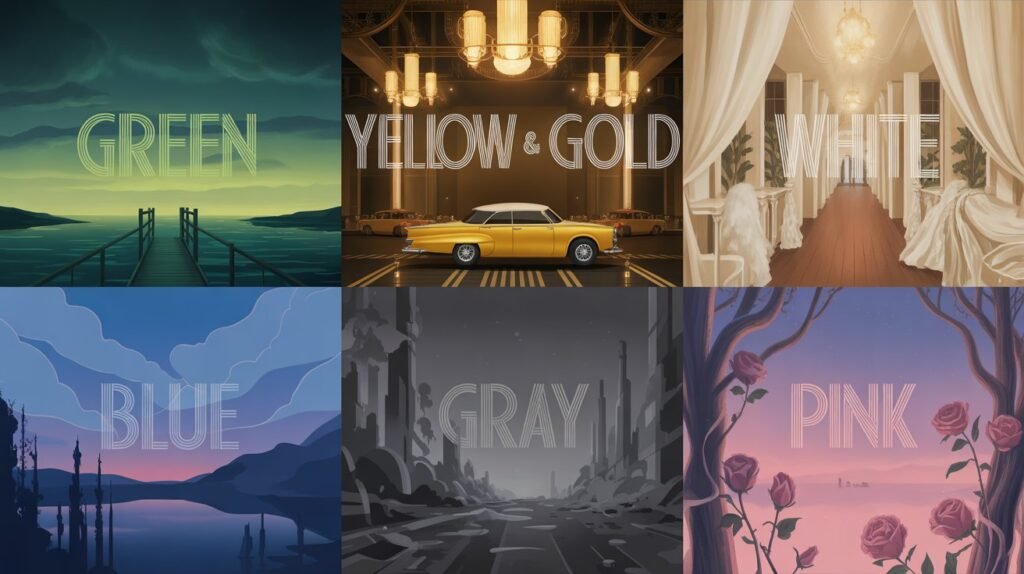
Blue in The Great Gatsby often surrounds Gatsby’s dreams, creating a dreamy, unreal atmosphere. It appears in his gardens, his rooms, and even the sky, reflecting imagination and longing. Yet the color also evokes sadness, emphasizing isolation beneath the glittering surface.
Through blue, F. Scott Fitzgerald shows how Gatsby’s fantasies blur reality. The color highlights his emotional distance and the fragile, ephemeral nature of his ambitions. Fantasy and loneliness are intertwined, painting a world both beautiful and melancholic.
Key Quotes:
- “He smiled understandingly—much more than understandingly. It was one of those rare smiles with a quality of eternal reassurance in it, that you may remember forever.”
→ Blue hints at Gatsby’s dreamlike charm. - “The windows were ajar and gleaming blue against the night.”
→ Suggests both beauty and isolation. - “A blue lawn and blue gardens.”
→ Highlights fantasy and unreal perfection. - “He wanted to recover something, some idea of himself perhaps, that had gone into loving Daisy.”
→ Blue reflects Gatsby’s longing and illusion.
Analysis:
1: Blue symbolizes dreams tinged with sadness and longing.
2: It reflects Gatsby’s isolation amidst his glittering fantasies.
3: Fitzgerald uses blue to blur reality and imagination.
4: The color shows how hope and illusion are inseparable in Gatsby’s world.
The Color Gray: Death, Moral Decay, and the Valley of Ashes
Gray dominates the Valley of Ashes, symbolizing lifelessness, moral decay, and the consequences of unchecked ambition. The bleak landscape reflects the emptiness behind wealth and glamour, where dreams are crushed and values erode. Characters who pass through it, like George Wilson, are trapped in a world stripped of vitality.
Through gray, F. Scott Fitzgerald critiques the darker side of the American Dream. The color embodies despair and inevitability, showing how corruption and indifference poison both society and individuals. It is a visual reminder that not all that glitters is golden.
Key Quotes:
“This is a valley of ashes—a fantastic farm where ashes grow like wheat.”
→ Gray depicts decay and lifelessness.
“Ashes take the forms of houses and chimneys and rising smoke.”
→ Shows the oppressive, colorless environment.
“The eyes of Doctor T. J. Eckleburg… brood over the gray land.”
→ Gray emphasizes moral emptiness and judgment.
“Nothing grows here except ashes and despair.”
→ Reflects hopelessness and corruption.
Analysis:
Gray represents moral decay and the death of dreams.
It reflects the emptiness beneath wealth and ambition.
Fitzgerald uses gray to show despair and social corruption.
The Valley of Ashes embodies the cost of chasing hollow success.
The Color Pink: Love, Desire, and False Hope
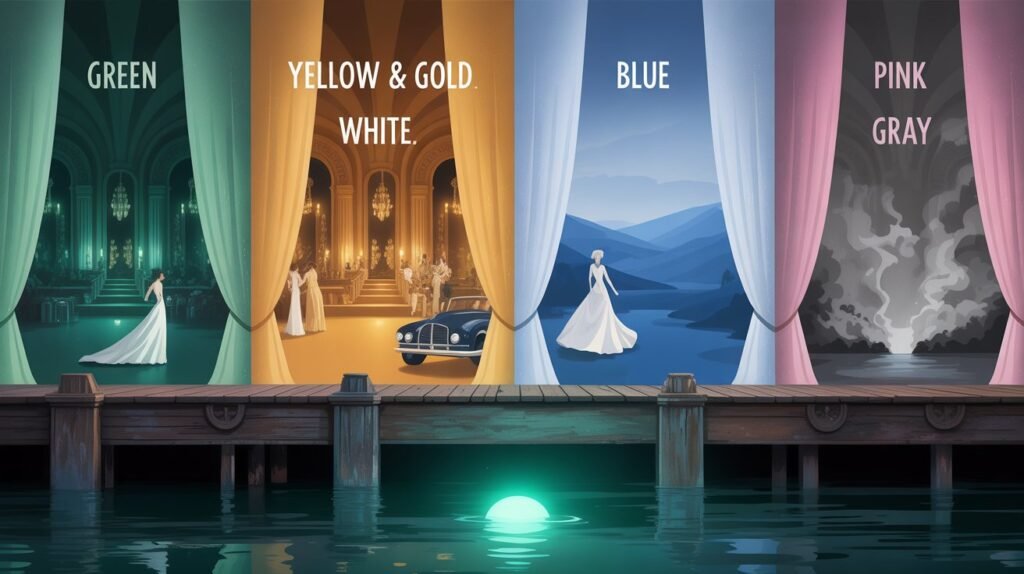
Pink in The Great Gatsby often appears in moments of romance or longing, suggesting tenderness and attraction. Yet, it carries a sense of artificiality, hinting that love and desire in Gatsby’s world are fragile and easily deceived. The color softens reality, making illusions seem appealing.
Through pink, F. Scott Fitzgerald explores how desire can blind characters to truth. It symbolizes fleeting hope and emotional vulnerability, revealing the gap between appearance and reality in matters of the heart.
Key Quotes:
“The rosy-colored space was full of laughter and music.”
→ Pink suggests romance and fleeting joy.
“She looked at him with a soft pink glow in her cheeks.”
→ Highlights desire and attraction.
“There was a warm pink light in the room that made everything seem gentle.”
→ Creates an illusion of comfort and hope.
“Pink clouds floated over the horizon of their dreams.”
→ Reflects fragile, temporary optimism.
Analysis:
Pink symbolizes romantic longing and emotional vulnerability.
It creates an illusion of warmth and happiness.
Fitzgerald uses it to show hope that is often temporary or deceptive.
The color reveals how desire can mask reality and disappointment.
The Owl-Eyed Man and Symbolic Colors 👁️
The Owl-Eyed Man is a mysterious observer in The Great Gatsby, often associated with insight and awareness. His presence in Gatsby’s library, surrounded by books, highlights the contrast between appearance and reality. He notices details others overlook, reminding readers to look beyond the glittering surface.
Fitzgerald links him to color symbolism to deepen meaning. The muted tones of the library, the shimmer of gold and green in the background, and the pale gray of the world outside all interact with his observations. Through the Owl-Eyed Man, colors become a lens to understand truth, illusion, and the moral undercurrents of Gatsby’s world.
Why Fitzgerald Used Color Symbolism
- To reveal characters’ emotions and inner desires.
- To distinguish reality from illusion and highlight moral contrasts.
- To critique the American Dream and the emptiness of wealth.
- To create a vivid, memorable visual atmosphere that deepens thematic impact.
Fitzgerald’s use of color goes beyond decorative description; it communicates mood, intention, and social commentary. Each shade—from the hopeful green light to the gray ashes of despair—serves as a storytelling device that shapes how readers perceive characters and their world.
By weaving color into his narrative, he exposes the tension between surface beauty and underlying decay. Symbolic colors help illustrate the fragility of dreams, the illusions of love, and the moral consequences of obsession and ambition in the Jazz Age.
FAQs on Color Symbolism in The Great Gatsby
1. What does the green light symbolize in The Great Gatsby?
The green light represents Gatsby’s dreams, hope, and the illusion of achieving the American Dream. It is distant and unattainable, highlighting the gap between desire and reality.
2. Why are yellow and gold significant in the novel?
Yellow and gold symbolize wealth, luxury, and status, but also decay and moral corruption beneath the glamorous surface.
3. How does white function in the story?
White suggests innocence, purity, and elegance, but often masks carelessness, privilege, and emotional emptiness, especially in Daisy’s character.
4. What is the meaning of gray in the Valley of Ashes?
Gray represents death, moral decay, hopelessness, and the harsh reality behind the glitter of wealth. It emphasizes the social and spiritual emptiness of the characters trapped there.
5. What does blue symbolize in Gatsby’s world?
Blue reflects fantasy, dreams, and emotional isolation. It shows how Gatsby’s desires are idealized and detached from reality.
6. How is pink used in the novel?
Pink signifies love, desire, and false hope. It creates a soft, romantic illusion but highlights the fragility and deception of emotional dreams.
7. Who is the Owl-Eyed Man, and why is he linked to colors?
The Owl-Eyed Man represents insight and awareness. He notices truths hidden beneath appearances, and his interactions with the library and surrounding colors emphasize the contrast between illusion and reality.
8. Why did Fitzgerald use color symbolism throughout the novel?
Colors convey emotion, reveal character motives, critique the American Dream, and visually illustrate the tension between illusion and reality.
9. Can color symbolism help understand Gatsby’s character?
Yes. Colors like green, blue, and gold reflect his hope, fantasies, desire for love, and obsession with wealth, revealing both his dreams and vulnerabilities.
10. Does every color in the novel carry a negative meaning?
Not always. Some colors, like green, suggest hope and ambition, but even hopeful colors often carry layers of illusion or warning, showing the complexity of Fitzgerald’s symbolism.
Conclusion
Color symbolism in The Great Gatsby enriches the novel’s emotional and thematic depth. Each hue—from green to gray—carries meaning, revealing characters’ desires, illusions, and moral complexities. Fitzgerald uses colors as a visual language to guide readers through the glittering yet fragile world of the Jazz Age.
By decoding these colors, we understand how hope, wealth, love, and despair intersect. Green represents dreams, yellow and gold warn of corruption, and gray exposes decay, while pink and blue highlight desire and fantasy. The colors illuminate both the allure and the emptiness of Gatsby’s world.
Ultimately, Fitzgerald’s palette serves as a mirror to human ambition and illusion. Through symbolic colors, readers see beyond surface appearances into deeper truths about society, love, and the fleeting nature of the American Dream. Understanding this symbolism allows the novel to resonate long after the final page.