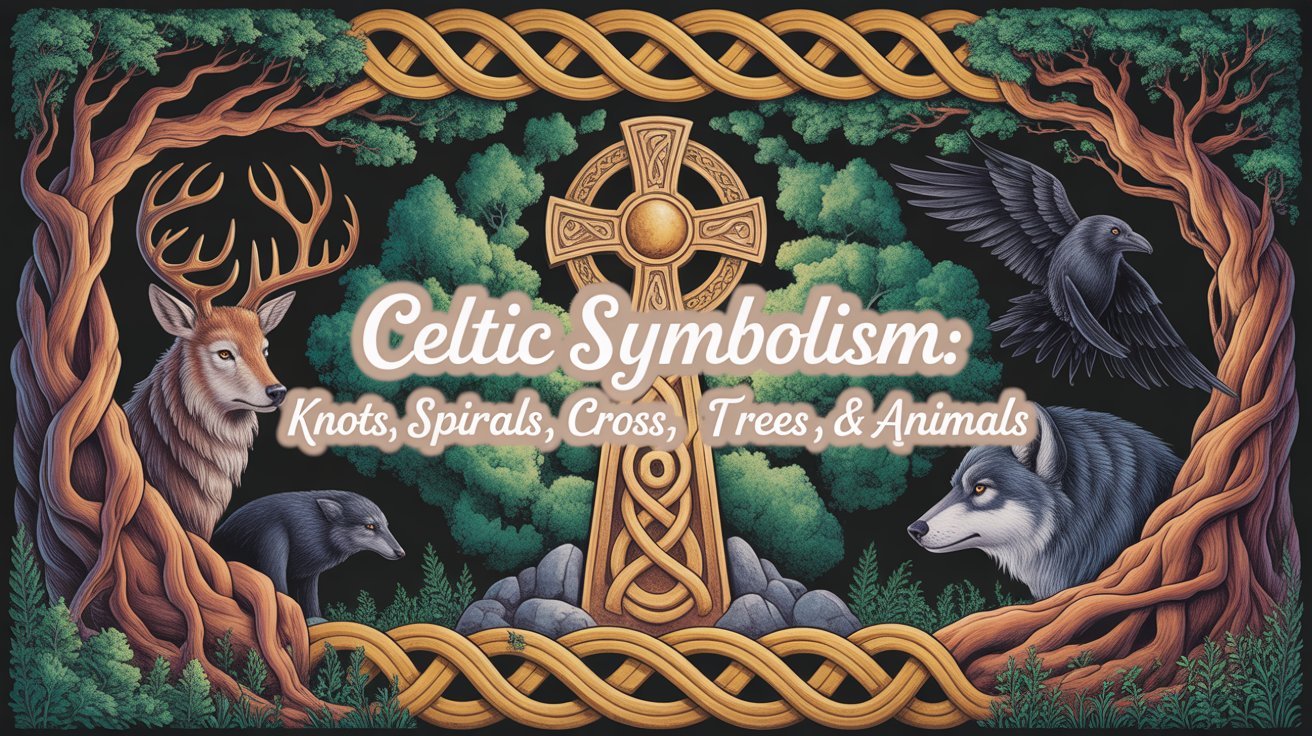
Celtic Symbolism: Meanings of Knots, Spirals, Cross, Trees & Animals
Celtic symbolism is one of the oldest spiritual and cultural traditions in Europe, deeply rooted in the beliefs of ancient Celtic societies. These symbols were used in art, jewelry, manuscripts, and stone carvings to represent spiritual truths, natural cycles, and the connection between the physical and mystical worlds. Many of these symbols continue to hold meaning today.
Celtic knots are perhaps the most recognizable symbols in Celtic culture. Their endless loops with no beginning or end represent eternity, unity, and the interconnectedness of life. They often symbolize the eternal bond of love, faith, and the cycle of life, death, and rebirth.
Celtic spirals reflect movement, growth, and the continuous flow of energy in the universe. Ancient Celts used spirals to symbolize personal development, spiritual awakening, and the journey of life. The triple spiral, also known as the triskelion, represents balance between mind, body, and spirit.
The Celtic cross combines a traditional Christian cross with a circular ring. The circle represents the sun, eternity, or the unity of heaven and earth. This symbol reflects the blending of ancient Celtic spirituality with early Christian beliefs.
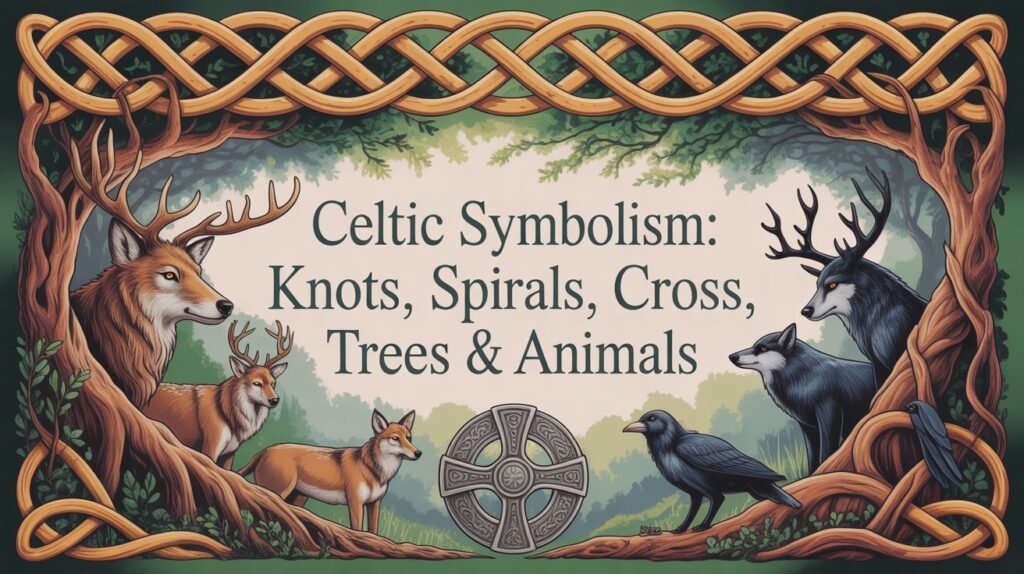
Trees and animals were sacred in Celtic belief because they represented the spirit of nature. The Celtic Tree of Life symbolized harmony between heaven, earth, and the underworld. Animals like stags, wolves, and ravens were seen as spiritual guides carrying wisdom, strength, and transformation.
The Origins of Celtic Symbolism
The origins of Celtic symbolism trace back to the ancient Celtic tribes that lived across parts of Europe over 2,000 years ago. These communities relied heavily on nature, mythology, and spiritual beliefs to understand the world around them. Their symbols were created to express ideas about life, balance, and the unseen forces of the universe.
Many early Celtic symbols were influenced by the natural environment surrounding these tribes. Patterns such as spirals, knots, and circles reflected cycles found in nature, like the changing seasons and the movement of the sun. These designs appeared in stone carvings, metalwork, and sacred monuments.
Celtic priests, known as Druids, played a significant role in preserving and interpreting these symbols. They used them to communicate spiritual teachings, cosmic balance, and the connection between humans and nature. Because much of Celtic knowledge was passed down orally, symbols became powerful visual representations of deeper wisdom.
Over time, Celtic symbolism spread through art, manuscripts, and religious structures across regions like Ireland, Scotland, and Britain. As Christianity arrived, many Celtic symbols blended with Christian imagery rather than disappearing. This fusion allowed the ancient meanings to survive and continue influencing culture today.
The Power of the Circle in Celtic Tradition
The circle held deep spiritual meaning in Celtic tradition because it symbolized eternity and wholeness. With no beginning and no end, the circle represented the endless cycles of life, death, and rebirth. For the Celts, it reflected the natural rhythm of the universe.
In Celtic belief, circles also represented protection and sacred space. Ancient communities often formed circular stone structures and ritual sites to create a spiritual boundary. These spaces were believed to hold powerful energy and connection to the divine.
The circle frequently appeared in Celtic art and symbols, including knots, spirals, and crosses. These designs emphasized the idea that everything in existence is connected. Life, nature, and the spiritual world were seen as parts of one continuous cycle.
Because of this meaning, the circle became a symbol of harmony and balance in Celtic culture. It reminded people that life moves in repeating patterns and that every ending eventually leads to a new beginning. This philosophy shaped many Celtic spiritual beliefs and artistic traditions.
Celtic Knots: Endless Paths of Life & Spirit
Celtic knots are intricate patterns formed by continuous, interwoven lines with no beginning or end. They symbolize eternity, the interconnectedness of life, and the spiritual journey that flows endlessly through time.
Meanings of Celtic Knots:
- Eternity and Infinity – The unbroken loops represent life, death, and rebirth without end.
- Unity and Interconnection – They reflect the belief that all things in nature and spirit are connected.
- Love and Loyalty – Often used to symbolize eternal bonds between partners, family, or friends.
- Spiritual Growth – The complex paths represent the journey of the soul through life’s challenges.
Popular Types of Celtic Knots:
- Trinity Knot (Triquetra) – Represents the balance of mind, body, and spirit or the Holy Trinity.
- Shield Knot – Traditionally used as a protective symbol against evil spirits.
- Dara Knot – Inspired by oak roots, symbolizing inner strength and resilience.
- Sailor’s Knot – A symbol of enduring love and the bond between separated partners.
The Triskelion: Three Spirals in Motion
The Triskelion, or triple spiral, is one of the most ancient Celtic symbols, representing motion, progress, and the cycles of life. Its three interconnected spirals reflect balance and harmony, often interpreted as mind, body, and spirit. The design emphasizes constant movement and the flow of energy in the universe.
In Celtic culture, the Triskelion was also linked to the natural world, symbolizing earth, water, and sky, or past, present, and future. It was commonly used in carvings, jewelry, and manuscripts to convey spiritual wisdom. This symbol reminded the Celts of life’s ever-changing and evolving nature.
The Triskelion remains a powerful emblem in modern times, representing personal growth and spiritual awakening. Its dynamic form encourages resilience, transformation, and embracing life’s cycles. For many, it serves as a visual guide toward balance and harmony in daily life.
The Celtic Cross
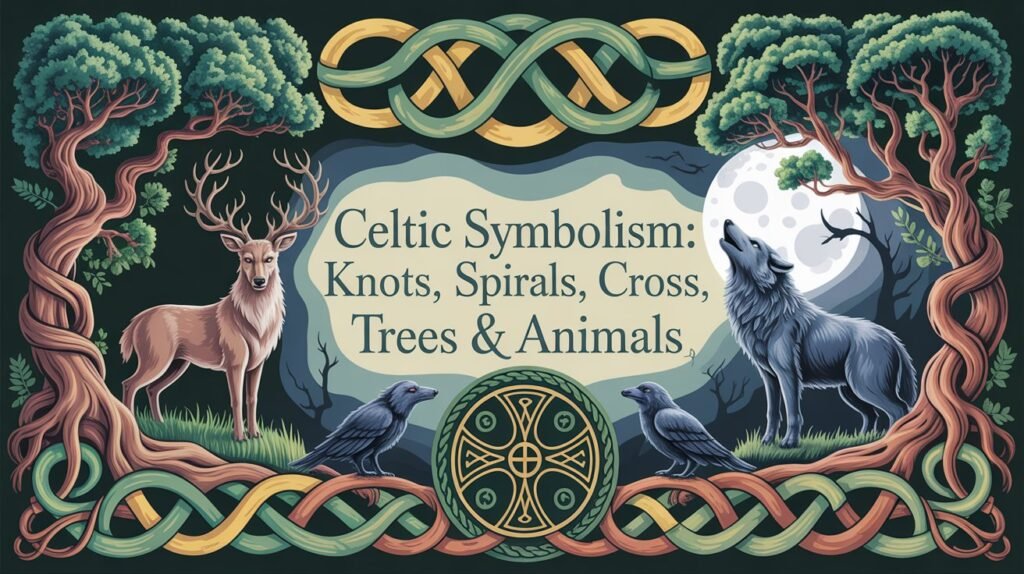
The Celtic Cross combines a traditional Christian cross with a circle at its center, symbolizing unity, eternity, and the connection between heaven and earth. It reflects the blending of early Christian beliefs with ancient Celtic spirituality.
The circle often represents the sun or the endless cycles of life, while the cross signifies faith, protection, and spiritual guidance. This iconic symbol appears in stone monuments, manuscripts, and jewelry, serving as both a religious and cultural emblem.
Celtic Tree Symbolism
In Celtic tradition, trees were sacred, representing life, growth, and the connection between heaven, earth, and the underworld. They symbolized wisdom, strength, and the cycles of nature.
Sacred Trees:
- Oak – Strength, endurance, and protection.
- Ash – Wisdom, connection to the spiritual world.
- Yew – Transformation, immortality, and rebirth.
- Hawthorn – Love, fertility, and magical protection.
Trees were central to Celtic rituals and mythology, serving as symbols of guidance, shelter, and spiritual energy for both communities and individuals.
Animal Symbolism in Celtic Culture
Animals held profound spiritual significance in Celtic culture, representing traits, wisdom, and guidance from the natural and supernatural world. Each animal was seen as a messenger, teaching lessons about strength, courage, and life’s cycles.
For example, the stag symbolized purity, leadership, and renewal, while the wolf represented loyalty, intuition, and protection. Birds like the raven were associated with prophecy, transformation, and a connection to the otherworld.
Animals also appeared in Celtic art, mythology, and folklore, often serving as totems or spiritual guides. Their symbolism emphasized the Celts’ deep respect for nature and the belief that every creature carried sacred meaning.
The Ogham Alphabet & Symbolism
The Ogham alphabet is an ancient Celtic script consisting of lines and notches carved on stones or wood, often used for communication and ritual purposes. Each letter is associated with a tree or plant, carrying spiritual and symbolic meanings.
Ogham was more than a writing system; it served as a guide to wisdom, divination, and magical practices. Each character conveyed lessons about life, growth, and the natural world, connecting humans to the spiritual energies of nature.
The symbols of Ogham are still studied today for their historical, mystical, and cultural significance. They represent the Celts’ deep respect for nature, language, and the hidden forces that shape existence.
Celtic Color Symbolism
Colors held deep meaning in Celtic culture, often representing spiritual concepts, emotions, and natural elements. They were used in art, clothing, and rituals to convey identity, status, and mystical significance.
Green symbolized growth, fertility, and life, while blue represented wisdom, healing, and the divine. Red was linked to strength, courage, and vitality, reflecting both physical and spiritual energy.
White denoted purity, protection, and sacredness, and gold or yellow was associated with the sun, abundance, and enlightenment. Together, these colors created a visual language connecting the Celts to nature, the spiritual world, and their cultural values.
Celtic Symbolism in Mythology & Folklore
| Symbol | Meaning in Mythology & Folklore |
|---|---|
| Salmon | Wisdom, knowledge, and inspiration from the Otherworld |
| Boar | Courage, ferocity, and warrior strength |
| Horses | Sovereignty, travel, and connection to gods |
| Crows/Ravens | Prophecy, transformation, and messenger of spirits |
| Celtic Knots | Eternal life, interconnectedness, and protection |
| Fairy Trees | Magical portals, sacred spaces, and spiritual guidance |
Celtic Symbols in Literature & Poetry
Celtic symbols have long inspired literature and poetry, serving as metaphors for life, nature, and the spiritual journey. Writers often use knots, spirals, and trees to evoke timelessness and connection to the mystical world.
Mythological animals and legendary figures frequently appear in Celtic tales, symbolizing strength, wisdom, and moral lessons. Poets draw on these images to explore human emotions, transformation, and the cycles of life.
Even modern literature continues to weave Celtic symbolism into storytelling, linking characters and themes to heritage, nature, and the spiritual realm. These symbols create depth, resonance, and a sense of continuity with ancient traditions.
Celtic Symbolism in Art & Jewelry
Celtic art and jewelry are rich with symbols like knots, spirals, and crosses, representing eternity, interconnectedness, and spiritual balance. These motifs were carved into stone, metalwork, and manuscripts to convey cultural and mystical meanings.
Jewelry such as rings, pendants, and brooches often featured symbolic designs to offer protection, convey status, or honor relationships. Celtic symbols in adornments served as both decorative and spiritual tools.
Artists continue to draw inspiration from ancient Celtic motifs, blending tradition with modern aesthetics. These creations celebrate heritage, spirituality, and the enduring power of symbolic expression.
Celtic Symbols in Modern Life
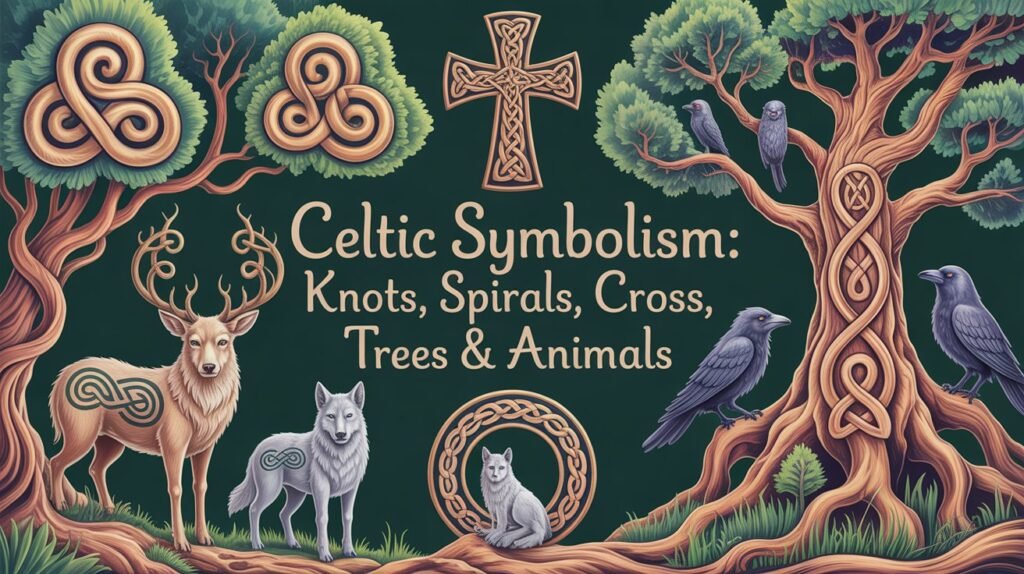
Celtic symbols continue to inspire modern culture, representing heritage, spirituality, and personal meaning in everyday life. They appear in fashion, tattoos, art, and spiritual practices worldwide.
Applications Today:
- Tattoos – Expressing personal identity, spirituality, or life journeys.
- Home Decor – Knots, spirals, and crosses used in art and furnishings.
- Jewelry – Pendants, rings, and bracelets as symbols of love, protection, or faith.
- Fashion – Clothing and accessories featuring Celtic patterns and motifs.
- Spiritual Practice – Used in meditation, rituals, and symbolic guidance.
Life Lessons from Celtic Symbolism
Celtic symbolism teaches the importance of interconnectedness, reminding us that every action and relationship is part of a larger web of life. Knots and spirals reflect the idea that all experiences, challenges, and joys are linked.
Symbols like the Celtic Tree of Life emphasize growth, balance, and harmony with nature. They encourage patience, resilience, and respect for the cycles of life and personal development.
Animals, colors, and sacred patterns inspire courage, wisdom, and spiritual awareness. By studying these symbols, we learn to embrace change, honor traditions, and find meaning in both the seen and unseen aspects of life.
Celtic Symbols in Dreams
Celtic symbols appearing in dreams often carry messages from the subconscious, reflecting personal growth, spiritual guidance, or life transitions. Knots, spirals, and crosses can indicate interconnectedness and cycles in your waking life.
Seeing animals like stags, wolves, or birds in dreams may symbolize strength, intuition, or messages from the spiritual realm. Trees and natural motifs often represent grounding, wisdom, and balance.
Colors and Ogham symbols in dreams can highlight emotions, decisions, or hidden potential. Interpreting these symbols helps uncover insights about relationships, challenges, and your spiritual path.
FAQs on Celtic Symbolism
What do Celtic knots symbolize?
Celtic knots represent eternity, interconnectedness, and the continuous cycle of life, love, and spirit.
What is the meaning of the Triskelion?
The Triskelion symbolizes motion, progress, balance, and the cycles of life, often linked to mind, body, and spirit.
Why are trees important in Celtic symbolism?
Trees are sacred in Celtic culture, representing life, growth, wisdom, and the connection between heaven, earth, and the underworld.
What does the Celtic Cross represent?
The Celtic Cross combines spiritual protection, faith, and eternal life, uniting Christian and ancient Celtic beliefs.
What role do animals play in Celtic symbolism?
Animals convey traits, spiritual guidance, and lessons from nature, often serving as totems or symbols of transformation.
How is Celtic symbolism used in modern life?
It appears in jewelry, tattoos, art, fashion, and spiritual practices, carrying meanings of heritage, protection, and personal identity.
What do colors mean in Celtic symbolism?
Colors reflect emotions, spiritual energies, and natural elements, such as green for growth, red for courage, and white for purity.
Can Celtic symbols appear in dreams?
Yes, they often convey guidance, personal insights, or messages about cycles, transformation, and spiritual growth.
What is the significance of the Ogham alphabet?
Ogham letters represent trees or plants, offering wisdom, divination, and connection to the natural and spiritual world.
Are Celtic symbols only from Ireland and Scotland?
While most originate from these regions, Celtic symbols were used across ancient Europe, influencing art, mythology, and culture widely.
Conclusion
Celtic symbolism is a rich tapestry of spiritual, natural, and cultural meanings that have endured for centuries. From knots and spirals to trees, animals, and the Ogham alphabet, each symbol carries lessons about life, balance, and interconnectedness.
These symbols were integral to ancient Celtic society, guiding rituals, storytelling, and daily life. They expressed spiritual truths, personal growth, and the cycles of nature in ways both artistic and mystical.
Over time, Celtic symbols blended with Christian imagery, folklore, and mythology, ensuring their survival and continued relevance. This fusion created a unique cultural heritage that bridges ancient and modern spirituality.
Today, Celtic symbols inspire art, jewelry, tattoos, literature, and even dreams, offering guidance, protection, and personal meaning. They connect individuals to their heritage, nature, and the timeless wisdom of the past.
Understanding Celtic symbolism encourages reflection, mindfulness, and respect for life’s cycles. By embracing these symbols, we can find inspiration, spiritual insight, and lessons that remain relevant in contemporary life.