Garden Symbolism: Meaning, Growth, and New Beginnings
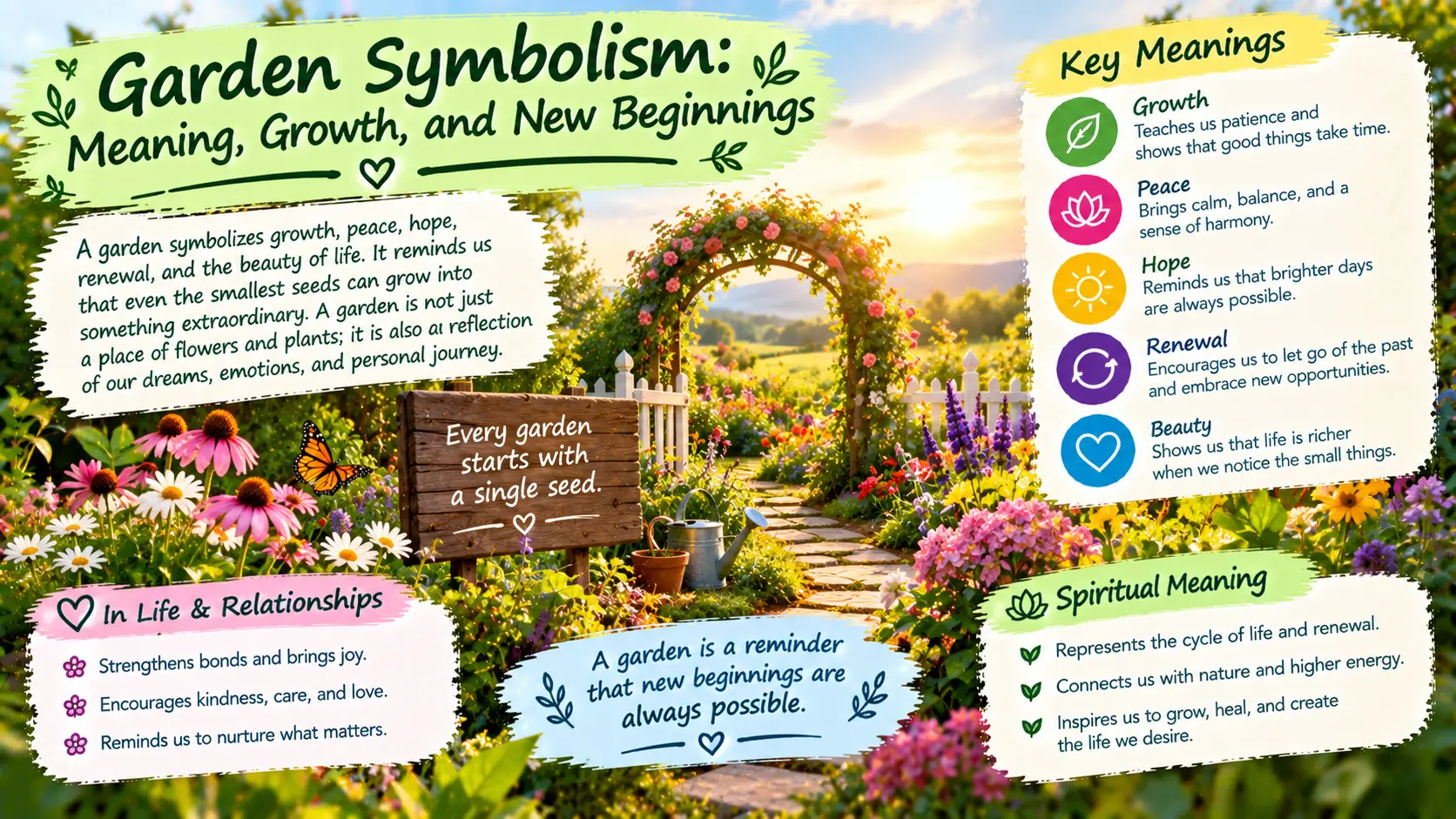
Garden symbolism represents growth, peace, hope, renewal, abundance, and the beauty of life’s journey. More than a collection of flowers, plants, and trees, a garden can serve as a powerful reflection of our emotions, relationships, dreams, and personal development. Every seed planted, leaf unfurled, and flower in bloom reminds us that meaningful growth takes time, patience, and consistent care.
Throughout history, gardens have been associated with love, harmony, healing, prosperity, and spiritual awakening. Their symbolism can vary depending on the plants they contain, their condition, and the cultural or spiritual traditions connected to them. A flourishing garden may represent happiness and fulfillment, while a neglected garden can encourage reflection on parts of life that need renewed attention.
Have you ever noticed how spending time in a garden can inspire a sense of calm, gratitude, or hope? Garden symbolism invites us to look beyond the beauty of nature and discover the lessons it offers. From learning to trust the process of growth to embracing new beginnings, a garden reminds us that the life we nurture today can become the beauty we experience tomorrow.
What Does a Garden Symbolize?
A garden commonly symbolizes personal growth, happiness, peace, patience, and the rewards of nurturing something meaningful. Just as plants need sunlight, water, healthy soil, and time to thrive, people need encouragement, emotional support, opportunities, and self-care to reach their potential.
A healthy, colorful garden may represent balance, fulfillment, and a sense of progress. A garden filled with weeds or struggling plants may symbolize neglected responsibilities, unresolved emotions, or goals that require renewed attention. These interpretations are not fixed rules; they are ways of using nature as a mirror for personal reflection.
At its heart, garden symbolism teaches that what we consistently nurture has the greatest opportunity to flourish. Whether you are developing a new skill, building a relationship, or working toward a personal dream, a garden offers a gentle reminder to focus on steady progress rather than immediate results.
Spiritual Meaning of a Garden
Spiritually, a garden can represent inner peace, spiritual growth, renewal, gratitude, and a deeper connection with nature. Its quiet beauty encourages reflection and reminds us to create space for stillness in a world that often demands constant activity.
The changing seasons also carry spiritual significance. Spring may symbolize awakening and fresh possibilities, summer can represent abundance and vitality, autumn may suggest wisdom and release, and winter can reflect rest, patience, and preparation. Together, these cycles remind us that every stage of life has value, even when progress is difficult to see.
A garden may also serve as a personal symbol of the inner world. The seeds we plant can represent intentions, the flowers can reflect our developing qualities, and the roots can symbolize the values that keep us grounded. The spiritual lesson of a garden is to cultivate what brings meaning, practice gratitude for what is growing, and allow yourself time to become who you are meant to be.
Garden Symbolism in Different Cultures
Gardens have carried meaningful associations across many cultures, often representing paradise, harmony, beauty, fertility, and the relationship between human beings and the natural world. Their meanings are shaped by geography, history, religious beliefs, and local traditions.
In Japanese garden traditions, carefully arranged stones, water, plants, and open spaces can encourage contemplation and express balance, simplicity, and the changing nature of life. Persian garden traditions have historically emphasized water, shade, greenery, and geometric design, creating spaces associated with beauty, comfort, and the idea of paradise.
Gardens also appear in religious stories, poetry, mythology, and traditional art as places of transformation, refuge, and spiritual significance. Their symbolism is not identical across cultures, but many traditions recognize the garden as a place where beauty and meaning can grow together.
The universal appeal of garden symbolism lies in its connection to human experience: people everywhere understand the value of nourishment, the passage of seasons, and the hope represented by new growth.
Garden Symbolism in Love and Relationships
In love and relationships, a garden symbolizes affection, trust, patience, commitment, and emotional growth. A healthy relationship resembles a well-tended garden because both require regular attention, honest communication, mutual respect, and room for change.
A garden filled with blooming flowers may represent a relationship that feels joyful, secure, and emotionally rewarding. New seedlings can symbolize the beginning of a romance, while deep roots may represent trust and a lasting connection. Different flowers can add further meaning, depending on their traditional associations with love, friendship, loyalty, or devotion.
Weeds and struggling plants can serve as metaphors for misunderstandings, neglected needs, or repeated patterns that prevent a relationship from flourishing. These images do not necessarily predict the future of a partnership; instead, they can encourage honest reflection about what needs attention.
The relationship lesson of a garden is that love grows through everyday actions. Listening carefully, respecting boundaries, expressing appreciation, and resolving disagreements with kindness help create the conditions for a stronger connection.
Garden Symbolism and Personal Growth
A garden provides a powerful metaphor for personal development because growth happens gradually and often invisibly before it becomes obvious. Seeds represent possibilities, roots symbolize strong foundations, young plants reflect progress, and blooming flowers suggest confidence, achievement, or the expression of personal potential.
Like plants, people develop at different rates. One person may discover a new direction quickly, while another may need time to recover from setbacks, learn new skills, or understand their goals. Comparing your progress with someone else’s can make your own journey feel smaller than it really is.
Garden symbolism encourages you to recognize the importance of small, consistent actions. Reading a few pages, practicing a skill, setting healthier boundaries, or making time for rest may seem insignificant at first, but these choices can gradually transform your life.
It also reminds us that personal growth requires removing what no longer serves us. Just as a gardener prunes damaged branches and manages weeds, we may need to reconsider unhelpful habits, unrealistic expectations, or relationships that repeatedly undermine our well-being.
The deeper lesson is that personal growth is not about becoming perfect; it is about creating the conditions in which you can thrive.
What Does a Garden Symbolize in Dreams?
Dreams involving gardens can be interpreted in different ways depending on the setting, your emotions, and the events taking place. A garden may bring to mind personal growth, peace, emotional needs, hope, or a desire for a fresh start. However, dream meanings are subjective and should not be treated as guaranteed predictions.
Here are some common symbolic interpretations:
| Garden in a Dream | Possible Symbolic Meaning |
|---|---|
| A beautiful, blooming garden | Happiness, hope, satisfaction, or a sense of progress |
| A lush green garden | Renewal, balance, vitality, or fresh opportunities |
| A dry or dying garden | Emotional exhaustion or an area needing attention |
| Planting seeds | Beginning a new goal, project, or chapter |
| Watering plants | Nurturing relationships, ambitions, or personal well-being |
| Walking through a garden | Reflection, peace, or a search for clarity |
| A garden full of weeds | Unresolved concerns or neglected responsibilities |
| A garden with colorful flowers | Joy, creativity, affection, or appreciation |
| Harvesting fruit or vegetables | Recognizing the results of patience and effort |
| An abandoned garden | Feeling disconnected from a goal, memory, or part of yourself |
For example, dreaming of planting seeds might reflect your hopes for a new opportunity, especially if you are beginning a project or considering an important change. A flourishing garden may reflect satisfaction with your current direction, while a neglected one could prompt you to consider whether you have been overlooking your needs.
The most useful way to explore a garden dream is to consider how you felt during it and what is happening in your waking life. The dream may offer a starting point for reflection rather than a definite spiritual message or prediction.
Garden Symbolism and New Beginnings
Gardens are powerful symbols of fresh starts, hope, transformation, and the possibility of a better future. Planting a seed requires faith in something that has not yet become visible. You prepare the soil, provide water, and wait, trusting that the right conditions can support growth.
This image is especially meaningful when starting a new job, rebuilding confidence, entering a relationship, moving to a different place, or learning a skill. The beginning of any major change can feel uncertain because the results are not yet clear. Garden symbolism reminds us that uncertainty does not mean nothing is happening.
Seeds also teach us that growth often begins beneath the surface. Before a plant produces leaves or flowers, its roots must develop. Similarly, personal progress may begin with private decisions, small improvements, and changes in perspective that others cannot immediately see.
A garden does not bloom all at once, and neither does a meaningful life change. Some goals need weeks of effort, while others require months or years of patience and adjustment.
If you are entering a new chapter, garden symbolism encourages you to begin where you are, care for your intentions, and trust the value of consistent effort. You do not need to see the entire outcome before taking the first step.
Garden Symbolism in Nature and Healing
A garden often symbolizes restoration, emotional balance, calmness, and reconnection with the natural world. The sight of green leaves, the fragrance of flowers, the movement of butterflies, and the sound of birds can encourage people to slow down and appreciate their surroundings.
Gardens can also provide a meaningful setting for reflection. Sitting quietly among plants may offer an opportunity to process emotions, think through decisions, or take a break from daily pressures. Caring for plants can create a gentle routine that encourages attention, responsibility, and appreciation for gradual change.
From a symbolic perspective, a garden represents a place where damaged or neglected things can receive care. A plant that begins to recover after watering can remind us that difficult periods do not necessarily define the future. With appropriate support and changed conditions, improvement may become possible.
It is important to recognize that garden symbolism is not a substitute for professional medical or mental health care. However, gardening and spending time in green spaces may complement other healthy routines and provide opportunities for relaxation and connection.
Ultimately, a garden reminds us that healing does not always require dramatic transformation. Sometimes, it begins with rest, a supportive environment, a small daily habit, or permission to move forward at a gentler pace.
Garden Symbolism and Abundance
A flourishing garden can symbolize abundance, prosperity, gratitude, fertility, and the rewards of sustained effort. Fruit-bearing trees, thriving vegetables, and abundant flowers reflect the possibilities that emerge when living things receive suitable conditions and care.
In a practical sense, a productive garden represents nourishment and the results of preparation. The harvest reflects earlier work: selecting seeds, preparing soil, watering plants, managing pests, and adapting to changing weather. Symbolically, this process illustrates the connection between effort, patience, and opportunity.
Abundance, however, does not have to mean financial wealth or material success. It may also appear as supportive friendships, a loving family, meaningful work, creative inspiration, good memories, or the freedom to pursue personal interests. A small garden can feel abundant when it provides beauty, nourishment, and a sense of belonging.
Garden symbolism also encourages gratitude without suggesting that every outcome is entirely within our control. Weather, soil conditions, and unexpected challenges can affect a harvest, just as circumstances influence our lives. Preparation matters, but so does adaptability.
The message of an abundant garden is to appreciate what is flourishing while continuing to care for what you hope to grow. Recognizing existing blessings can help you approach future opportunities with greater perspective and appreciation.
Garden Symbolism and Patience
Patience is one of the most important lessons associated with gardens. Seeds need time to germinate, roots must develop, and flowers cannot be forced to bloom simply because someone wants immediate results.
This symbolism can be especially helpful when working toward long-term goals. Learning a language, improving a skill, rebuilding trust, or developing a career often involves periods when progress seems slow. A garden reminds us that visible results are only one part of the process.
Patience does not mean doing nothing. Gardeners continue to water, prune, observe, and adjust their methods while allowing plants the time they need. In the same way, personal patience combines consistent action with the understanding that some outcomes cannot be rushed.
A garden also teaches us to respect different timelines. Some plants grow quickly, while others take much longer to mature. People have different strengths, circumstances, and starting points, so comparing their journeys rarely provides a fair measure of success.
The lesson is to keep tending your goals without demanding that every effort produce immediate rewards. Progress may be gradual, but small actions can build the foundation for lasting change.
Garden Symbolism and Transformation
Gardens reflect transformation because they continually change through growth, flowering, pruning, harvesting, and seasonal rest. A bare patch of soil can become a vibrant space, while a once-flourishing garden may need renewal after difficult weather.
Symbolically, these changes represent the ways people evolve through experience. Challenges can encourage new perspectives, relationships may change as people mature, and old goals may give way to more meaningful priorities. Transformation is not always comfortable, but it can create opportunities for learning and renewed direction.
Pruning offers a particularly useful lesson. Removing a damaged branch or an overgrown section can help a gardener maintain the health and shape of a plant. In life, letting go of an outdated expectation, an unhelpful habit, or an unrealistic commitment may create room for healthier choices.
Seasonal changes also remind us that transformation is not always a straight path toward visible success. There are periods of action, moments of uncertainty, and times when rest is necessary.
Garden symbolism teaches that change can be part of growth rather than evidence of failure. By adapting to new circumstances and caring for what remains important, we can create space for a more balanced and fulfilling life.
Garden Symbolism and Gratitude
A garden can symbolize gratitude by drawing attention to the small details that are easy to overlook. A new leaf, a flower opening, fresh herbs, or the return of birds can make ordinary moments feel meaningful.
Gardens also reveal how many elements contribute to growth. Sunlight, water, soil, pollinators, and careful maintenance all play a role. This interconnectedness can encourage us to recognize the people, resources, and opportunities that support our own lives.
Practicing gratitude does not mean ignoring disappointment or pretending that every season is easy. A garden may contain damaged plants alongside healthy ones, just as life can include both difficulties and blessings. Appreciation becomes more meaningful when it allows room for honest emotions.
You can apply this lesson by noticing small achievements, acknowledging supportive people, celebrating progress, or spending a few quiet minutes observing nature. These simple practices can help shift attention toward what is valuable in the present.
The garden’s message of gratitude is to recognize what is already growing in your life instead of focusing only on what has not yet bloomed.
Life Lessons We Can Learn From Garden Symbolism
A garden offers practical lessons that can be applied to relationships, personal goals, emotional well-being, and everyday decisions.
- Practice patience: Meaningful growth often requires time, repetition, and steady effort.
- Keep learning: Each season brings new experiences and opportunities to develop.
- Care for yourself: Your physical and emotional well-being deserve regular attention.
- Welcome change: Different stages of life may require different priorities and approaches.
- Celebrate small progress: Every step forward can contribute to a larger achievement.
- Address negativity: Recognize habits, patterns, and situations that repeatedly hold you back.
- Practice gratitude: Appreciate the people, experiences, and opportunities that enrich your life.
- Nurture relationships: Trust and affection grow through consistent care and communication.
- Stay hopeful: Difficult periods can change, even when improvement is not immediately visible.
- Allow time for renewal: Rest and reflection can prepare you for a new chapter.
- Build strong foundations: Healthy roots, like strong values and supportive routines, help sustain long-term growth.
- Adapt to circumstances: Just as gardeners respond to changing weather, flexibility helps us navigate life’s uncertainties.
- Make room for joy: Beauty, creativity, and simple pleasures deserve a place in everyday life.
- Respect your own timeline: Your progress does not need to match anyone else’s journey.
Together, these lessons show why gardens are such enduring symbols of human experience. They remind us that growth requires both effort and patience, that setbacks can provide opportunities for adjustment, and that beauty often develops through small acts of care.
Final Thoughts on Garden Symbolism
Garden symbolism reminds us that life flourishes when we nurture it with patience, love, gratitude, and care. From the promise of newly planted seeds to the beauty of blooming flowers, a garden represents hope, renewal, abundance, personal growth, and the changing seasons of life.
Its deeper lesson is that meaningful progress rarely happens all at once. Strong roots develop before flowers appear, and even a struggling garden may offer opportunities for renewal. Whether you view a garden as a spiritual symbol, a reflection of your relationships, or a source of personal inspiration, it encourages you to appreciate the present while caring for the future.
When you nurture what matters, allow yourself time to grow, and remain open to change, you create the conditions for a more meaningful and fulfilling life.
FAQs About Garden Symbolism
What does garden symbolism mean?
Garden symbolism represents growth, peace, hope, abundance, renewal, and new beginnings. It reminds us that meaningful things develop through patience, consistent effort, and care.
What is the spiritual meaning of a garden?
Spiritually, a garden can symbolize inner peace, personal transformation, gratitude, and connection with nature. It encourages reflection and reminds us to nurture the qualities that bring meaning to our lives.
What does a garden symbolize in dreams?
A garden in a dream may represent personal growth, emotional needs, happiness, or new opportunities. Its possible meaning depends on the garden’s condition, your emotions, and the circumstances of your waking life.
What does a blooming garden symbolize?
A blooming garden often symbolizes happiness, success, abundance, beauty, and personal fulfillment. It can represent progress that is finally becoming visible after a period of patience and effort.
What does a garden symbolize in love?
In love, a garden symbolizes trust, affection, patience, and emotional growth. It reminds couples that healthy relationships develop through mutual respect, communication, and consistent care.
What does planting a garden symbolize?
Planting a garden represents hope, fresh starts, and the beginning of something meaningful. It reflects the belief that small actions taken today can contribute to future opportunities and achievements.
What does a dry or neglected garden symbolize?
A dry or neglected garden may symbolize exhaustion, neglected responsibilities, forgotten goals, or areas of life that need attention. It can encourage reflection on what needs care, adjustment, or renewal.
How does a garden symbolize personal growth?
A garden represents personal growth because plants develop gradually when conditions support them. Its symbolism encourages patience, learning, self-care, and appreciation for progress that may not be immediately visible.
What does a garden symbolize in different cultures?
Gardens have represented paradise, harmony, beauty, abundance, and renewal in many cultural traditions. Their meanings differ according to local customs, religious beliefs, historical experiences, and artistic traditions.
What does a garden symbolize spiritually in Christianity?
In Christian traditions, gardens can be associated with creation, fellowship with God, prayer, renewal, and resurrection. The Garden of Eden and the garden setting of Jesus’ resurrection narratives are important biblical contexts for these associations.
What does a garden symbolize in literature?
In literature, gardens can symbolize innocence, paradise, personal transformation, hidden emotions, or the relationship between nature and human life. Their meaning often depends on how the author uses the setting and its changes.
What life lessons can we learn from garden symbolism?
Garden symbolism teaches patience, resilience, gratitude, adaptability, and the importance of nurturing relationships. It reminds us that lasting growth often begins with small actions and develops through consistent care.