Sunflower Symbolism in Death: sunflower meaning, Spiritual Meaning, Funerals & Remembrance
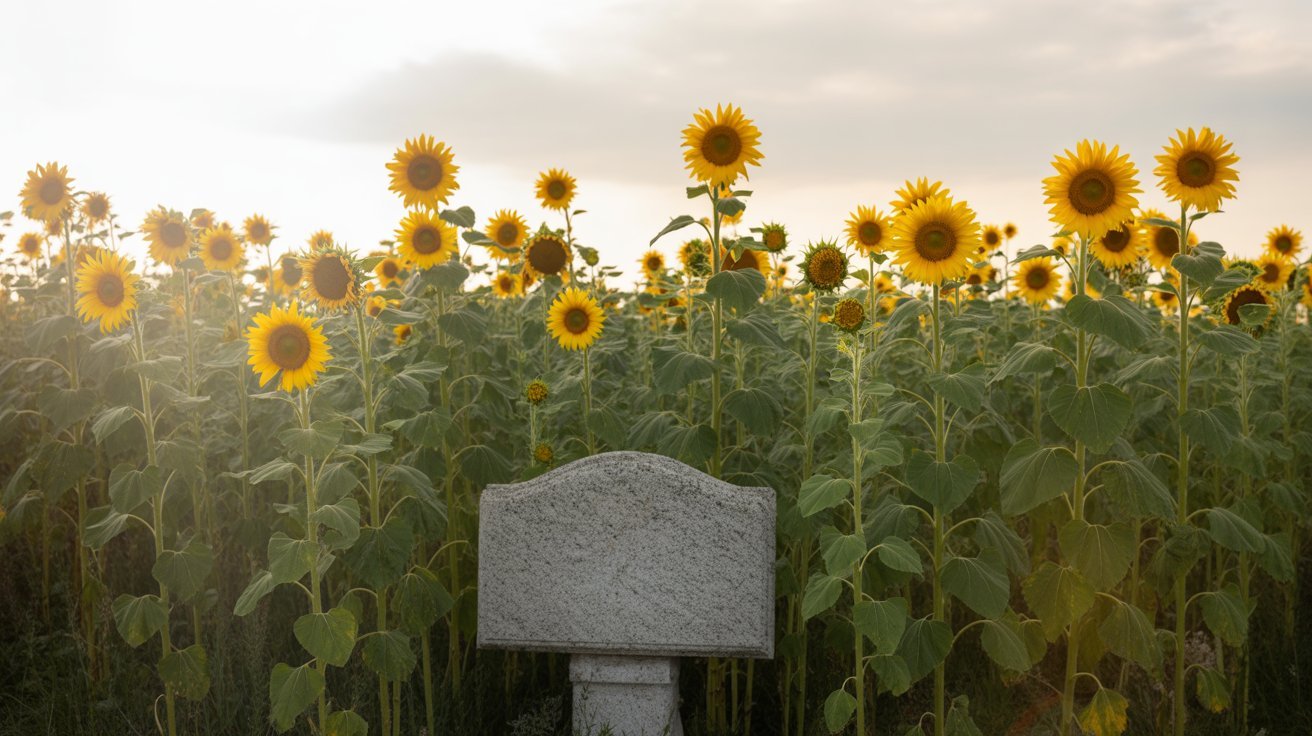
Sunflowers are often associated with warmth and life, yet in times of loss, they carry a profound message of enduring hope. Because they turn toward the sun, they symbolize the soul’s journey toward light even after physical death. In grief, the sunflower becomes a reminder that love does not fade—it transforms. Its golden petals reflect the belief that light continues beyond earthly endings.
Spiritually, sunflowers represent faith, resurrection, and the promise of renewal. In Christian traditions, they echo themes found in the Bible about seeking divine light and eternal life. Many people see them as symbols of spiritual awakening and the idea that the soul rises toward higher realms. Their upright posture suggests resilience, even in the face of sorrow.
At funerals, sunflowers are chosen to celebrate a life lived with warmth, positivity, and generosity. Unlike darker funeral flowers, they bring brightness to memorial services, creating an atmosphere of gratitude rather than only mourning. They are especially meaningful when honoring someone known for optimism or kindness. The flower gently shifts the focus from loss to remembrance filled with love.
In remembrance rituals, sunflowers are planted in gardens, placed on graves, or included in tribute arrangements. Over time, they stand as living memorials—growing tall as memories continue to live on. Their seeds also symbolize legacy, suggesting that what a person has sown in life continues to bloom in others. In this way, sunflowers transform grief into a symbol of enduring connection.
General Symbolism of Sunflowers
Sunflowers universally symbolize positivity, vitality, and unwavering faith. Their constant turning toward the sun reflects loyalty, hope, and the pursuit of light even in challenging times.
They are also associated with growth and spiritual awakening. Standing tall and bright, sunflowers represent confidence, resilience, and the courage to remain authentic.
In many cultures, sunflowers symbolize abundance and prosperity because of their rich seeds and vibrant color. They remind us that with patience and faith, life naturally unfolds into fullness and renewal.
Sunflowers and Death Symbolism
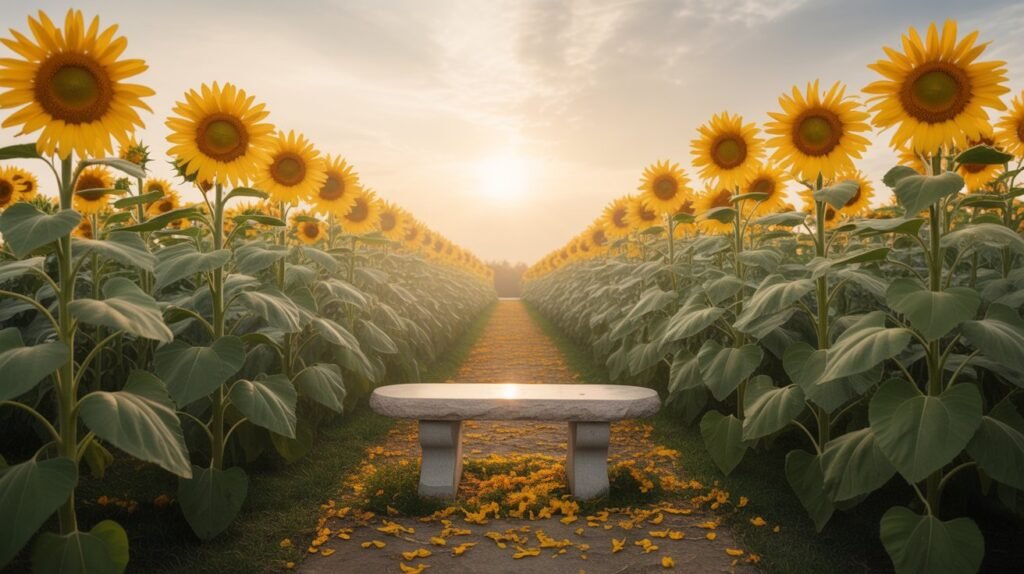
Sunflowers hold a unique place in death symbolism, representing hope in the midst of grief. Though bright and vibrant, they remind us that even endings are part of a larger cycle of light and renewal. Their golden petals reflect the belief that the soul continues its journey beyond physical life.
In many spiritual interpretations, sunflowers symbolize resurrection and eternal faith. Because they naturally turn toward the sun, they are seen as a metaphor for the soul seeking divine light after death. This makes them comforting symbols during mourning, offering reassurance of spiritual continuity.
They also represent remembrance and lasting legacy. Just as a sunflower produces countless seeds, a person’s love, influence, and kindness continue to grow in others after they are gone. In this way, sunflowers transform sorrow into a tribute of enduring connection and gentle hope.
Spiritual Meaning of Sunflowers in Death
Sunflowers carry a powerful spiritual message in times of death, symbolizing the soul’s movement toward divine light. Their natural tendency to follow the sun reflects the belief that the spirit seeks higher realms after leaving the physical world. In this way, they represent guidance, faith, and the promise of continued existence beyond earthly life.
Spiritually, the sunflower is often seen as a sign of resurrection and renewal. Just as the flower closes at night and reopens with the morning sun, it mirrors the idea of rebirth after darkness. This symbolism offers comfort, suggesting that death is not an end but a transformation into another form of being.
Sunflowers also embody unwavering devotion and spiritual alignment. Their upright stance and bright face remind mourners to remain connected to hope, even during grief. They symbolize trust in a greater plan, encouraging acceptance and peace in the face of loss.
Finally, the seeds of a sunflower carry deep meaning in remembrance. They represent legacy, growth, and the continuation of love through future generations. Spiritually, this suggests that the essence of a person lives on in the hearts and lives they touched, just as seeds create new life long after the original bloom fades.
Sunflowers in Funerals and Memorials
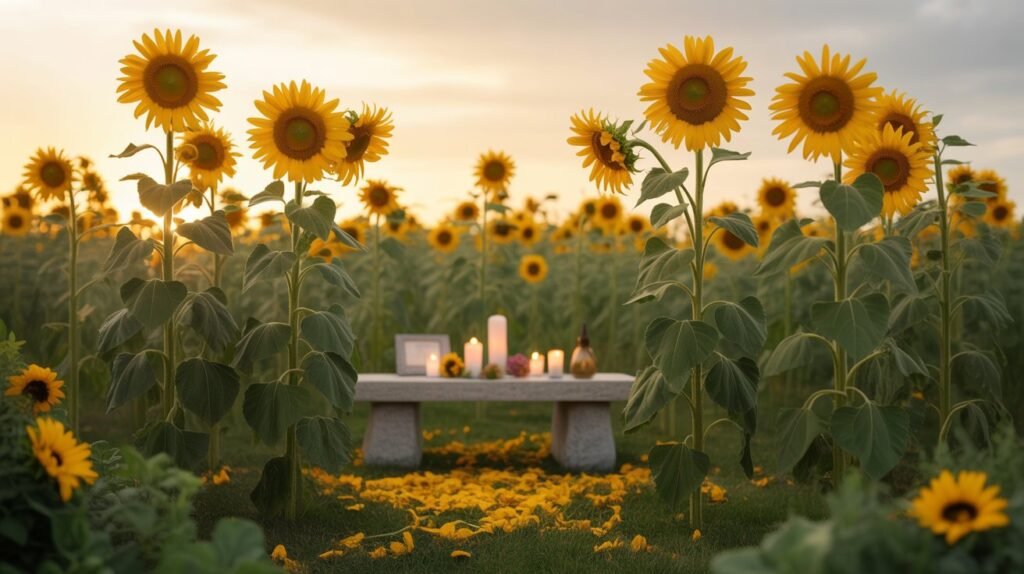
Sunflowers are increasingly chosen for funerals and memorial services because they bring warmth into moments of sorrow. Their bright yellow petals symbolize gratitude, remembrance, and the celebration of a life well lived. Instead of focusing solely on mourning, they gently shift the atmosphere toward honoring joyful memories and meaningful connections.
At funeral ceremonies, sunflowers are often included in standing sprays, casket arrangements, or memory tables. They are especially fitting for individuals known for their kindness, optimism, or radiant personality. Their bold presence can transform a somber space into one filled with light, offering comfort to grieving family and friends.
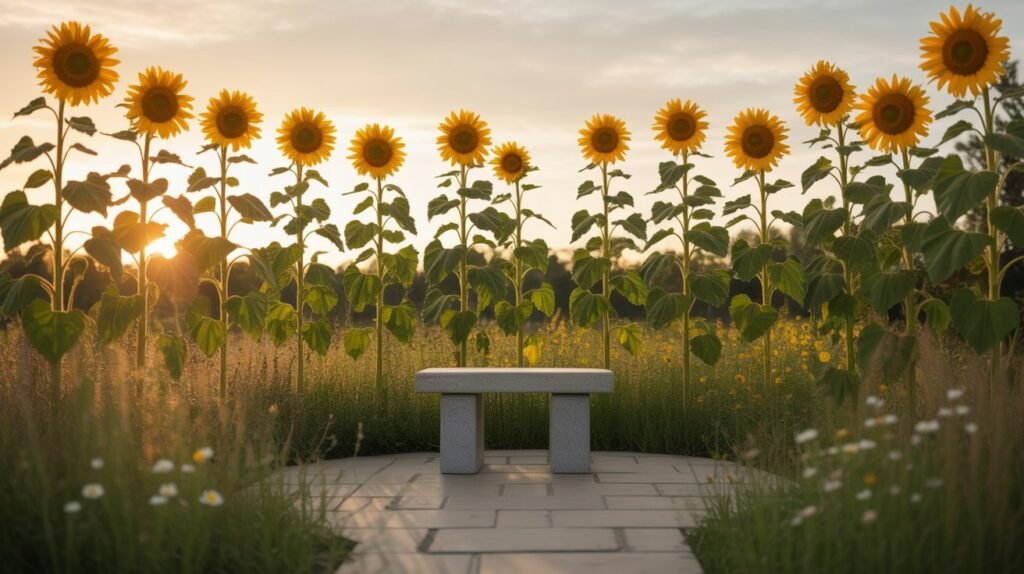
In memorial traditions, sunflowers are sometimes planted in gardens or placed at gravesites as living tributes. As they grow tall and strong, they become symbols of enduring love and ongoing remembrance. Over time, they stand as visual reminders that while life changes form, the impact of a loved one continues to bloom in the hearts of those left behind.
Sunflower Symbolism in the Bible and Christianity
- Sunflowers symbolize seeking God’s light, reflecting verses like “Those who look to Him are radiant” (Psalm 34:5), representing spiritual focus and devotion.
- Their constant turning toward the sun mirrors a believer’s desire to follow Christ, often connected to the teachings of Jesus Christ as the “Light of the World.”
- The bright golden petals are seen as symbols of faith, joy, and the glory of God shining through a faithful heart.
- Their tall, upright growth represents steadfastness, spiritual strength, and standing firm in faith during trials.
- The many seeds of a sunflower reflect abundance and fruitful living, symbolizing how a Christian life rooted in faith can bless and multiply goodness in others.
Cultural Symbolism of Sunflowers and Death
In Mexico, sunflowers are sometimes associated with remembrance and are linked symbolically to light during Día de los Muertos. Their bright color reflects the belief that death is not an end, but a continuation of the soul’s journey. They can represent guiding light for spirits returning to visit loved ones.
In parts of Japan, sunflowers have been used in memorial contexts to express resilience and hope after loss. Following times of national tragedy, they became quiet symbols of healing and forward movement. Here, the flower represents strength, endurance, and collective remembrance.
Across various cultures, sunflowers balance sorrow with optimism. Rather than symbolizing darkness, they emphasize light beyond death and the enduring presence of love. Their universal message is clear: even in farewell, warmth, memory, and spiritual connection continue to shine.
Sunflowers in Dreams About Death
Dreaming of sunflowers in the context of death often symbolizes hope emerging from emotional endings. Rather than predicting physical loss, such dreams usually reflect transformation, healing, or the closing of a life chapter. The sunflower’s brightness suggests that even in symbolic “death,” renewal and clarity are on the horizon.
Spiritually, sunflowers in death-related dreams can represent the soul’s movement toward light. They may appear during periods of grief to reassure the dreamer that love continues beyond separation. The image often serves as comfort, indicating peace, spiritual growth, or divine guidance during transition.
Psychologically, this dream may point to acceptance and resilience. The sunflower stands tall despite storms, mirroring the dreamer’s inner strength in facing change or loss. It can be a powerful reminder that from endings come new beginnings, and that light still exists even after darkness.
Life Lessons from Sunflower Symbolism in Death
- Turn toward the light, even in grief. Just as a sunflower follows the sun, we can choose hope and faith during life’s darkest moments.
- Endings are part of growth. Death teaches that transformation is natural, and every ending carries the seed of a new beginning.
- Leave a legacy of seeds. Like a sunflower filled with seeds, our kindness, love, and values continue to grow in others long after we are gone.
- Stand tall through storms. Sunflowers remind us to remain strong and dignified, even when facing loss and emotional pain.
- Celebrate life, not just mourn loss. Their brightness encourages gratitude for shared memories rather than focusing only on sorrow.
- Choose warmth and positivity. Even in farewell, we can reflect light, compassion, and encouragement to those around us.
FAQ on Sunflower Symbolism and Death
1. Do sunflowers symbolize death?
Sunflowers do not traditionally symbolize death itself, but they represent hope, spiritual light, and renewal during times of loss. They focus more on transformation than on endings.
2. Are sunflowers appropriate for funerals?
Yes, sunflowers are increasingly used in funerals to celebrate a life filled with warmth and positivity. They create an atmosphere of gratitude and remembrance rather than only sorrow.
3. What is the spiritual meaning of sunflowers after someone dies?
Spiritually, sunflowers symbolize the soul’s journey toward light and eternal peace. They offer comfort by suggesting continuity beyond physical life.
4. What do sunflowers represent in grief?
In grief, sunflowers represent resilience, faith, and emotional healing. They remind mourners that love continues to shine even after loss.
5. Do sunflowers have biblical meaning related to death?
While not directly mentioned in the Bible, sunflowers are often connected symbolically to faith, devotion, and following divine light, reflecting Christian beliefs about eternal life.
6. What does dreaming about sunflowers and death mean?
It usually symbolizes personal transformation, closure, or emotional healing rather than literal death. The dream often carries a message of hope.
7. Why are sunflowers used in memorial gardens?
They are planted as living tributes that grow tall and bright, symbolizing enduring love and cherished memories.
8. Do sunflowers symbolize resurrection?
Yes, in spiritual interpretation, their daily turning toward the sun represents renewal, rebirth, and rising toward higher light.
9. Are sunflowers a symbol of remembrance?
Absolutely. Their vibrant presence helps people honor joyful memories and celebrate the positive legacy of a loved one.
10. What do sunflower seeds symbolize after death?
Sunflower seeds represent legacy, continuation, and the lasting impact a person leaves behind in the lives of others.
Conclusion
Sunflowers transform the symbolism of death into a message of light, hope, and renewal. Instead of representing darkness, they remind us that love continues beyond physical separation.
Their golden petals reflect faith, resilience, and the belief that the soul journeys toward higher light. In funerals, dreams, and memorials, they offer comfort and gentle reassurance.
Ultimately, sunflower symbolism teaches that even in loss, life’s warmth endures. Through memory, legacy, and spiritual connection, the light of those we love never truly fades.